

Moving the needle
-
- from Shaastra :: vol 05 issue 03 :: Mar 2026
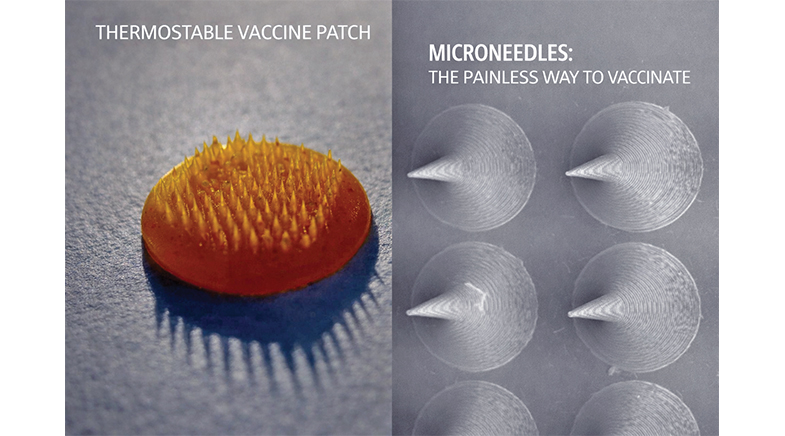
Efforts are on to make vaccination safer, easier, and less painful.
A needle jab doesn't just traumatise children; it is often stressful for adults, too. Driven by a desire to make vaccination less painful and more accessible, researchers at the Indian Institute of Technology (IIT) Kharagpur have developed India's first vaccine patch technology.
Tarun Kanti Bhattacharya, who heads the Institute's Micro Electro Mechanical Systems (MEMS) Laboratory, specialising in semiconductor device technology, has been working with his team on microneedle technology for several years. In 2020, during the COVID-19 pandemic, Jhimli Manna, a Materials Scientist at the MEMS Lab, and Ayan Chatterjee, then a research scholar, developed the vaccine patch technology as a gentler alternative to needle jabs.
According to the World Health Organization, about 50% of vaccines worldwide go to waste each year due to logistical issues, such as transportation delays and improper storage conditions. Sharp object wastage — discarded needles — is another problem. The vaccine patch resolves such problems.
The patch — which can be used in various types of vaccines — consists of microneedles that are significantly thinner and smaller than regular needles and do not cause pain. It remains stable at high temperatures because it is enclosed in a special polymer-based material. This material forms a thick, protective environment around the vaccine, limiting the movement of its molecules and reducing heat-induced damage. The polymer interacts closely with the vaccine, forming chemical bonds that help maintain its original shape, even when temperatures rise. At the same time, the material protects the vaccine's sensitive core, shielding it from heat and moisture that could cause it to break down.
Together, these factors prevent the vaccine from losing its structure or clumping together during storage. It remains effective for longer periods than regular vaccines without the need for refrigeration or cold-chain facilities. "We have addressed all the above issues through our technology," says Manna, Principal Investigator of the work.
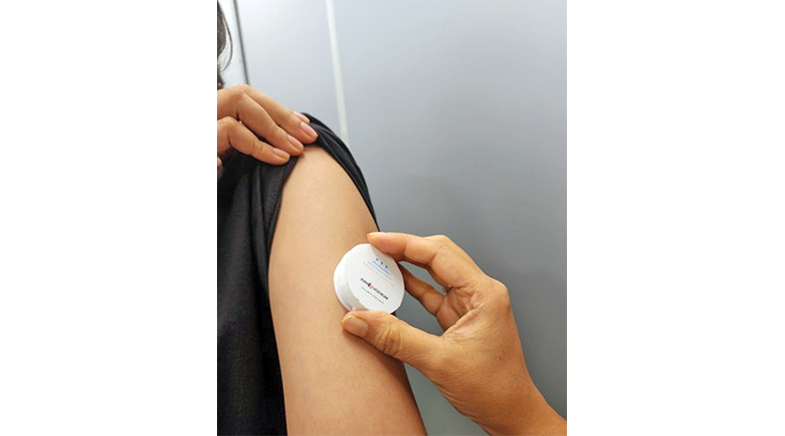
With Bhattacharya serving as an advisor, Manna and Chatterjee founded a start-up, Innovodigm, developing its proprietary Microneedle Array Patch. The team filed a patent for the technology in 2023. The company is now scaling up and undergoing pre-clinical validation, with clinical trials expected in 2026. Theroptach, the thermostable vaccine patch, is its first product.
Innovodigm aims to support India's universal immunisation efforts by improving last-mile delivery, especially in underserved regions. In 2021, India had about 2.7 million 'zero-dose' children — those who had not been vaccinated. The number dropped to 1.1 million in 2022, underscoring the importance of better delivery systems. Globally, vaccines prevent around 4.4 million deaths each year.
REACHING OUT
Researchers and companies have been working on painless vaccination technology for several years. Australian biotechnology company Vaxxas, for one, has developed a high-density microarray patch (HD-MAP) for needle-free vaccine delivery. The patch uses thousands of microscopic projections to deliver vaccines directly into the skin's upper layers, which are rich in immune cells. The company has tested this technology for vaccines against influenza and SARS-CoV-2, demonstrating promising immune responses in pre-clinical and early clinical studies. U.S.-based Kindeva Drug Delivery has worked extensively on transdermal microneedle systems.
"Our technology has some advantages over the existing technologies in terms of temperature maintenance and cost effectiveness," says Manna.
On March 19, 2025, the Innovodigm team met Bill Gates to showcase its vaccine patch technology during the American entrepreneur's visit to India. Manna says the Gates Foundation — a non-profit fighting disease — could be interested in using Innovodigm's vaccine patch technology to address the challenge of delivering vaccines to remote areas. Millions of children across the world suffer from measles, mumps and rubella disease (MMR). MMR vaccine delivery is a serious problem in many countries, including India. Resolving the issue of storage and supply will help save countless lives.








Down memory lane
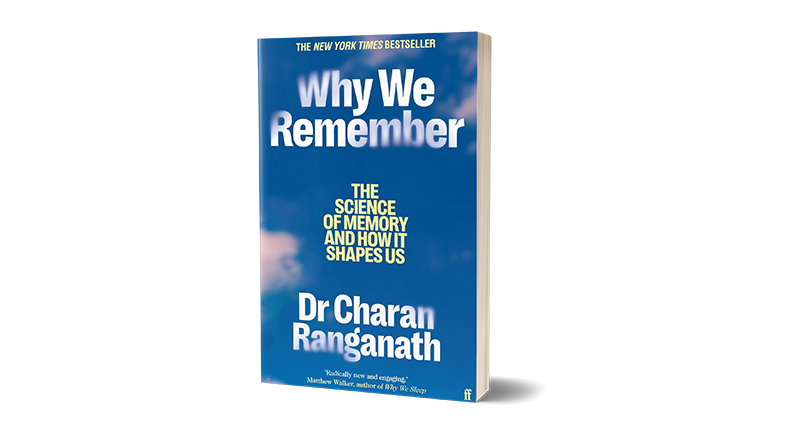
An engaging – but occasionally self-indulgent – introduction to the science of memory.
A fab roadmap for India
The global chip shortage provides India an opportunity to fill the vacuum in semiconductor manufacturing.


Have a
story idea?
Tell us.
Do you have a recent research paper or an idea for a science/technology-themed article that you'd like to tell us about?
GET IN TOUCH