

Saving lives & materials
-
- from Shaastra :: vol 05 issue 02 :: Feb 2026
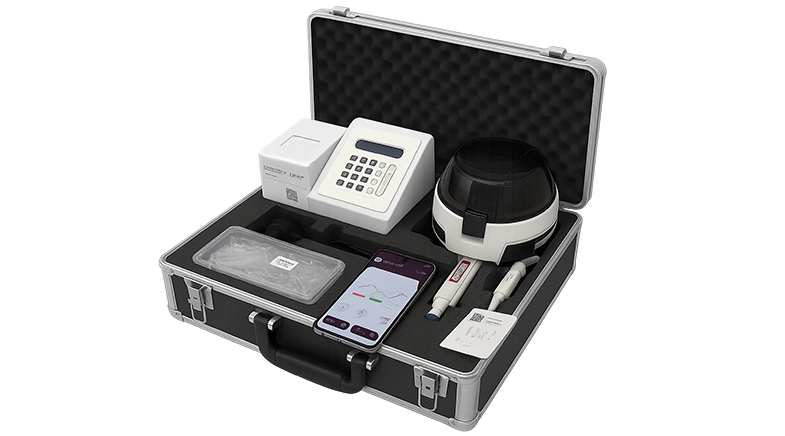
Focusing on portable diagnostic kits and recyclable waste.
EDHAA INNOVATIONS
Founders: Nisha Yadav and Saugandha Das
Year: 2018
Big idea: Developing kits to decentralise diagnostic facilities
Nisha Yadav came from a remote part of Uttar Pradesh, and Saugandha Das belonged to Jharkhand. Aware of the difficulties people faced in accessing diagnostic facilities in some parts of India, they were keen to do something to ease the problem. They had experience in pharmacy: the two had worked in the pharmaceutical industry and had received doctorates from the Mumbai-based Institute of Chemical Technology — Yadav in pharmaceutical sciences and technology, and Das in pharmaceutical nanotechnology.
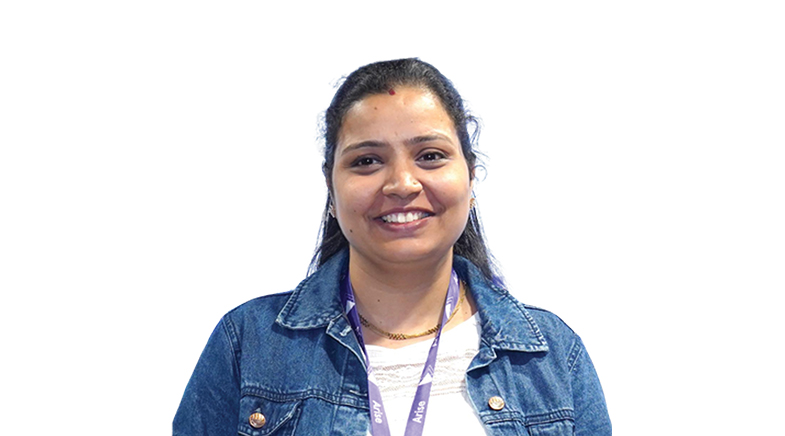
Diagnostic laboratories, they realised, were city-centric. Samples collected in remote areas were sent to cities, resulting in a delay in the availability of test results. So, the two decided to decentralise diagnostic facilities. Their start-up, Edhaa Innovations, focuses on maternal care. While maternal mortality has come down significantly in India, they felt that maternal care could be substantially improved if diagnostic facilities were made more accessible. Their start-up manufactures portable, easy-to-use kits that allow tests to be conducted close to patients and for results to be known almost immediately.
The company's first product, Bio-Cheq, can be used to perform routine tests prescribed during pregnancy and to provide a risk score for the pregnancy — low, medium, or high risk. "We are predicting whether the pregnancy will lead to any kind of complications, such as pre-term birth, miscarriages and foetal anomalies," says Yadav.

Yadav says that Bio-Cheq can perform 10-15 tests prescribed for pregnancy, as the kit can run tests with 0.5 ml of blood, whereas existing diagnostic laboratories use 2 ml. "Our innovation is in finding the markers in such small samples," she adds. Also, the cost per test will be ₹60, considerably lower than the charges at large laboratories. The kits, she adds, can be handled by anybody using a smartphone.
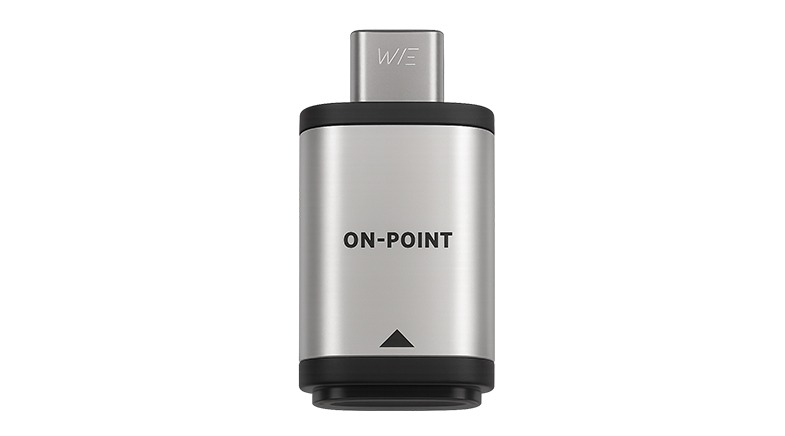
Another product, On-Point, is a highly specialised test kit used for conducting sophisticated diagnoses for conditions such as Down Syndrome. Existing analysers in the market cost ₹50 lakh to ₹1 crore, whereas On-Point costs ₹2 lakh. The per-test cost with On-Point will be around ₹2,000; current tests cost between ₹5,000 and ₹12,000.
Incubated at the Society for Innovation and Entrepreneurship at the Indian Institute of Technology Bombay, Edhaa Innovations is a team of 10. It has developed the hardware and software for the kits, which are to be sold to diagnostic centres. The start-up has completed multi-site validation and applied for a manufacturing licence. It hopes to commercially launch its first product by April 2026.
BEYOND RENEWABLES
Founders: Manhar Dixit and Vedant Taneja
Year: 2024
Big idea: To recycle waste from solar panels
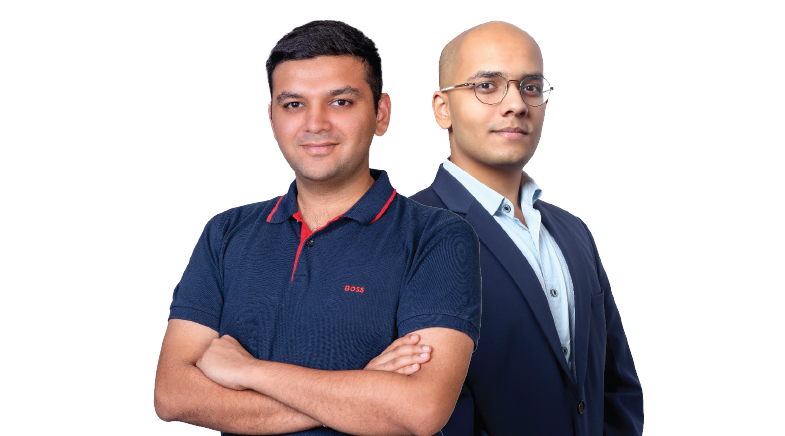
India's installed solar power capacity has shot up over the past decade — from 3 GW in 2014 to 129 GW today. But solar power has a downside: discarded solar panels. These panels, with a lifespan of 20-25 years, are dumped in landfills when they lose efficiency or are damaged. This is where Beyond Renewables, a venture founded by two old schoolmates, Manhar Dixit and Vedant Taneja, comes into play.
Dixit, an Economics graduate from The University of Chicago, and Taneja, who did his BCom from the Narsee Monjee Institute of Management Studies, decided to establish a company that would address the issue of solar waste. This, says Dixit, was their Eureka moment. Why not start a venture to recover materials from solar modules and recycle them for industrial use?

Beyond Renewables was founded in 2024 with this goal. The company, with an office in Noida, Uttar Pradesh, is setting up a plant near Jaipur to recycle solar panels. The company will buy waste from solar companies, solar panel manufacturers and owners of solar plants. After mechanically removing the aluminium panels and junction boxes from the solar modules, the start-up will use mechanical, thermal and chemical processing methods to ensure that maximum value is recovered from the panels. "We aim for a recovery of more than 95% from the panels," Dixit says. The company will heat the panels to a specific temperature so that the polymers decompose, yielding a semi-liquid resin that preserves the hydrocarbons. The resin is then converted into other value-added products.
The focus is on recovering five materials: aluminium, copper, glass, silicon, and silver. These materials are to be distributed through various supply chains, he adds. While aluminium and copper will be sent to secondary manufacturers of these metals, glass will go to flat glass manufacturers for use in furnaces and to decorative glass makers. The company will sell the silver to jewellers. The company has identified a few partners in Germany and Italy to bring silicon back into the solar industry. The solar panel industry requires technical trade specifications, whereas India has a capability only in metallurgical grade processing. Therefore, the company will export the silicon recovered from the panels to partners to add value.
It can process about 500 panels a day at its 24,000-sq-ft facility. The largest extracted material is glass, which accounts for up to 75% of a solar panel, followed by polymers, aluminium, silicon, copper and silver, according to Dixit. The plant is expected to be ready by the end of March.
ALTM
Founders: Apoorv Garg, Yugal Raj Jain and Harshad Velankar
Year: 2022
Big idea: Developing alternative materials from crop waste for use as feedstock
Apoorv Garg and Yugal Raj Jain met when they worked at Tesla in the U.S. Garg, a Mechanical Engineering graduate, had a Master's in Industrial Engineering and Operations Research from UC Berkeley. Jain had completed his B.E. in Manufacturing Process and Automation Engineering from the Netaji Subhas Institute of Technology and his Master's in Engineering in Advanced Manufacturing and Design from the Massachusetts Institute of Technology. Their stint at Tesla exposed them to the world of alternative materials and the need for companies to reduce their carbon footprints. "We wanted to build an engineering-focused research company," Garg says.
The company researches these alternative materials and seeks to produce them at scale. From a supply-and-demand perspective, they want to look at abundant resources that can be processed and whose products would find ready use across industries. Crop waste was one of the richest available feedstocks and met all the criteria they were looking for, says Garg. They studied the specific functions each component in the residue played and extracted them for human application. They aimed to reduce the use of petrochemicals as feedstock to make the products. By this time, Harshad Velankar, who holds a PhD from the University of Mumbai in Bio-transformation and has vast experience in the bio-process industry, joined them as the third co-founder.
PHOTO: BY SPECIAL ARRANGEMENT
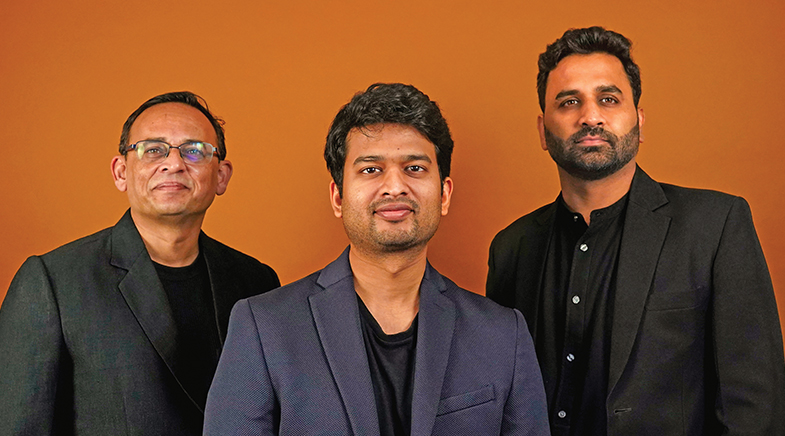
(From left) Founders Harshad Velankar, Yugal Raj Jain and Apoorv Garg
According to Garg, altM processes two types of crop waste — sugarcane bagasse and rice straw — to extract cellulose, hemicellulose and lignin, which make up about 70% of the rigid cell walls of the two wastes, and silica. The company extracts these four components with more than 99% purity into subfractions and then upgrades each fraction to support specific chemical or biomaterial applications for industrial use. The company has 29 different molecules at the R&D stage, all with varied industrial applications.

As part of its go-to-market strategy, altM is initially focusing on cosmetic applications. It has extracted an SPF (Sun Protection Factor) booster from lignin for sunscreens. He adds that this is the first 100% natural SPF booster and has a low carbon footprint. Using cellulose, the company has developed a thickener for cosmetics. The cosmetics industry now uses petrochemical-derived thickeners in products such as body washes and shampoos; altM's product can replace these petrochemical-derived elements. The company is developing an anti-ageing molecule based on hemicellulose, which is water-retentive and flexible. There are other applications too for its products, including in electric vehicle batteries. Based in Bengaluru, altM has set up a pilot plant and is establishing a 1,000-tonne-per-annum (of agro-waste) commercial plant. It is slated to go into production in 2027.








Those magical magnons
Scientists and engineers have been looking for energy-efficient alternatives to silicon-based transistors. Magnons could be the answer.


Soy far, soy good
From healing wounds to rejuvenating roads, newer soy solutions abound in the world of materials science.

The great AI jailbreak
With the rising threat of catastrophic misuse of AI models, researchers are working on safety mechanisms to prevent jailbreaking.



Have a
story idea?
Tell us.
Do you have a recent research paper or an idea for a science/technology-themed article that you'd like to tell us about?
GET IN TOUCH