

All mapped out
-
- from Shaastra :: vol 05 issue 10 :: Oct 2026

Psychiatrist Panagiotis Roussos on how genetic variation, ageing, and disease affect particular brain cells.
Seven years ago, psychiatrist Panagiotis ('Panos’) Roussos led the formation of the PsychAD Consortium, a multi-institute, cross-disciplinary medical research initiative to investigate the molecular and cellular biology of neurodegenerative disorders. On September 23, 2026, the consortium released the first single-cell atlas of a region of the human brain associated with problem-solving and memory. Along with it, the group released eight other papers, detailing transcriptome-level investigations of brain disorders, their associations and differences. In an interaction with Shaastra, the 47-year-old Director of the Center for Disease Neurogenomics at the Icahn School of Medicine at Mount Sinai in New York, demystifies this mind-boggling body of work.
Why did PsychAD focus specifically on the prefrontal cortex?
The prefrontal cortex supports abilities such as planning, decision-making, working memory, and regulating behaviour. We focused on its dorsolateral region because it undergoes prolonged development and supports cognitive functions that can become vulnerable with age or brain disease.
There was also a practical advantage: brain banks have carefully characterised donated tissue from this region, often accompanied by valuable clinical, genetic, and pathological information. Studying the same region across many donors allowed us to compare ageing and different disorders within a consistent framework.
Our broader motivation was to understand how genetic variation, ageing, and disease affect particular brain cells. The prefrontal cortex provides an important starting point.
One of your papers mentions that neurons maintain circadian rhythms. How did you find this from the brains of deceased individuals? How can this knowledge treat brain disorders?
Individual cells contain molecular clock machinery that helps organise their activity over an approximately 24-hour cycle. In our study, we examined daily fluctuations in gene activity: some clock genes tend to be more active at particular times of day, with coordinated patterns across different neuronal populations.
We found that these patterns were clearer in younger and middle-aged adults, and weaker or less coordinated in older adults. Some glial cells, which support and protect neurons, also showed evidence of distinct daily rhythms in their responses to cellular stress.
We reconstructed these circadian patterns by comparing brain samples from people whose times of death were known. We did not continuously monitor individual neurons or measure changes in a person’s sleep.
For treatment development, the findings identify cells and molecular processes whose timing disruption warrants investigation. Researchers can now test whether restoring particular rhythms improves cellular function in experimental models. If that proves beneficial, it could help guide therapeutic development. At present, however, the study does not establish that these clock changes cause disease or that correcting them would benefit patients.
PAST ISSUES - Free to Read









Smothering the flames of instability
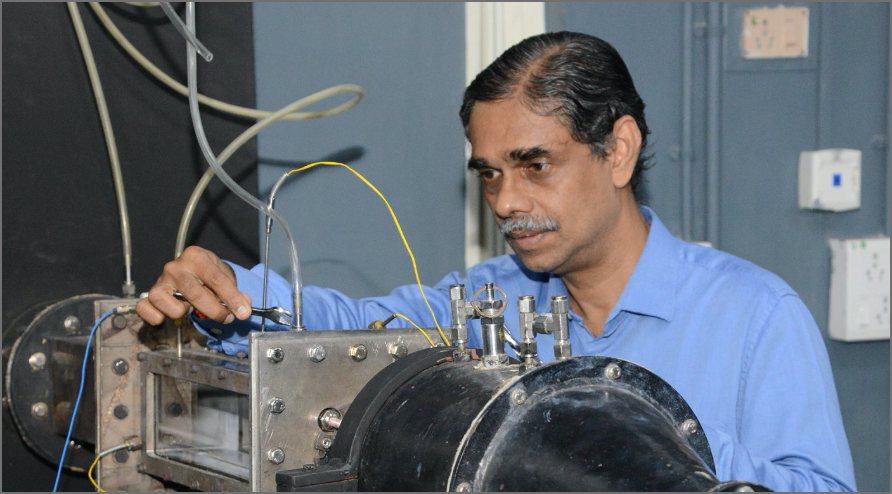
Scientists at IIT Madras channel an intuitive understanding of complex system dynamics to solve the problem of ‘combustion instability’.

The bee-tech biz is abuzz
A swarm of young beekeepers are developing affordable technology to maximise hive production, modernise a traditional livelihood, and advance conservation…

The tussle over the muon g-2
A short-lived particle continues to throw the world of physics in a tizzy.



Have a
story idea?
Tell us.
Do you have a recent research paper or an idea for a science/technology-themed article that you'd like to tell us about?
GET IN TOUCH

