

Getting the sting out of the bite
-
- from Shaastra :: vol 05 issue 04 :: Apr 2026
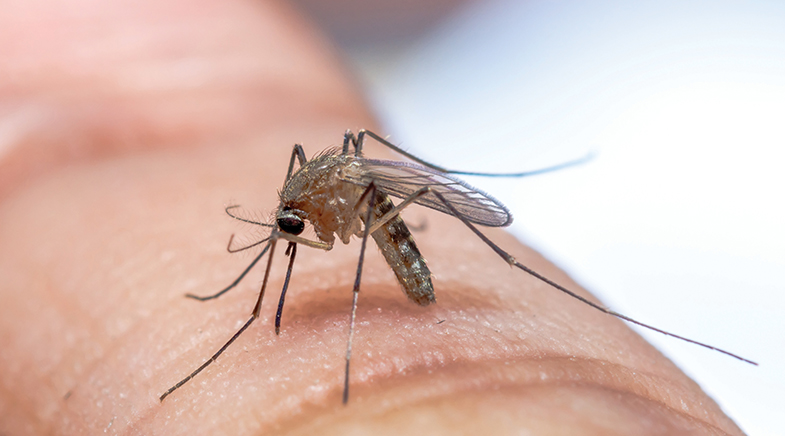
Targeting a protein complex can help combat malaria: new study.
In collaborative research, scientists have identified a unique malarial parasite protein complex that is essential for its growth and can thus be targeted by anti-malarial drugs.
While Pushkar Sharma's laboratory at the New Delhi-based National Institute of Immunology was studying the malaria parasite's development in human red blood cells, Rita Tewari at the U.K.-based University of Nottingham was examining the parasite's development in mosquitoes. The duo joined forces through a collaborative grant by the DBT/Wellcome Trust India Alliance to study the role of the parasite's Aurora-related kinase 1 (ARK1) protein — involved in cell division — in its development in human and mosquito hosts. The results of this study have now been published in Nature Communications (bit.ly/Parasite-Protein).
The malarial parasite alternates between its two hosts — the Anopheles mosquito and humans — to complete its life cycle and spread further. As is known, when an infected mosquito bites a person, the parasite enters the human's bloodstream, multiplies in the liver and then infects red blood cells, causing malaria. If another Anopheles mosquito bites the infected person, it picks up the parasite and then transfers it to another person through its bite.
The ARK1 protein was responsible for forming a spindle — the scaffold that pulls the parasite's DNA apart during division.
Sharma and Tewari have found that the ARK1 protein was responsible for forming a spindle — the scaffold that pulls the parasite's DNA apart during division. When this gene is disrupted, the parasite is unable to grow and divide, and thereby cannot infect other red blood cells. Further, without ARK1, male parasites were not able to produce the gametes required to infect mosquitoes.
The study found that the ARK1 protein forms a complex with two other proteins — INCENP-A and INCENP-B — to carry out its role in cell division. As INCEP proteins are not found in humans and mosquitoes, the scientists feel that targeting the ARK1-INCEP complex can specifically jam the parasite's growth engine while leaving human cells unharmed. "Such a drug will inhibit both the transmission of the disease as well as the propagation of the clinical manifestation of the disease," Sharma says.
The team now aims to identify the protein targets of ARK1, which they believe will advance the understanding of ARK1's mechanism.
According to the World Health Organization, malaria affected 282 million individuals and led to the death of around 6 lakh people globally in 2024.









Chipping in
India's semiconductor industry is undergoing a major transformation.

These all-purpuse robots signal a new era
Researchers are on the path towards general-purpose bots that can complete tasks in unfamiliar environments with minimal training.

Degrading microplastics with bacterial cocktails
Scientists are formulating bacterial consortia, searching for new sources of enzymes and engineering bacteria and protein to degrade plastic.



Have a
story idea?
Tell us.
Do you have a recent research paper or an idea for a science/technology-themed article that you'd like to tell us about?
GET IN TOUCH