

Cool plasma, hot future
-
- from Shaastra :: vol 05 issue 04 :: Apr 2026
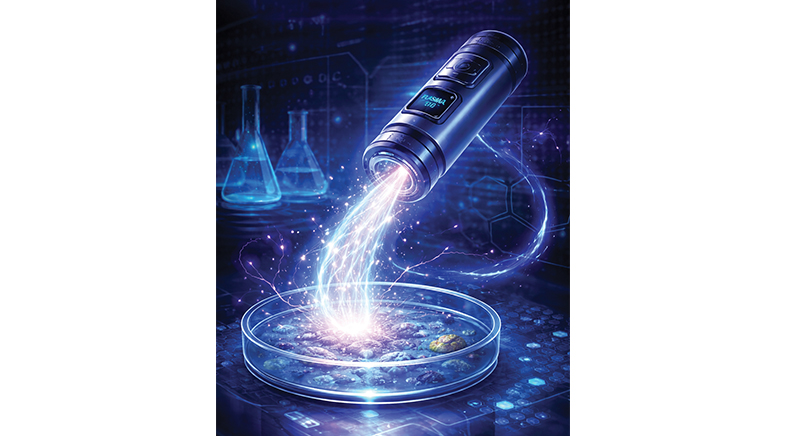
Researchers are identifying the use of cold plasma in diverse fields — with remarkable results.
Growing up in a Jharkhand village in the 1980s, Suraj Kumar Sinha often heard elders say that lightning was good for crops because it fixed nitrogen in the soil. Years later, armed with a doctorate in plasma physics, Sinha decided to 'recreate' lightning in a controlled and repeated fashion. Sinha, who had by then joined the Department of Physics at Pondicherry University, proposed a ₹2-crore project to a national research agency. The agency turned it down, saying it would rather that a national-level institute took up such a project than a university researcher.
"It actually turned out to be a blessing in disguise," remarks Sinha, now a Professor at the university. "It allowed me to work at my own pace, without any pressure of project deadlines."
Over the last 10 years, without any external funding, Sinha and his colleagues at the university have achieved something remarkable: they have designed a table-top system capable of producing miniature flashes of lightning in the lab. They did this using a form of plasma known as corona discharge, a non-thermal plasma created when high voltage is applied across a gas. Unlike the extreme heat of lightning, this plasma operates at near-room temperature but still generates highly energetic electrons.
These electrons are powerful enough to break apart nitrogen gas molecules (N2) present in the atmosphere, which are otherwise notoriously stable. Once broken, nitrogen atoms react with oxygen and moisture to form reactive nitrogen species — compounds that plants can use.
Their experiments demonstrated that a few minutes' exposure to such a treatment could rejuvenate soil by significantly improving its nitrogen content. But the real surprise came when the researchers combined plasma treatment with natural microbial inputs, such as organic matter. Working closely with colleagues from the Earth Science and Microbiology departments, they found that nitrogen content could be further enriched by mixing the soil with organic manure, such as cow dung. While the plasma treatment alone doubled the soil's nitrogen content from 300 parts per million (ppm) to 600 ppm, it jumped from 4,100 ppm to 11,700 ppm when used with cow dung. "This drastic jump may be due to different reaction pathways in the plasma phase, as well as in the soil, due to the catalytic effect of the various elements present, or due to a rise in microbial population," the scientists report in a paper, published in the journal Physics Letters A in March, stating that it needs to be further investigated (bit.ly/Chemical-Alternative).
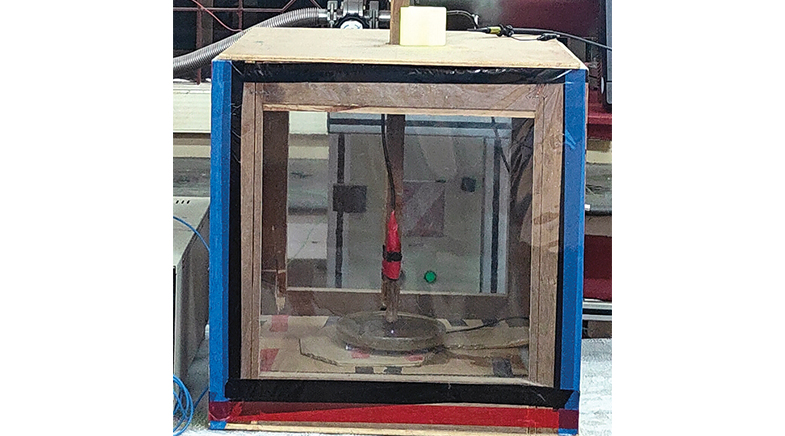
The work is significant because, if the lab tests can be replicated in real-life conditions, it opens a novel way to enrich soil nitrogen content without adding chemical fertilisers.
TRANSFORMING AGRICULTURE
Plasma-based nitrogen fixation can transform agriculture in many ways. It can help achieve cleaner farming by reducing dependence on synthetic chemical fertilisers, thereby reducing pollution and lowering greenhouse gas emissions. Further, decentralised on-site nitrogen production using compact plasma devices, possibly powered by renewable energy, can reduce supply chain dependencies and make farming more resilient in remote and resource-scarce regions.
"Our conservative estimates show that with one unit of electricity we can produce fertiliser equivalent of 110 quintal urea," says Sinha, who has filed a patent application for the technique, and has teamed up with Bengaluru-based start-up Sigrit Water LLP for setting up a pilot plant.
"It seems like a clever idea," says veteran plasma physicist P.I. John, who retired from the Gandhinagar-based Institute of Plasma Research (IPR) as Emeritus Professor in 2012. "Even if he develops a simple ammonia conversion system, which is portable and accessible to farmers without being expensive, it is of value," says John, who was instrumental in setting up the Facilitation Centre for Industrial Plasma Technologies, an arm of the IPR set up to transfer plasma technologies to industry.
CAPTURING PLASMA
The earliest scientific attempts to harness plasma to produce ammonia date back more than a century. In 1903, more than a decade before the invention of the ammonia-producing Haber-Bosch process, two Norwegian scientists, Kristian Birkeland and Samuel Eyde, attempted to fix atmospheric nitrogen using plasma by passing air through two highly charged copper electrodes and a strong magnetic field. But efforts to harness plasma — the fourth state of matter that accounts for 99.9% of what is found in the universe — were long shelved, as its efficiency paled in comparison to the Haber-Bosch process, which subsequently emerged as the most popular industrial chemical process. Plasma is a curious mix of ions, reactive species, electrons, and neutral atoms, produced when a gas is passed through two or more high-voltage electrodes, causing it to break down.
Plasma-based nitrogen fixation can transform agriculture. It can help achieve cleaner farming by reducing dependence on chemical fertilisers.
Plasma technology has gained popularity in recent years, and for several interconnected reasons. One of the primary reasons was the successful production of plasma at ambient conditions without vacuum systems. "This cold plasma technology is a few years old, and it has matured only recently. This puts a plasma device in every person's hand," explains John. As a result, the technology has finally become reliable and compact enough for real-world applications. A better understanding of plasma chemistry enabled researchers to control it precisely.
"Much of the plasma technology we see today has been an offshoot of humankind's attempts to understand nuclear fusion better," says Amita Das, a theoretical plasma physicist at the Indian Institute of Technology (IIT) Delhi. Das, who has been involved in India's efforts to design a Tokamak reactor, believes that the availability of private funding has been a prime driver of the upsurge in plasma-based technologies. "This sudden interest also stems from the fact that this technology, which was long inaccessible, became accessible," says John.
The technology was theoretically promising for decades, but only recently hit the right combination of practical feasibility and urgent real-world problems, strengthening the realisation that it was worth scaling up. Around the world, the field exploded as researchers identified potential applications of cold plasma in diverse fields. Medical researchers, for instance, discovered that cold plasma could selectively kill cancer cells and drug-resistant bacteria, such as Methicillin-resistant Staphylococcus aureus (MRSA), without harming healthy tissues. This turned out to be a significant milestone, leading to enormous funding and attention. For instance, Coldray Plasma Labs, a Pune-based start-up, has received technical guidance from IPR and is developing cold-plasma-based medical devices to treat chronic wounds, primarily associated with conditions such as diabetes and burn injuries. The company's co-founder, Vrushal Phadnis, says the treatment with cold plasma can expedite the wound-healing process by 30-40%. "This serves as adjunctive therapy, not a replacement therapy. It can reduce patients' dependence on internal medication, thereby minimising their risk of developing antibiotic resistance. This is done by modulating inflammation and also by relying on oxygen and nitrogen reactive species to trigger fibroblast formation, connective tissue cells that are crucial for wound healing and tissue repair," Phadnis says. Their products are currently undergoing clinical trials in India.
The system demonstrates a scalable pathway for localised fertiliser production, aligning with circular economy principles.
Similarly, rising pressure to reduce chemical pesticides has pushed researchers towards plasma-treated water and seeds, which improve germination and kill pathogens without chemicals. At IIT Tirupati, researchers led by Shihabudheen M. Maliyekkal, Professor of Civil and Environmental Engineering, and Reetesh Kumar Gangwar, Associate Professor of Physics, have developed a compact plasma-based reactor which is capable of producing nitrate-rich water using only air, water, and electricity. The system employs atmospheric-pressure plasma to generate reactive nitrogen species, which dissolve in water to form plant-available nitrates, offering a clean alternative to conventional fertilisers. The team, jointly with the Nagpur-based Ozone Crop Innovate, has designed a nitrate generator with a daily capacity of 100 litres.
"Beyond nitrate delivery, the plasma process simultaneously produces reactive oxygen species, imparting antimicrobial properties to the treated water. This dual functionality enables both nutrient delivery through irrigation and crop protection, reducing reliance on chemical inputs," Maliyekkal says.
By eliminating the need for chemical storage, transportation and handling, the technology enhances safety while reducing the environmental impact. More important, the system can break down industrial wastewater containing pharmaceutical residues and other harmful chemicals into nitrogen-rich liquid fertiliser, helping clean up the environment, he says.

The benefits have been established, but the costs pose a problem. "We are not able to match the conventional process. That is because fertilisers available in the market are heavily subsidised. But if you look at the original production cost and compare that with some plasma-based technique, it's more or less the same," he says. Maliyekkal adds that their current focus is on demand-based applications. "We actually want to integrate the reactor with the irrigation system, which has sensors to detect and measure the moisture and nutrient levels. So one can transform wastewater into a fertiliser and then supply it as per what the soil demands," he says. This is promising, as crops take only 30% of the synthetic fertilisers applied; the rest goes down the drain, polluting groundwater and surface water resources.
AN ARRAY OF APPLICATIONS
At IIT Jodhpur, Professor of Physics Ram Prakash has been developing similar applications of cold plasma technology. His team, for instance, has designed a technology to treat textile wastewater, which contains high levels of toxic dyes. "We use the cold plasma technology to clean this effluent water so that it can be used for irrigation," says Prakash, President of the 3,000-member Plasma Science Society of India. The team has built a 5,000-litre-per-day-capacity plant at the IIT Jodhpur campus. "Now we want to scale it up to produce millions of litres of water per day," Prakash says. "One challenge that we face now is that the cost of treating each litre of water is around 40 paise. The company that is willing to associate with us wants it to be brought down substantially. We are working on that," he says.
During the early days of the COVID-19 pandemic, when he and his family were in quarantine, Prakash took upon himself the challenge of designing a cold-plasma-based indoor air steriliser. "It was the first such air steriliser developed in India, and there were only very few such devices in the world then," he says. Such devices, which can trap pathogens, pollens, and odours, are very useful for intensive care units in hospitals. "Devices that perform similar functions cost ₹15-20 lakh when imported, while ours cost just ₹20,000-25,000 a unit," says Prakash, who has co-founded a start-up.
In addition, cold plasma technology is useful for seed germination. Reactive nitrogen species produced by cold plasma can reduce seed coat thickness. "This not only results in better absorption of water, but also modifies certain enzymes and hormones such as gibberellins and auxins, which can bring seeds faster from dormant states," Maliyekkal explains. The Andhra Pradesh government, he says, is keen on taking this technology forward.
The system also demonstrates a scalable pathway for localised fertiliser production, aligning with circular economy principles and the growing demand for sustainable agricultural solutions.
These plasma technologies, however, are not without challenges. "By default, plasmas, at atmospheric pressure, are thermal in nature. So the challenge is to suitably generate and sustain the plasma at atmospheric pressure and keep it close to room temperature," says Gangwar of IIT Tirupati.
If such challenges are overcome, clean, efficient, and versatile cold plasma processes — with their ability to turn air and electricity into a powerful chemical toolkit — may become one of the defining technologies of the current century.








Southward ho!
A powerful new telescope offers a deep view of the southern sky.

Soaring skyward
The aviation industry is flying high on technology, but faces turbulent headwinds.

May we have some ore?
Urban miners prospect for gold, and more, from India's burgeoning e-waste.



Have a
story idea?
Tell us.
Do you have a recent research paper or an idea for a science/technology-themed article that you'd like to tell us about?
GET IN TOUCH