

Dressed to heal
-
- from Shaastra :: vol 05 issue 03 :: Mar 2026
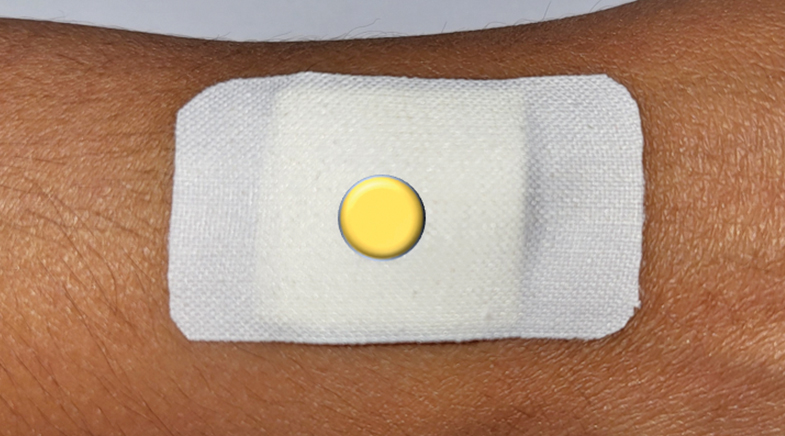
Tech-enabled bandages are helping clinicians treat wounds.
Clinicians often face a dilemma when treating a patient with a wound dressing. Should they open the dressing to rule out infection or leave it intact to hasten healing? Removing the dressing can cause an abrasion, which may lead to a secondary wound, points out materials chemist Ramakrishnan Ganesan, Professor at the Hyderabad campus of the Birla Institute of Technology and Science, Pilani (BITS Pilani). On the other hand, if a wound infection is left untreated, it can lead to issues such as tissue destruction, delayed healing, bone infection and, in severe cases, sepsis, amputation, or even death. In patients with burn wounds, pressure ulcers, and diabetes, where tissue healing is slow and the risk of infection is high, this choice is critical to recovery.
For over 150 years, cotton gauze has been the standard dressing material for wounds. "(But) commercially available gauzes are hydrophilic and cannot remove the excess exudate and also interfere with the gaseous exchange at the site and hence delay the healing," says Jayati Ray Dutta, a microbiologist and Professor at the institute in Hyderabad. This necessitates periodic changes of dressing. To address this problem, Ganesan and Dutta have developed a smart bandage to help clinicians and patients make informed choices. This dressing is antibiotic-free yet kills germs, helps drain wound exudate, does not stick, and changes colour to warn of an infection.
PAST ISSUES - Free to Read









The chemistry of life
In labs across the world, chemists are studying the origins of life.

Digital goes the easel
With emerging technologies embracing art, digital artists are tasting success - and raking it in.



Have a
story idea?
Tell us.
Do you have a recent research paper or an idea for a science/technology-themed article that you'd like to tell us about?
GET IN TOUCH