

New takes on aches
-
- from Shaastra :: vol 05 issue 05 :: May 2026

Modern preventive treatments for migraines show promise.
Everyone knows someone troubled by migraines. And that's no surprise, for migraine affects one in seven adults each year. Sitting under the office air-con vent, spending time out in the sun, getting dehydrated in the heat, or waking up from a disrupted night's sleep can all trigger a migraine.
Managing migraine is, thus, a big headache in itself. On most days, it feels like you're tiptoeing around the problem, trying to avoid this trigger or that. There are, of course, medications you could reach for when the migraine attacks, but their use is linked to side effects, and their overuse leads to more headaches. For some, a migraine can be back with a vengeance within days of medication.
With prevention, it's now possible to catch a migraine before it attacks. A range of preventive treatments — from devices you can strap to your arm or stick on your forehead to Botox injections — may help patients get their life back.
WORK IN PROGRESS
Migraines can be mild for some and debilitating for others. Of the billion-strong migraine patients worldwide, about 10% are the most affected and need migraine prevention. Compared to acute treatment, which provides relief when a migraine strikes, preventive treatment aims to reduce migraine frequency, severity and duration, and the number of acute treatments required. But prevention, researchers say, is underused. "It is estimated that only one-third of these (100 million) people needing migraine prevention actually get it," says Raffaele Ornello, Associate Professor of Neurology in the Department of Biotechnological and Applied Clinical Sciences, University of L'Aquila, Italy.
Emerging pathways such as PACAP might change how migraine is managed.
Until migraine-specific treatments came along, drugs meant for other conditions, such as depression and epilepsy, were repurposed to prevent migraines, leading to stigma and confusion among migraineurs. Now, Ornello says, the focus is on migraine-specific treatment.
New preventive treatments target a specific neuropeptide released during migraines: pituitary adenylate cyclase-activating polypeptide (PACAP). Drugs that block PACAP have shown promise in the prevention of migraine in early clinical trials. Emerging pathways, such as PACAP, may change how the neurological disorder is managed, especially for patients who do not benefit from available preventive therapies.
The results of the phase IIb trial of bocunebart (Lu AG09222) — a monoclonal antibody that binds to PACAP — were announced by the biopharmaceutical company Lundbeck earlier this year. Lundbeck said in a February statement that the company planned to use the results to design phase III clinical trials.
The phase IIb trial, which sought to find the dose and route of administration (subcutaneous or intravenous), studied bocunebart as a potential treatment in patients who had failed 1-4 preventive treatments in the past decade. The trial, called PROCEED, assessed the efficacy (desired outcome), tolerability and safety of bocunebart when administered once a month for three months. The intravenous (IV) part of the trial was conducted in about 430 patients from 14 countries. The multi-dose IV, the company claims, showed a statistically significant difference to placebo in the change in the number of migraine days per month over 12 weeks.
"These data underline Lundbeck's ambition to deliver the first PACAP targeting option in migraine prevention," Johan Luthman, Head of Research & Development at Lundbeck, said in the company statement (bit.ly/PROCEED-trial). The results are yet to be published in a peer-reviewed scientific journal.
The outcome of the previous, Lundbeck-funded phase IIa, proof-of-concept trial HOPE, which studied the efficacy and safety of the anti-PACAP monoclonal antibody in migraine patients, was published in The New England Journal of Medicine in 2024 (bit.ly/HOPE-trial). A single, 750-mg IV infusion reduced the frequency of migraines over the following four weeks. About 32% of patients who received the 750-mg dose showed at least a 50% decline in the number of monthly migraine days from the baseline. "There are encouraging data on the antagonists of PACAP as an alternative treatment," says Ornello. "PACAP is the next big thing in the pipeline."
PACAP belongs to a family of peptides that includes the neurotransmitter calcitonin gene-related peptide (CGRP). PACAP was identified as a potential alternative target after CGRP's role in migraine became known. In many ways, PACAP is similar to CGRP: both, for instance, are released during a migraine. But since their expression in the neuronal pathways implicated in migraine doesn't fully overlap, they offer distinct drug targets.
THE CGRP REVOLUTION
While the PACAP target is still being investigated as a potential prevention pathway, the CGRP pathway treatments show the most evidence for prevention so far (bit.ly/prevention-2026). "They are becoming more and more the mainstay for migraine treatment," Ornello says.
Peter Goadsby, Professor of Neurology at King's College London, U.K., points out that the CGRP pathway drugs are relatively new. "They are effective for many and extremely well-tolerated." Moreover, they can be used for both acute and preventive treatment.
Goadsby and colleagues have found that a CGRP pathway drug used for the acute treatment of migraine headaches can prevent headaches altogether when administered during 'prodrome'. Prodrome is the phase of migraine that precedes the headache phase by hours or days, during which patients experience brain fog (difficulty concentrating and thinking), fatigue, photophobia (light sensitivity) and phonophobia (sound sensitivity), among other symptoms.
The drug, called ubrogepant, not only prevents moderate to severe headaches over the next 48 hours, but it also relieves prodromal symptoms, such as photophobia and cognitive dysfunction, within a few hours of dosing. The results from the double-blind and placebo-controlled phase III trial PRODROME conducted in the U.S. were published in Nature Medicine in 2025 (bit.ly/PRODROME-trial).
Ubrogepant belongs to a novel class of migraine-specific drugs called gepants or 'small-molecule CGRP receptor antagonists'. These small molecules bind to the CGRP receptor, blocking the effects of the CGRP neurotransmitter involved in pain signalling.
Together with rimegepant and atogepant, ubrogepant is part of the second generation of gepants, which, unlike some first-generation gepants, are administered orally. Rimegepant and atogepant have already demonstrated migraine prevention in clinical trials. While rimegepant has been approved in India for acute treatment, with Pfizer launching it in late 2025, it is yet to be approved for preventive treatment.
Besides gepants, monoclonal antibodies that either block the CGRP receptor or mop up the CGRP itself are another class of CGRP pathway drugs. Only four monoclonal antibodies targeting CGRP or its receptor have been developed for migraine prevention so far. Two of these — erenumab and galcanezumab — have undergone trials in India.
BOTOX & OTHER DRUGS
Based on the frequency of headaches, migraine is classified into episodic and chronic. If there are up to 14 headache days per month, it is called episodic migraine; 15 or more headache days are classified as chronic.
If episodic migraine is not treated properly or diagnosed in time, it can progress to chronic migraine, says Debashish Chowdhury, Professor of Neurology at the Govind Ballabh Pant Institute of Postgraduate Medical Education and Research, New Delhi, who conducted a phase III clinical study — called EMPOwER — on the use of erenumab. This is a fully human monoclonal antibody that blocks the CGRP receptor.
The study was conducted in 900 patients with episodic migraine from across Asia and Latin America in 2018-2020. For three months, patients received monthly subcutaneous injections of erenumab (140 mg), erenumab (70 mg), or a placebo to assess the drug's efficacy and safety. The study showed a statistically significant reduction in monthly migraine days with erenumab versus placebo (bit.ly/empower-trial).
Using data on patient-reported outcomes from the same trial, Chowdhury and his colleagues have now assessed the impact of erenumab on daily work and non-work activities, physical functioning, and the overall quality of life of migraine patients. Treatment with erenumab resulted in greater improvement in patient outcomes than placebo, they report in Neurology Clinical Practice (bit.ly/empower-2026). The results, they say, add to the evidence of erenumab in preventing episodic migraine and the related disability.
For chronic migraines, OnabotulinumtoxinA (a neurotoxin produced by the Clostridium botulinum bacteria, otherwise known as Botox) has shown prevention and high tolerability. Injected intramuscularly in the neck, shoulder and head, it acts on the sensory nerves to block the release of neuropeptides and neurotransmitters CGRP, PACAP-38 (a form of PACAP) and substance P (bit.ly/advances-2026).
OnabotulinumtoxinA was the first migraine preventive that interfered with the CGRP pathway to be approved by the U.S. Food and Drug Administration, back in 2010. "It was only approved for chronic migraine, but… it was a big thing," says Ornello. "And it is still a big thing because it's the only local migraine treatment. Not even monoclonal antibodies or gepants are local." New ways to deliver the botulinum toxin are now being explored, such as injecting it along the sutures of the skull.
Once researchers learn more about the brain mechanisms underlying migraine, new targets could also be identified. "For now, we focus on CGRP and PACAP, and these are all extracerebral targets," says Ornello. "In the future, we will focus on intracerebral targets for migraine prevention."

Meanwhile, researchers are monitoring the long-term effects of the anti-CGRP treatments in real-world scenarios and combining them with non-pharmacological methods, such as neuromodulation, in clinical trials.
A ZAP OF ENERGY
Neuromodulation techniques use electrical or magnetic pulses to treat and prevent migraine. They take advantage of the body's own mechanism of dealing with pain. "If you have pain, there are mechanisms within the brain that try to reduce the pain signal — the so-called pain modulation systems," explains Goadsby.
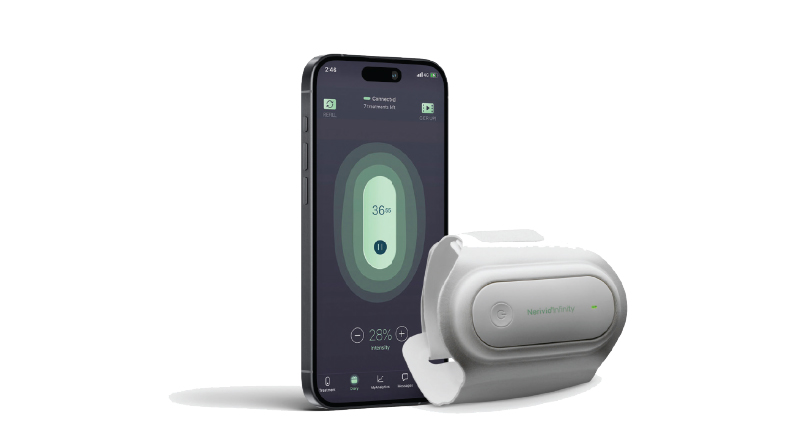
A neuromodulation device called the Nerivio REN wearable, for instance, exploits the conditioned pain modulation mechanism, which releases neurotransmitters (such as serotonin and norepinephrine) to relieve pain. In migraineurs, this natural pain mechanism can be dysfunctional. "We developed a device that can… externally, almost artificially, trigger this mechanism," says Alon Ironi, the Co-founder of Theranica, Israel, the developer of Nerivio.
MORE THAN A BAD HEADACHE
What is migraine?
- A neurological disorder that affects over one billion people worldwide.
- Characterised by throbbing headache on one or both sides of the head that can last 4-72 hours.
- Headache is accompanied, or preceded, by sensory sensitivities to light, sound, smell and touch.
- Occurs in three phases but with overlapping symptoms: prodrome, headache and postdrome.
- About 25% of patients have an additional phase called ‘aura' an hour before the headache; most experience a temporary visual disturbance from zig-zag lines and bright spots appearing in their field of vision.
- Triggered by sleep disruption, hormonal changes, stress, alcohol consumption and environmental factors.

Nerivio uses what's called remote electrical neuromodulation (REN), that is, the site of external stimulation is away from the site of migraine pain, the head. Ironi says that he tried different parts of the body, like the wrist which "was a disaster", before settling on the outer upper arm as the location for remote stimulation. The upper arm is within reach of the patient for self-administration at home, and electrical stimulation doesn't cause involuntary muscle contractions or pain at this site, he says.
Neuromodulation techniques use weak electrical or magnetic pulses to manage a migraine.
With backgrounds in electrical and electronics engineering, the company's co-founders developed a signal that targets receptors on nerve fibres under the skin of the arm. "Initially, we developed this signal for acute treatment," Ironi says. But to their surprise, the relief it provided from headaches and other symptoms lasted longer than expected (up to 48 hours), leading to the device being adapted for prevention. Preventive treatment with the device reduces the frequency and duration of migraine attacks, and acute treatment use, he adds. In India, where the prevalence of migraine is higher than the global average (bit.ly/prevalence-IN), Nerivio has been studied for its safety and effectiveness in acute treatment (bit.ly/REN-2025).
Non-invasive neuromodulation devices may be a lifesaver for migraineurs averse to pharmacological agents due to their side effects or injection route. While nothing is useful for everybody, says Goadsby, "neuromodulation approaches offer a reasonable opportunity for improvement and an absolute guarantee that you're not taking any drugs". But Chowdhury says they may not be effective on their own, but rather as an add-on.
Recently published results of a clinical trial show that neuromodulation works in combination with other treatments (bit.ly/TACTIC-trial). Ornello and colleagues conducted the trial combining anti-CGRP monoclonal antibodies with ‘transcranial direct current stimulation' — a neuromodulation technique used in clinical settings that delivers a weak current through the scalp via electrodes to stimulate cortical areas.
Patients who had had an unsatisfactory response to anti-CGRP monoclonal antibodies alone benefited from the combination. "It is the first step towards the widespread use of neuromodulation in combination with anti-CGRP treatment or in people who are not responsive to anti-CGRP treatments," Ornello says.








Sky full of stars
Tycho Brahe spotted celestial bodies before the advent of telescopes.

Grounded by gravity
An 'accidental physicist' on a fundamental force of nature.

Going the extra mile
Low-cost kits make healthcare accessible in rural areas.



Have a
story idea?
Tell us.
Do you have a recent research paper or an idea for a science/technology-themed article that you'd like to tell us about?
GET IN TOUCH