

The woods are lovely, dark — and speak
-
- from Shaastra :: vol 05 issue 07 :: Jul 2026
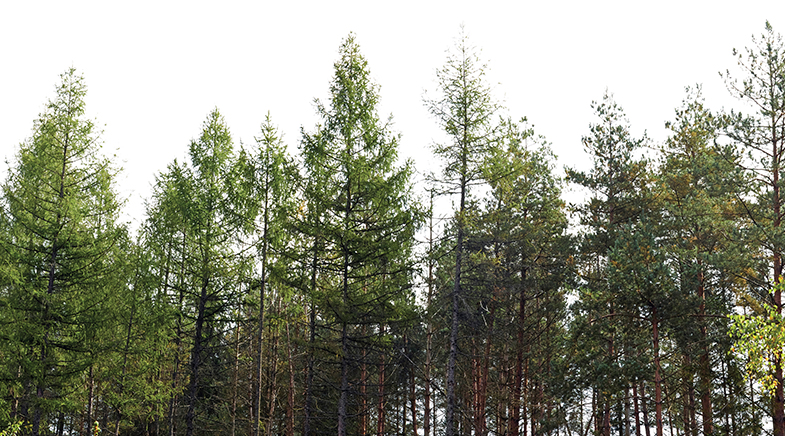
Understanding how plants communicate through diverse modes could transform agriculture, ecosystem conservation, and even space farming.
The forest was like a battlefield: thousands of trees lay on the ground, uprooted, broken and splintered. But when science filmmaker Alessandro Bernard and his team observed the destruction caused by Hurricane Vaia near Trento, Italy, in 2018, they saw more than just devastation. To them, it was a natural laboratory.
Bernard and his team were there to shoot a documentary on plant communication. The filmmaker from Turin had long been fascinated by plants and sought to understand if they had forms of intelligence. "We thought it was an opportunity to think about the best way to establish contact with those trees," says Bernard. The research led to The Forest Code, released in 2025.
For the project, Bernard consulted a slew of researchers, including Alessandro Chiolerio of the Istituto Italiano di Tecnologia in Genova, Italy. Chiolerio and his team were keen to record two-way communications between plants. They installed recorders that measured bioelectrical signals, tiny electrical impulses produced by the movement of ions such as calcium and potassium in plants. During one visit to the forest — the research and the filming carried on for several years — the researchers observed something extraordinary.
On October 25, 2022, Italy witnessed a solar eclipse. The researchers found that before and during the eclipse, there was an electrical surge across the forest, and the electrical signals between the plants were synchronised: different trees showed similar patterns of electrical activity recorded at the same time, or with a consistent time delay. "We were not ready for that," Bernard says. An analysis of the activity was published in a research paper in 2025 (bit.ly/eclipse-plants).
Researchers are exploring the diverse modes of plant communication: through sounds, fungal networks, or large-scale electrical synchronisation across forests.
The study found that the trees altered and synchronised their electrical activity hours before the eclipse. The researchers, however, are yet to understand how the trees sensed the impending solar event. Ruling out changes in light and temperature, they suggest the synchronisation was triggered by environmental cues related to the Sun-Moon-Earth orbital dynamics, such as gravity.
Rather than behaving like individual trees, the forest seemed to act as a coordinated system during the eclipse. To interpret their findings, researchers studied theories of collective behaviour and synchronisation, which describe how independent systems can spontaneously align their activity. The researchers also used quantum physics to explain how a large group of living cells becomes coordinated, making all the trees behave synchronously in response to an environmental change. "Most probably, the forest is a resonant system correlated in phase; it is a collective organism of entangled systems," Chiolerio says.
In a 2023 study, Chiolerio and colleagues found that the electrical activity of Norway's spruce trees was closely linked to thermal patterns across a forest, suggesting that forests may function as coordinated systems rather than collections of isolated trees. The findings suggest that bioelectrical signals may provide insights into collective forest responses to environmental change and ecosystem health.
Droughts, pathogen attacks, and pollution could prompt changes in electrical activity, chemical signalling, root behaviour, and fungal growth.
Researchers are now exploring the diverse modes of plant communication: through sounds, fungal networks, or large-scale electrical synchronisation across entire forests and chemical messengers. Together, these approaches reveal a hidden world of biological information exchange that challenges long-held assumptions about plant life. Understanding how plants communicate could transform agriculture, ecosystem conservation, and even space farming by revealing how plants sense, share information about water scarcity, nutrients, and other related issues, and collectively respond to environmental stress.
UNDERGROUND WEB
Andrew Adamatzky, head of the Unconventional Computing Laboratory at the University of the West of England Bristol (England), studies underground fungal networks that connect trees across a forest. Through the network, plants exchange information such as growth, nutrient transport, environmental stress, damage, hydration, chemical exposure, and interactions with neighbouring organisms. "I would interpret them as bioelectrical signatures of fungal activity rather than conscious messages. In forest ecosystems, such patterns may represent the internal dynamics of fungal networks as they integrate information from their environment and coordinate responses across large distances," says Adamatzky, who also co-authored the eclipse study.
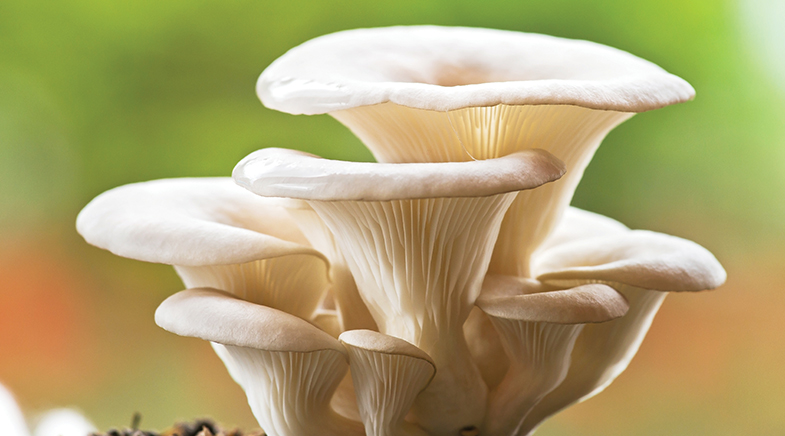
For a paper published in April 2026 (bit.ly/fungi-activity), Adamatzky and his colleagues recorded electrical activity in oyster mushroom mycelium for over two weeks. They found recurring electrical spikes travelling through the fungal network. The results suggest that fungal mycelia can transmit and integrate information across different parts of the network, much like a distributed communication system. Because underground fungal networks link many plants, the study suggests that fungi may help plants share information about their surroundings, such as stress or changes in environmental conditions.
Droughts, pathogen attacks, and pollution could prompt changes in electrical activity, chemical signalling, root behaviour, fungal growth, microbial communities, and resource flows. "The outcome of this computation may be stomatal closure, altered growth patterns, activation of defence mechanisms, redistribution of nutrients or changes in network connectivity. Unlike digital computers, forests do not separate hardware and software; the physical structure of the system is itself part of the computation," Adamatzky says.
In May 2026, researchers from Kampala International University in Uganda suggested the concept of an "Internet of Plants" (bit.ly/plant-internet). They argue that plants continuously sense, process, and exchange information through interconnected electrical, chemical, hydraulic, hormonal, and volatile signalling networks. By applying information theory and network science, they propose a framework to quantitatively study how plants communicate and coordinate.
SOUND SYSTEM
Plants also perceive and produce sound. In a study, a team from Tel Aviv University, Israel, reports acoustic interactions between plants and insects (bit.ly/plants-sound). Plants emit sounds when they are under stress, especially when dehydrated. The group shows that moths use these sounds when choosing where to lay their eggs. "This is the first evidence of any animal responding to sounds produced by a plant," says Yossi Yovel, a biologist and co-author of the study, which suggests that plant sounds may serve as an additional communication channel in ecological interactions. "The findings could have practical applications in agriculture," says Yovel. "Being able to detect sounds emitted by stressed plants could help farmers identify dehydration or disease at an early stage."
Anshu Rastogi and his team at the Poznań University of Life Sciences, Poland, dealt with the information contained in plant sounds. The group studied whether different levels of stress produced different acoustic patterns and whether plant species emitted distinct sound signatures (bit.ly/stress-sounds). "Different plant species appear to produce distinct acoustic signatures, raising questions about whether sound forms part of a larger plant communication network," Rastogi says. Acoustic signals may be among the earliest indicators of plant stress, appearing before visible symptoms emerge, adds Bedabrata Saha, co-author of the study and a postdoctoral researcher at Rastogi's lab.
Rastogi's group aims to develop field-deployable sensors capable of detecting plant sounds in real-world conditions. It envisions integrating acoustic monitoring with IoT (Internet of Things) systems, remote sensing, and other environmental data streams to create decision-support systems for agriculture. In ongoing research, the group has also found that the sound of happy plants is different from that of stressed plants. This strengthens the idea that sound is an integral component of plant physiology rather than simply an indicator of damage.
PRESSURE POWER
Sound may act as an additional communication channel alongside chemical, electrical, and hormonal signalling, helping plants gather information about their environment. Ritesh Ghosh, a plant biologist at the Indian Institute of Technology, Kharagpur, studied acoustic communications in plants, inspired by Jagadish Chandra Bose's collection of essays and stories, Abyakta. Ghosh, who found that plants respond to sound vibrations, altering their growth, development, gene activity, and stress responses, explores how plants produce and detect these signals.
Sound is a mechanical signal, as is pressure. Ghosh is studying the ancient Japanese farming ritual mugifumi, in which farmers walk on wheat and barley plants to encourage growth. Ghosh and his collaborators have investigated how cereal plants respond at the genetic level to repeated mechanical stimulation such as touch, bending, or pressure (bit.ly/touch-bend). They found that touch rapidly activated a set of genes involved in growth regulation, stress responses, and cell-wall remodelling, helping plants adjust their development to physical disturbances. Their research shows that plants retain a memory of that mechanical stress and pass it on to the next generation.
MACHINES TO THE FORE
Having grown up in a family of farmers in Patiala, Punjab, Harpreet Sareen's connection with plants came naturally. Trained as an electronics engineer, Sareen later evolved into an interactive design researcher, translating plants' sensory responses into technologies that enable intelligent machines to interact with the living world. The Director of the Synthetic Communication Lab at the Parsons School of Design, New York, explores how the unique abilities of plants can be combined with digital technologies. In one of his projects, plants act as communicators of environmental conditions. As they absorb water and pollutants, embedded sensors translate the plant's interaction with its surroundings into readable optical signals; that is, the plant "communicates" the presence of contaminants such as lead. "Plant language is going to be completely alien to us. So, we should learn to understand and respect that," Sareen says.
In another programme, robots send signals to a plant through light, exploiting the plant's natural phototropic response. The plant "responds" by changing its growth direction, creating a feedback loop between the living organism and the machine. The projects explore how technology can help humans better perceive and interact with the hidden communications of the plant world.
CHEMICAL MESSENGERS
Plant communication begins within the plant itself through a sophisticated network of signals, with calcium playing a central role. "What biology has worked out is that it can use those little blips of calcium inside cells as signals," says botanist Simon Gilroy of the University of Wisconsin-Madison. Tiny changes in calcium levels inside cells act like biological messages, allowing information about touch, wounding, drought, or insect attack to travel rapidly through the plant. Modern imaging techniques enable researchers to watch these calcium signals move as waves through leaves and stems almost immediately after a plant is disturbed.
According to Gilroy, these discoveries revealed that plants are far more dynamic than they appear, constantly monitoring their surroundings and coordinating responses across their bodies. "Plants are sort of integrated beings just like we are," he says. Calcium signalling is one of the key mechanisms enabling this hidden internal communication system. Gilroy's group discovered that calcium acts as an internal signalling molecule that helps plants detect low-oxygen stress caused by flooding (bit.ly/flooding-plant). Because plants grown in space experience flood-like conditions around their roots, understanding these calcium-based communication pathways could help scientists develop crops better adapted for future space missions and controlled-environment farming on Earth.
The team has also shown (bit.ly/leaf-signal) that injured plants can send warning signals. When a leaf is damaged, it releases glutamate, an amino acid that acts as a distress signal. This triggers a wave of calcium signals that travels through the plant to distant leaves. These leaves activate defence genes and produce protective hormones, helping them prepare for any potential attack. The study reveals that glutamate functions as a long-distance warning signal, enabling rapid communication throughout the plant. The study provides strong evidence that plants possess a rapid, whole-body communication system.
Researchers know plants are aware of their surroundings and respond to environmental conditions. The question, Gilroy says, is how such awareness is possible without brain-like activity.
LESSONS TO LEARN
Adamatzky believes that in an increasingly uncertain world, nature has important lessons to offer. "Plants teach us that cooperation does not require central control, that intelligence can emerge collectively, and that long-term robustness comes from diversity, redundancy, and mutual support," he says.
Bernard's documentary sought to capture scientists attempting to listen to trees. Years later, what stays with him is not a definitive answer about plant communication, but the experience itself. "What began as a scientific experiment ultimately became a human experience."
Yovel predicts that the field will continue to grow rapidly over the next five years. While researchers are now studying plant behaviour and decision-making using sophisticated technological tools, many fundamental questions remain unanswered, including whether plants possess forms of memory, and how such memory might operate. These basic questions are likely to drive much of the research in the near future.
Also read









Start-ups born on campuses
Start-ups are becoming an integral part of Indian universities, transforming faculty from researchers to solution providers for industry.

Computers come alive
Fungal bodies may help make analogue computers one day.

Of bonds, waves and frequencies
Entrepreneur-scientists are working on detecting cancer tissues, precision labelling of proteins and ultrasonic-guided wave technology.



Have a
story idea?
Tell us.
Do you have a recent research paper or an idea for a science/technology-themed article that you'd like to tell us about?
GET IN TOUCH