

Helping hand
-
- from Shaastra :: vol 05 issue 04 :: Apr 2026

DIAGOPREUTIC
Founders: Roshan Naik and Swaroopa Naik
Year: 2022
Big idea: Diagnostic company that identifies pathogens and their antibiotic susceptibility
Swaroopa Naik was troubled by a urinary tract infection (UTI) when she was pregnant, her husband Roshan recalls. So, when the Naiks participated in a healthcare challenge, they decided to find a way to speed up the diagnosis process for UTI. Most existing diagnostic methods take two days to identify the pathogen and the antibiotic required to treat the infection. The Naiks' Goa-based start-up Diagopreutic promises to do so within six hours.
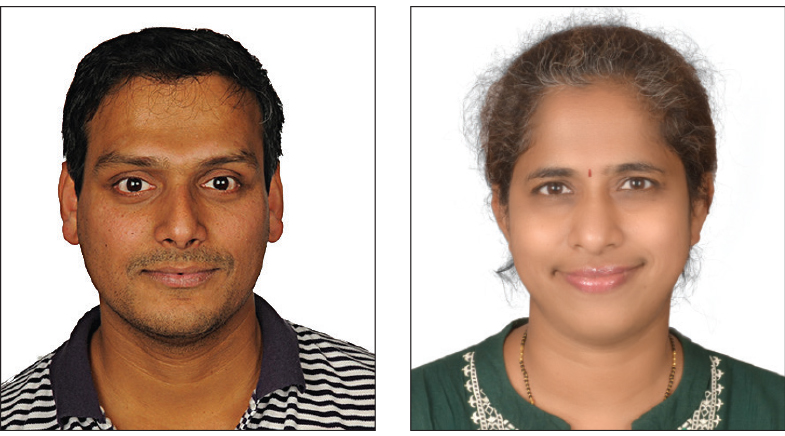
Having done their Master's in Marine Biotechnology from Goa University, the Naiks were keen to focus on anti-microbial resistance. Roshan, who has a PhD from the Max Planck Institute in Germany, worked in Germany, France, and Singapore. After returning to India, they decided to start their own venture.
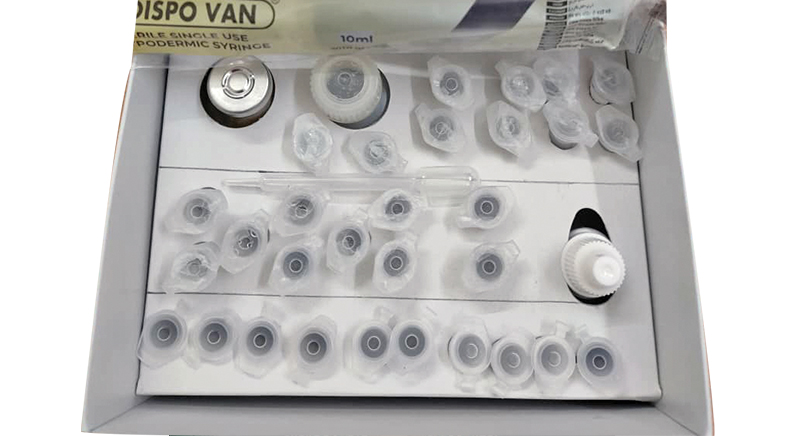
Normally, urine samples are collected from patients with suspected UTI for culture. It takes two to three days for the results, which enable doctors to prescribe the right antibiotic. Diagopreutic's diagnostic kit, says Roshan, is simpler and swifter. "It is an enzyme-based diagnosis. We are using bacterial enzymatic activity," he says.
Swaroopa explains that the existing method uses a series of different media, which are the chemical reagents that feed the bacteria. The culture takes a day. Then, antibiotics are tested against the pathogen, and their efficacy is marked. That typically takes another 24 hours. Diagopreutic, on the other hand, has a single media formulation that simultaneously tests for multiple organisms and their antibiotic sensitivities. Roshan says their idea was to reduce the number of steps and ensure faster bacterial growth.
The company uses a liquid-based medium instead of the semi-solid one currently in use. Chromogenic media make colour-based identification easy. "We cut down on the number of steps using different iterations, how the bacteria will grow, and where we can reduce the time. That is what our patent is about," says Roshan. According to Swaroopa, the same diagnostic method can be used for bovine mastitis and for Vibrio infections in aquaculture. The company has received regulatory approval for the product. It has begun selling the product and is initially targeting hospitals and diagnostic facilities in Tier-2 and Tier-3 cities.
SCIMPLIFY
Founders: Sachin Santhosh, Salil Srivastava and Dheeraj Dhingra
Year: 2023
Big idea: Building a B2B platform for speciality chemicals
Their backgrounds differed, but Sachin Santhosh, Salil Srivastava, and Dheeraj Dhingra had a common goal. They wanted to build a Business-to-Business platform that would connect customers of speciality chemicals — used for specific applications — with manufacturers in India that had idle capacity. The three had met through mutual contacts and realised that they had complementary skills. Santhosh has a Master's in Metallurgical Engineering from the Indian Institute of Technology Madras; Srivastava has a Master of Business Administration (MBA) degree from the National Institute of Agricultural Extension Management, Hyderabad; and Dhingra has an MBA from the Indian Institute of Management, Bengaluru. Santhosh had worked with polymers, textiles and packaging, and Srivastava had a background in manufacturing and operations. Dhingra had experience in global operations. "Given our background in the manufacturing sector and having seen factories in India, we knew these factories had excess capacity, while they had this ambition to become globally known and supply to a larger base," says Santhosh.
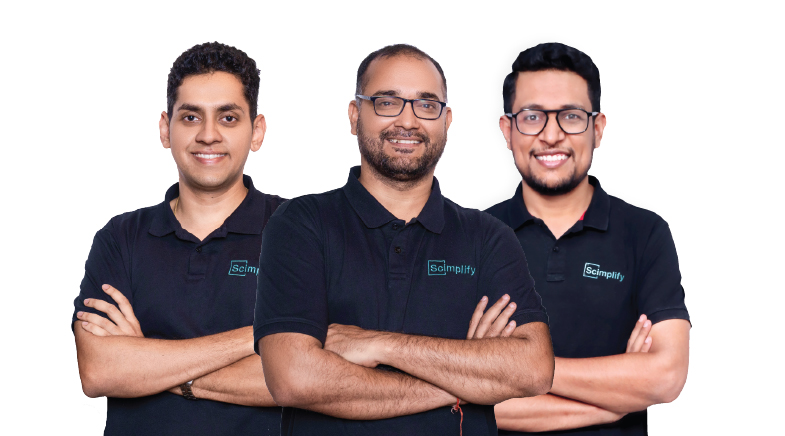
Having worked in the U.S., he realised that pharmaceutical and material sciences companies were looking to develop and manufacture products in India. The problem was that the aspirations of Indian manufacturers did not align with the buying opportunities of global companies. To address this, the three set up Scimplify. The 'matchmaking' was complex: the speciality chemicals, chemistries, and specific equipment needed were diverse. They knew that technology would help solve this problem. Scimplify has a market research and intelligence team that monitors demand for speciality chemicals worldwide, as well as scientists who help with process and technology innovation. It does not work on new chemicals, but on process innovation. "We decided to invest upfront on the scientific side. We have 50 scientists who work with us. These scientists develop processes and talk to customers and to the manufacturers about them. The missing link becomes a scientific or R&D expertise that we have been able to build," explains Santhosh.
According to him, Scimplify has more than 500 manufacturers in India on its platform and about 400 customers. For the customers, Scimplify may even identify a new product, if needed. It identifies the manufacturer, develops the product, ships a sample to the prospective buyer, and explains the technology. Once they are aligned with the customer's intention, Scimplify shows them its software for process development, how it uses artificial intelligence to accelerate the process, and its cloud-based manufacturing facilities. It currently works in four segments — life sciences (pharmaceuticals and nutraceuticals), agrochemicals, flavours and fragrances, and industrial chemicals.
SPARSHMIND INNOVATIONS
Founders: Harikrishnan M., Hrushikesh Wadekar and Abhijith Unni
Year: 2023
Big idea: Using virtual reality for providing therapy to stroke patients
A stroke often incapacitates a patient, whereas it doesn't have to. Harikrishnan M. felt so strongly about this that he founded a venture with two friends to help patients recover from a stroke. Harikrishnan had opted for neurology when he joined the All India Institute of Medical Sciences (AIIMS), Delhi, on a fellowship, after studying Mechanical Engineering at the Saintgits College of Engineering, Kerala, and Product Design and Manufacturing at the Indian Institute of Science, Bengaluru. In 2022, he set up SparshMind Innovations with two other Fellows from the AIIMS School of International Biodesign: Hrushikesh Wadekar, a mechanical engineer from the Vellore Institute of Technology Pune, and Abhijith Unni, an MTech in Biomedical and Medical Engineering from Amrita Vishwa Vidyapeetham.
PHOTO: BY SPECIAL ARRANGEMENT

Founders (from left) Harikrishnan M., Hrushikesh Wadekar and Abhijith Unni of SparshMind Innovations.
The objective of the AIIMS programme was to identify a problem and develop a product for India around it. "We found that stroke as a medical condition is one of the largest disability conditions," Harikrishnan says. The three learned about functional therapy, which addresses not just the symptoms but the root causes of the problem. They looked at various technologies for functional therapy and focused on virtual reality (VR). Each patient's requirement is unique. Customisation is possible with VR, and the required activities can be built into therapy using a VR headset. For this, they got a grant from Facebook Meta.
Stroke rehabilitation requires movement and speech therapy. They decided to start building their application using highly advanced VR headsets used in the gaming industry and available off the shelf. Apart from the headset, SparshMind's product includes software. They integrate the software and a companion app on a tablet to help the therapist. The control system is downloaded onto the tablet.

The company sells the complete package — the VR headset, a tablet, and the software interface — to its customers, mainly rehabilitation centres and large hospitals with therapy clinics. The software assesses the patient on 13 parameters covering range, speed, coordination, and balance. The product has more than 50 activities in seven categories, including repetitive task training for joints; daily living skills, customised to each patient; balance; and lower-body-related activities. There are specialised modules for different conditions.
He cites the example of a patient with an immobile arm. Using the VR headset, the normal arm will move and place itself on the other arm, giving the impression that the affected arm is moving. This triggers something called a mirror neuron network, says Harikrishnan. It gives the initial movement in the immobile hand. "We are using different parts of the brain to encourage them to move that hand first. Once the initial movement in the affected arm is achieved, we have other modules that help the patients progress," he says. Clinical studies have shown results, he says, and the venture has started selling its product in a limited way.









The worrying sound of silence
Silence is not golden when marine life is at stake: it sends out warnings of shrinking biodiversity, and of climate change.

Keys to a puzzle
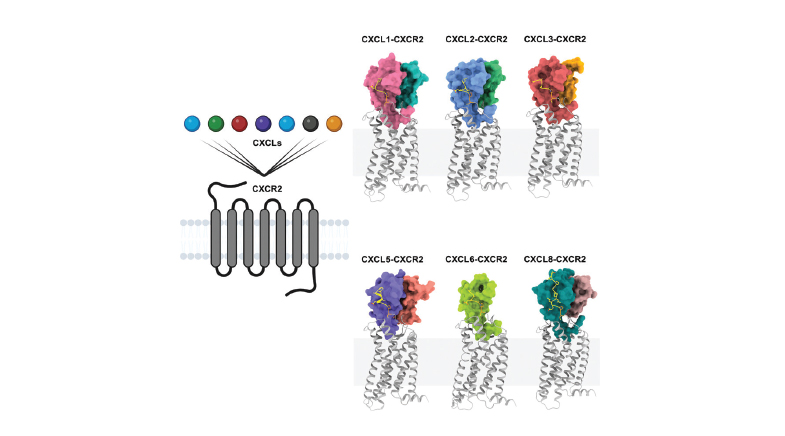
A 3D map of a 'promiscuous' protein opens a pathway to new drugs.



Have a
story idea?
Tell us.
Do you have a recent research paper or an idea for a science/technology-themed article that you'd like to tell us about?
GET IN TOUCH