

Seeds of hope
-
- from Shaastra :: vol 05 issue 03 :: Mar 2026
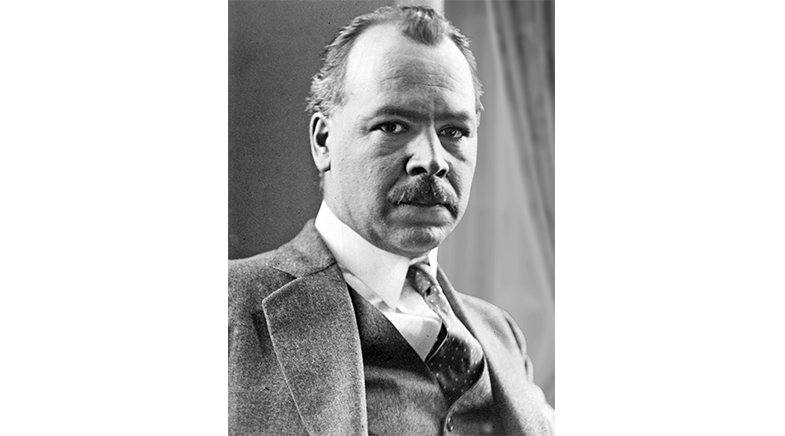
Soviet agronomist who endured persecution set up the world's oldest seed bank.
When a black sedan carrying agents of the NKVD (a precursor to Russia's KGB) pulled up next to Nikolai Vavilov, he wasn't entirely surprised. It was August 6, 1940. He was on a botanical expedition to Chernivtsi, Ukraine, collecting wild plant samples to take back to Leningrad (now St. Petersburg). Vavilov was whisked off to Moscow (bit.ly/Scientist-Vanishes), imprisoned on trumped-up charges, tortured and interrogated, and sentenced to death by firing squad (later commuted to 20 years of hard labour). All because he had staunchly stuck to his scientific principles in defiance of the dictator, Joseph Stalin.
Before his arrest, Vavilov had been on a quest to end famine in Russia. Growing up, he had heard stories of thousands dying from starvation during the 1890s, which sharpened his resolve. After studying at the Petrovskaya Academy of Agriculture and Forestry in Moscow, he briefly worked with biologist William Bateson — who coined the term "genetics" — at the University of Cambridge. Drawing on the principles of Mendelian genetics — the idea that traits are inherited — Vavilov was keen on breeding hardy crops.
WHIRLWIND ADVENTURES
Vavilov's expeditions were often dangerous. He went to Persia to trace the plant source of a mystery illness among Russian soldiers. In Afghanistan, he slipped between two railway cars and was left hanging by his elbows (bit.ly/Scientist-Mission). He crossed treacherous mountain passes and war zones. Along with seeds, he also picked up bits of local dialects by conversing with farmers everywhere.
Vavilov proposed key theories on plant resistance and genetic diversity. He suggested, for example, that if a plant species showed a specific trait (such as wheat seeds being either rough or smooth), a close relative would show similar variation (for instance, barley seeds also being either rough or smooth). He also theorised that a cultivated plant's "centre of origin" lay in areas where its wild relatives showed greatest genetic diversity. He was able to identify several such centres around the world.
But what Vavilov became most famous for was his Indiana Jones-style expeditions to more than 60 countries to collect thousands of seed and crop samples with which he began building the world's first seed bank — the Institute of Plant Industry in Leningrad.
Despite becoming popular among peers, he fell out of favour with Stalin. Stalin was heavily influenced by a silver-tongued agronomist, Trofim Lysenko, who criticised Vavilov's ideas as Westernised and pushed his own pseudoscientific solutions. Lysenko argued that plants could acquire traits from their environment and suggested — based on falsified data — that crops exposed to cold could pass on resistance to their offspring.
Vavilov, who initially supported Lysenko, soon saw through his falsehood and began to criticise the latter's methods openly. In retaliation, Lysenko mounted a smear campaign against Vavilov. When Stalin's dictatorial policies led to widespread famine, Vavilov was coerced into finding a quick solution, and when he failed, he was scapegoated and imprisoned.
SUPREME SACRIFICE
When the Nazis besieged Leningrad in 1941 — Vavilov was in prison by then — his colleagues at the Institute of Plant Industry hid in the basement with his seed and crop collection. As the siege carried on, even as their food ran out, they refused to eat from the collection. When the siege ended in 1944, at least nine people are thought to have died of starvation despite being surrounded by rice, beans, and potatoes (bit.ly/Seed-Tragedy). All the samples survived.

In prison, Vavilov was mercilessly tortured — at times, he had to crawl across his cell floor because his legs were heavily swollen (bit.ly/Soviet-Scientist). Fed on a diet of frozen cabbage and mouldy flour, he ironically starved to death in two years, and his body was dumped in a mass grave. It was only decades later that his legacy was revived in Russia. The Institute of Plant Industry, now named after him, still houses thousands of seeds that he had collected in his desire to end world hunger.
Ranjini Raghunath is a Bengaluru-based science writer and editor.









Medtech mall
'Make in India' is the mantra of an ambitious manufacturing and innovation cluster.

Mind it!
An atlas of 6.3 million brain cells reveals secret rhythms and common disease pathways.
The whole new yarn about sustainable fashion
Scientists and start-ups are going the whole nine yards to fashion sustainable fabrics using alternative raw materials and new technologies.



Have a
story idea?
Tell us.
Do you have a recent research paper or an idea for a science/technology-themed article that you'd like to tell us about?
GET IN TOUCH