

Illuminating choice
-
- from Shaastra :: vol 05 issue 11 :: Nov 2026
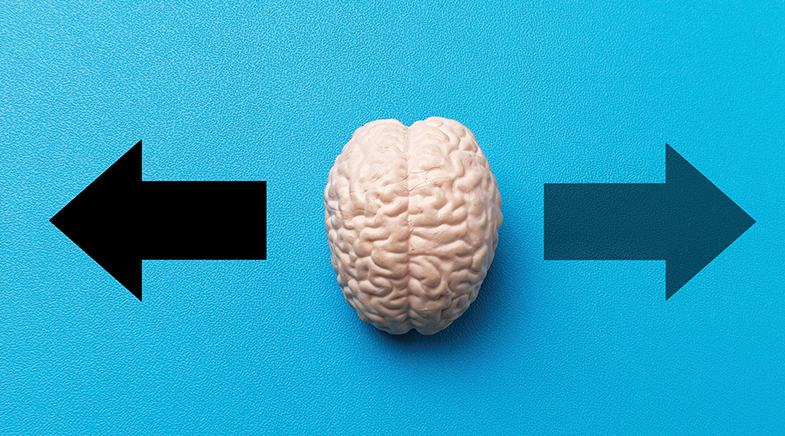
The discoveries that underlie this year’s Nobel Prize in Medicine have implications for the behavioural sciences.

Avinash Tripathi is an economics faculty member at the Centre for the Study of the Indian Economy, Bengaluru. Views are personal.
The citation for the 2026 Nobel Prize in Physiology or Medicine, awarded to Karl Deisseroth, Peter Hegemann, and Georg Nagel, recognised their discoveries "concerning light-gated ion channels and optogenetics". What is striking about this year's prize is that beyond its fundamental and applied relevance to medical science, the discoveries have implications for the behavioural sciences in general, including economics. They offer new ways of investigating how learning and choice arise from the workings of the brain.
The starting point for these discoveries was curiosity rather than any immediate application. Hegemann wanted to understand the light-sensitive movement of the single-celled green alga Chlamydomonas. Work by Hegemann, Nagel, and their collaborators identified proteins that open channels for charged ions in response to light. Expressing these proteins in other cells made it possible to control electrical activity with light. An investigation into how an alga responds to its surroundings thus provided a tool to study the nervous system.
What connected this somewhat technical discovery to broader questions of behaviour was Deisseroth and his colleagues' introduction of the gene encoding these proteins into neurons. This ingenious approach allowed researchers to manipulate nerve signals using pulses of blue light, helping establish optogenetics. The combination of genetic targeting and optical control made it possible to investigate the contribution of particular groups of nerve cells to behaviour with remarkable precision.
Optogenetics greatly strengthened neuroscience's ability to move from observation to causal explanation. Observing that neurons become active during a particular behaviour does not prove that they contribute to it, however. Selectively activating or inhibiting them provides a more direct test. Even though neuroscientists used crude methods to study neural patterns earlier, the distinctive contribution of optogenetics was to make interventions more precisely targeted and timed.
PAST ISSUES - Free to Read





Growing green
India's compelling need is to grow its economy and provide energy security while also moving away from fossil fuels.

Secret lives of leaves
Life on Earth is sustained by leaves' ability to capture sunlight and convert it into biologically usable energy.




Have a
story idea?
Tell us.
Do you have a recent research paper or an idea for a science/technology-themed article that you'd like to tell us about?
GET IN TOUCH