

Fun with numbers
-
- from Shaastra :: vol 05 issue 05 :: May 2026
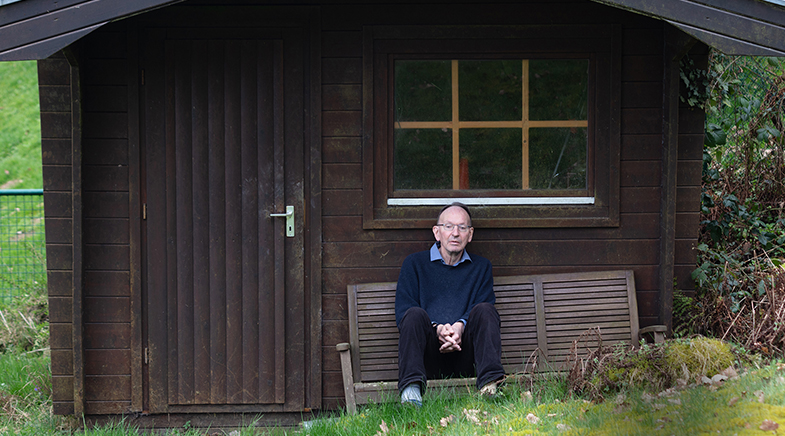
The Abel Prize 2026 winner Gerd Faltings on mathematics, AI, and the importance of competition.
There is no cinema-like epiphany in mathematics: "no moment… where the skies clear up and the music starts to play…", says German mathematician Gerd Faltings, former Director of the Bonn-based Max Planck Institute for Mathematics. In an interview to Shaastra, Faltings — who was awarded the Abel Prize by The Norwegian Academy of Science and Letters in March 2026 — speaks about his mathematical journey, and its many influences and implications.
The Academy said the Abel Prize had been awarded to Faltings, 71, "for introducing powerful methods in arithmetic geometry and resolving longstanding diophantine conjectures of Mordell and Lang". Number theory and geometry are two pillars of mathematics. Number theory deals mainly with natural numbers, which are whole numbers without the zero, and rational numbers, which are numbers that can be expressed as a ratio of natural numbers. These numbers can satisfy equations, when thought of as variables, and these equations in many variables can be imagined as flowing continuously as curves through space, offering a geometric approach to studying them. When the variables in the equations are raised to cubic and higher powers, these equations result in elliptic curves that form loops, or handles. In geometry, the number of handles is called genus.
More than 100 years ago, Louis Mordell had made a conjecture about the solution of such curves, of genus 2. Faltings proved this conjecture when he was 29, and was awarded the Fields Medal for it three years later, in 1986. Much later, he moved away from arithmetic geometry to work on the connections between moduli spaces and mathematical physics.
A major success of his work is that it has opened several areas in mathematics. "Faltings's theorem was the first big step towards philosophically breaking open the gateway to proving (17th-century amateur mathematician) Fermat's Last Theorem," says Vikraman Balaji, a senior algebraic geometer from the Chennai Mathematical Institute.
In the 1990s, Faltings got interested in the work of mathematicians M.S. Narasimhan and C.S. Seshadri, and wrote a paper in a related field. Before publication, he sent it to Seshadri, founder of the Chennai Mathematical Institute, who organised a seminar on the paper with his then students, including Balaji and P.A. Vishwanath. "We tried to understand what he had done," says Balaji, "And something nice emerged as a paper by Seshadri, with an appendix by Madhav Nori, which gave insight into Faltings's paper."
The Abel Prize — which carries a citation and an award of 7.5 million Norwegian kroner — is the most prestigious award in mathematics and is named after Norwegian mathematician Niels Henrik Abel. Excerpts from a telephonic interview with Faltings:
When you are doing mathematics, how do ideas click into place? Is it during a period of intense activity or the lull that comes later?
Well, the problem is (that) if you have a new idea, you first think that this works. But you have to check that it is correct and that you haven't overlooked something... and this happens quite often. So you cannot celebrate right away; you have to check things. And most of the time, with ideas, you find a problem at the end.
"The United States and Russia have become much more important because of the mathematics they have developed."
This was also true for the Mordell proof. I can say I had the final idea… but I had to check it first, and that took some time. There is no moment like (in) the movies, where the skies clear up and the music starts to play and so on.
You were only 32 when you were awarded the Fields Medal. What enabled you to achieve this at such a young age?
Well, I've been successful, but I don't know precisely why. One thing was that there was a friend of my advisor, (Lucien) Szpiro. He lived in Paris and had some ideas about the Mordell Conjecture, and he told me that, and I thought: 'Well, I may not prove it, but something interesting may come out of it'. When you are a young guy, you have to find topics where you want to work. So I did this, and I think maybe I was fortunate that the people in Paris didn't take him too seriously! I used his ideas, but some things were missing, and in retrospect, the method I used replaced the so-called Kodaira-Spencer Class by Galois representation.
In David Hilbert's time, Germany was a formidable force in mathematics. How do you feel about it now?
Well, one thing, of course, is that the United States and Russia have become much more important because of the mathematics they have developed. The other thing is that there was Hitler, and he threw out many good mathematicians, and this was a big loss for Germany. But we still had some mathematicians. We have my colleague, (Peter) Scholze, who is very good, and I think he will be… an Abel Prize winner.
"In my opinion, AI is like small talk. It sounds like a real person speaking, and is taken by probability."
But one thing in Germany is that we have no more centres. In France, there are many ambitious young people, and they compete. For good people, it is better to have competition. Germany is very decentralised — we have many good universities, but no exceptional universities like Harvard or Cambridge.
You have collaborated occasionally, but largely work alone. Can you communicate easily with others when you come across something significant?
As I said, I first want to check it (the result). I don't want to tell people I have it, and then, two days later, say, 'No, take everything back'. So then I usually look at the basic ideas and try to explain why it works… Then I tell other people. In some sense, I don't like to talk about things which I haven't thought out myself.
Collaboration seems to be a prevalent practice today…
Well, if they get results, it is fine!
On another track, did you engage with the works of (German-born French mathematician) Alexander Grothendieck? Is there a trace of Grothendieck's mathematics in your own?
When I started mathematics, I read Grothendieck's work. And I found it very inspiring, and so I had a great admiration for him. But at the time, Grothendieck was also leaving mathematics. I have never contacted Grothendieck. After I proved Mordell, he heard about it, and he wrote me a letter about certain conjectures of his. My reply was that they were very interesting, but I saw no way to prove them, and then he was, I think, disappointed, and we had no further contact. The letter — I was liberal about it. I sent it around to people who wanted to know. And now it has been published... But Grothendieck's expectations are still unfulfilled. Some things are true, but it is very far from what he envisioned.
Many eminent mathematicians, such as Terence Tao, are working with artificial intelligence (AI) to improve mathematics. What is your opinion on this?
I'm an old guy, and I'm not using AI. There is an impression that we all will be out of work because of AI. But I hope not. So far, AI seems to be mainly about language. They say it's taught to many to try to find out the most probable next word and then use it. In my opinion, it's like small talk. It sounds like a real person speaking, and is sort of taken by probability. But so far, they (AI) learn from humans; they read all sorts of books and learn. And maybe to be really creative, it needs to change, and they not only learn what humans have done but also find new ways to get good ideas. This may or may not happen.
At Princeton, your work changed from arithmetic geometry to mathematical physics. How did this happen?
In Princeton, (American theoretical physicist) Ed Witten was giving lectures in physics. I didn't really understand him, but I understood that physics was not mathematics. But (he said) some things about vector bundles and so on, and I tried to give mathematical proofs for these things — and this was very useful.
A message for young student mathematicians?
I often tell young people who ask me which area of mathematics they should do… You should not do something you think will make you famous; you should do something you like. It will then be more fun to work, and you may still get good results.









Harnessing the herb
Scientists have known the medicinal properties of ashwagandha for several decades. Now the evidence is getting stronger.


Have a
story idea?
Tell us.
Do you have a recent research paper or an idea for a science/technology-themed article that you'd like to tell us about?
GET IN TOUCH