

Good plastic, bad plastic
-
- from Shaastra :: vol 05 issue 02 :: Feb 2026
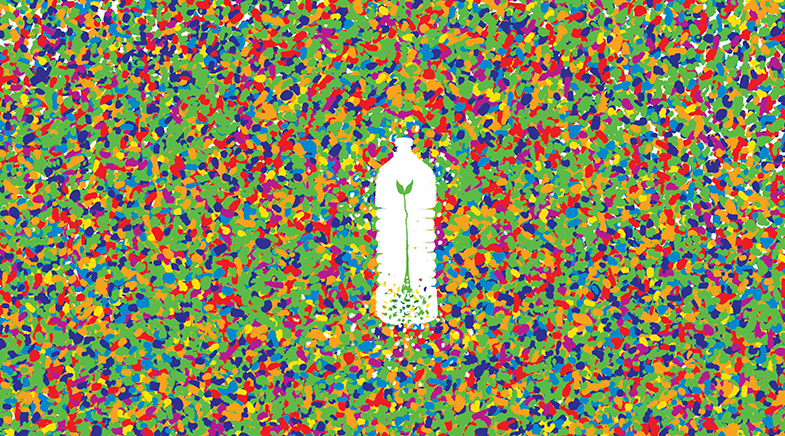
Scientists are developing a range of solutions to address pollution from microplastics.
A key event happened on Earth roughly 450 million years ago, one that would shape its future in a completely new direction. Until then, plants were small and weak structures that would buckle under their own weight if they grew beyond a certain height. Over time, some plants strung together a set of molecules, which had evolved in bacteria as a sunscreen of sorts, to make the polymer lignin. This molecule didn't have a uniform structure; it was put together in different ways from different kinds of molecules. But it was strong. Once a plant had lignin, it had a skeleton that could stand up to great heights. Plants grew tall and strong and dominated the land, but the planet paid a price: no microorganism could degrade the new polymer.
Over the next 100 million years, deadwood accumulated across the land, moving underground slowly to become coal, till white rot fungi produced an enzyme to degrade lignin. The new polymer had upset the Earth's carbon cycle, but the cycle resumed in full force again after fungi made the enzymes. Deposits of lignin disappeared from the Earth's surface. Now, life produces polymers that are degraded constantly, with no natural polymers accumulating anywhere. Yuwei Gu, an Assistant Professor in the Department of Chemistry and Chemical Biology at Rutgers University, was reminded of this fact when he saw plastic bottles on a hiking trail with leaves all around them. "Both of them are polymers. Why would this plastic stay there for many, many years while the leaves come and go?" When he was back in his lab, Gu began a line of research with one aim: develop plastics that would degrade once their use was over. The trick was to imitate nature's strategies of making polymers that can degrade. Natural polymers have molecular groups embedded in them; these make it easier for bacteria to degrade the material when the time is right. Similarly, in his lab, Gu developed a method to control the timing of polymer degradation by positioning and orienting specific chemical groups within the molecular structure. Based on the precise geometry of the chemical groups, he developed polymers that are strong when in use but can be programmed to degrade in weeks, months or years.
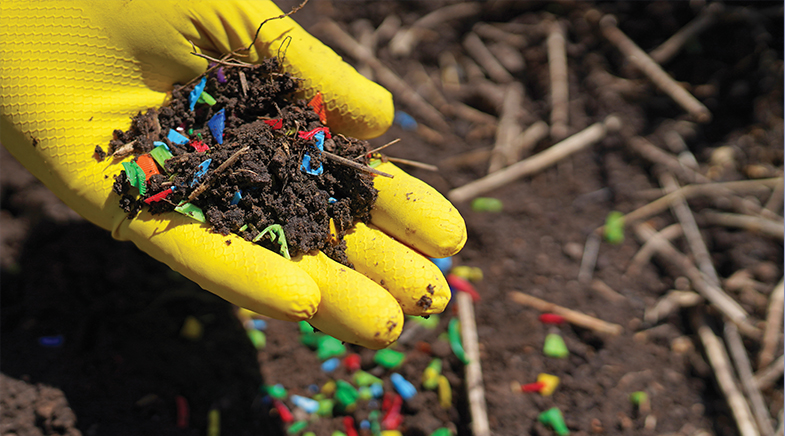
Initially, he focused on a special type of thermosetting polymer called polydicyclopentadiene (PDCPD), which has strong mechanical properties and is used in making car bumpers and agricultural appliances. To help induce self-deconstruction, the Rutgers University team carefully arranged parts of the chemical structure of the plastic in such a way that the bonds were in just the right positions to begin breaking apart when triggered. "It is like folding a piece of paper so that it tears easily along the crease," says Gu.
The technique is more than just about making one kind of plastic. It can be used to make recycling easier, because the monomers – units that are repeated to make the polymer – that are available after the deconstruction can be put back to make new material. In the current version, degradation occurs in the presence of ultraviolet light, which is available in plenty in sunlight. The byproducts of this degradation, the monomers that add up to make the polymer, are not benign. For Gu's method to work well, polymer manufacturers have to create a recycling chain to break down plastic and make it back again. "I am hoping that it is going to happen in the future," says Gu.
Gu's work has the potential to generate more new ideas and lines of research to address the plastics problem. When he went for his hike and was inspired to work on plastics, the world was waking up to a new problem: micro- and nanoplastics, tiny bits of plastic that may get into the food chain, into the bloodstream, and into living tissues. Microplastics were long considered a threat, but scientific evidence and public awareness had not been established well enough to consider acknowledging them as a serious global threat. While Gu was developing his new plastic, there was mounting evidence of the harm caused by microplastics, but his work addressed only a part of the problem. Other chemists are developing different strategies.
CHEMICAL TWINS
There are many varieties of plastics: most of them are made from coal or petroleum, but two kinds account for the largest share: polyethylene (PE) and polypropylene (PP). Together, they have a 50% share in global plastics production, according to Future Market Insights, an American market research firm. They are collectively called polyolefins, and their total production exceeds 200 million tonnes annually. Their dominance arises from an exceptional combination of low cost, chemical resistance, processability, and attractive thermal and mechanical properties. These two kinds of plastics have applications ranging from packaging and consumer goods to infrastructure and healthcare. Industry observers estimate that polyolefins account for 60% of the global plastic waste stream. Even though these materials are mechanically robust and chemically inert, they readily fragment in the environment due to UV radiation and mechanical abrasion, producing microscopic toxic waste.
While on a hike, Gu came across plastic bottles, with leaves around them. That started an exploration to develop plastics that would degrade.
Polyolefins are not chemically recyclable because their inert carbon-carbon backbones are hard to break. For some time, scientists have been attempting to improve the recyclability of such materials. One way to do so is to design and develop new materials that retain the key performance attributes of commercial polyolefins – such as melting temperature, crystallinity, toughness and mechanical robustness – while incorporating molecular bonds that could be cleaved and reconstituted. Such polyolefin-like materials will enable chemical recycling and depolymerisation. The biggest advantage of polyolefin-like materials is that they offer a pathway toward circularity without requiring a wholesale redesign of existing polymer processing and application paradigms. "Such materials enable closed-loop recycling strategies that lower plastic leakage into the environment," says Xin Liu, a postdoctoral researcher with Garret M. Miyake, a polymer chemist at Colorado State University. "While they are not a standalone solution to the microplastics crisis, recyclable polyolefin-like materials represent a systems-level intervention."
Miyake's research group is among the increasing number of chemists trying to find solutions to the plastics problem. One of the group's aims is to help address one of the biggest problems in plastic recycling: finding alternatives to hot-melt adhesives, which are widely used across many industries but are not recyclable. These glues, used in automotive manufacturing, furniture making, and the packaging of products such as home appliances and semiconductors, make recycling of plastic, paper and wood materials rather difficult.
Miyake and his team have been developing chemically recyclable adhesives that are as strong as or stronger than hot-melt adhesives (that are currently in use), but which are amenable to chemical recycling. In recent research published in Angewandte Chemie, Miyake and his team reported the synthesis of chemical recyclable and tunable adhesives made of polyolefin-like multiblock copolymers, large molecules composed of alternating sequences of multiple, distinct polymers, allowing for fine-tuned, high-performance properties like strength and elasticity. Such adhesives find use in woodworking, construction, consumer goods, electronics, and automotive assembly. The global market for hot-melt adhesives is valued at more than $9 billion.
Improving the recyclability of plastics is among the aims of several chemists, who view recycling as an intermediate step towards solving the problem. They believe the problem is too complex to be solved by a single approach and that a completely safe, benign material will take time to be developed. However, chemists are also working to develop plastics from natural materials that will degrade safely in the environment, just like lignin does now.
Stefan Mecking, a polymer chemist at the University of Konstanz, in Germany, developed a novel polyester with chemical and physical properties very similar to high-density PE (HDPE). It consists of two basic modules: a short diol unit with two carbon atoms and a dicarboxylic acid with 18 carbon atoms. Both modules can be easily obtained from sustainable sources. For example, the starting material for the dicarboxylic acid, the main component of the plastic, comes from a renewable source such as biomass.
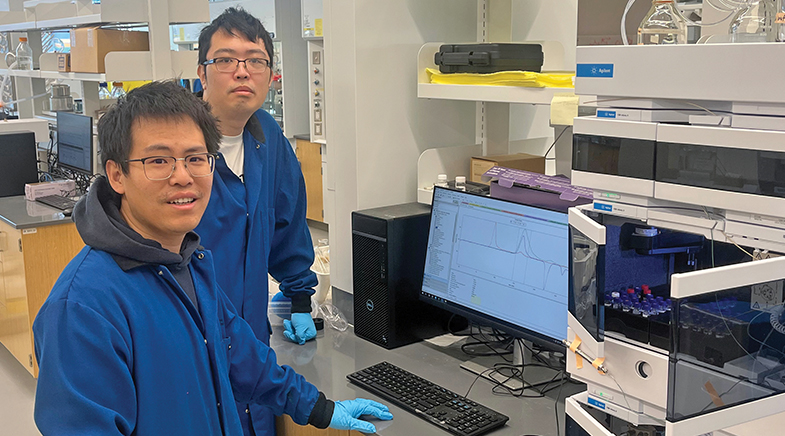
The properties of the polyester resemble those of HDPE: for example, due to its crystalline structure, it exhibits both mechanical stability and temperature resistance. At the same time, the first experiments for recyclability showed that under relatively mild conditions, the basic modules of this material can be recovered. The new plastic also has another, quite unexpected property: despite its high crystallinity, it is biodegradable. In a lab experiment, the polyester was degraded by enzymes within a few days. The scientists argue that this biodegradable material is much less persistent than plastics like HDPE, when unintentionally released into the environment.
Such breakthroughs do not mean that the world has found an alternative to polyolefins. "Saying we would replace polyethylene and polypropylene is like saying we would replace silicon," says Guruswamy Kumaraswamy, Professor in the Department of Chemical Engineering at the Indian Institute of Technology (IIT) Bombay. "Beating these polymers on cost and functional properties is very hard. So much investment has gone into these polymers."
NATURAL MATERIALS
Takuzo Aida, a Japanese polymer chemist with a record of work in supramolecular chemistry, has an eye on the long term: he is trying to find completely benign ways to make and degrade plastics so they do not leave microplastics in the environment. In December 2024, his team at the RIKEN Center for Emergent Matter Science in Japan made a breakthrough when it synthesised a new kind of plastic that dissolved in salt water within hours, without forming microplastic particles (bit.ly/shaastra-plastic). He was using supramolecular chemistry, the science of building and using collections of weakly attached molecules. The plastic is made of two different polymers held together by bonds called 'salt bridges'. In the presence of salt water, the bonds that hold the polymers together come apart, turning the polymers back into their basic units.
Improving the recyclability of plastics is among the aims of chemists; they see recycling as an intermediate step towards solving the problem.
This, however, was a proof-of-concept study, and the plastic was not good enough for real-world applications. Exactly a year later, Aida and his team developed another degradable plastic, based on the same chemical strategy. One of the polymers was a biodegradable wood-pulp derivative called carboxymethyl cellulose. The other was prepared from positively charged polyethyleneimine guanidinium ions. When cellulose and guanidinium ions were mixed in water at room temperature, the negatively and positively charged molecules attracted each other, forming the critical cross-linked network that made the plastic strong. In November 2025, Aida published this research in the Journal of the American Chemical Society (bit.ly/supra-plastic). The new plastic material, too, has the salt bridges that hold the network together – bridges that break when exposed to salt water. To prevent unintended decomposition, the scientists applied a thin protective coating.
The scientists, however, had to overcome some hurdles. Because of the presence of cellulose, the new plastic was too brittle, even though it was transparent, colourless and hard. Through a series of experiments, they found that food-grade choline chloride can be an ideal plasticiser, a compound added to improve the flexibility of plastic. By adding varying amounts of choline chloride, they could fine-tune the plastic's flexibility, from hard and glass-like to elastic, stretchable up to 130% of its original length. The resulting plastic is expected to have all the properties of conventionally used plastic. It is glassy, colourless, transparent, non-inflammable, and has ultra-high density. It can withstand temperatures up to 300° Celsius, and has high mechanical strength. It is even 3D-printable.

All polymers used by the RIKEN team are biocompatible and can promote plant health when left in the soil. The feedstock for making this plastic is abundantly available, as nature produces over 100 billion tonnes of cellulose every year, and global plastic production is around 400 million tonnes. However, the cellulose feedstock for Aida's bioplastics would come from agricultural waste, forest residues, dedicated crops grown for biomass, and so on. Even cellulose from such waste exceeds the annual plastic production, and so raw material will not be the limiting factor for cellulose-based plastics. However, even after the right technology is developed, the energy required for extraction and the economics of building scale can be hurdles. There will also be resistance from industry. "While the feedstock required for the plastic is abundant and cheap, the industry has to invest heavily as the processes are entirely different. That is going to be the biggest challenge," says Aida.
BIODEGRADABLE MICROBEADS
The current problem of microplastics started when scientists noticed microbead pollution in water. These are tiny particles added to toothpastes, cosmetics, cleansers and other products. Microbeads, which are produced in bulk for use, often go into streams and rivers and eventually end up in oceans, where they endanger marine organisms that mistake them for food. Before microbeads were flagged as a problem, plastics pollution was evident: empty bottles, plastic bags, packaging material, and so on. Microbeads were recognised as an invisible problem that became far more serious than the visible one. In other words, microbeads reframed the narrative. Although microbeads are not essential, they are still used, and they pollute the environment. Some scientists are trying to find replacements.
Robert Langer and Ana Jaklenec at the Massachusetts Institute of Technology, along with other colleagues, recently developed a class of biodegradable materials that could replace microbeads. It is made from poly (beta-amino esters) that, after use, break down into sugar and amino acids. The same polymer, with subtle modifications, can be used to encapsulate vitamin A and other essential nutrients for improved bioavailability.
Like microbeads, microplastic fibres from laundry waste are a big polluter. According to a study by the International Union for Conservation of Nature, nearly 35% of primary microplastics – in the form of microfibres -- found in oceans emanate from washing of synthetic textiles. A 2021 Scientific Reports study (bit.ly/wash-microplastics) found that each wash using a domestic washing machine releases microfibres in the range of 124 to 308 mg per kg of washed fabric, depending on the textile structure of washed garments.
Melik Demirel, Pearce Professor of Engineering and Huck Chair in Biomimetic Materials at The Pennsylvania State University, and colleagues have a solution: synthetic fibres (and even natural fibres like cotton) can be replaced with fibres produced from leftover yeast from brewing beer, wine and some pharmaceutical products. In a paper published in the Proceedings of the National Academy of Sciences in November 2025, Demirel and colleagues showed that brewery waste – composed of proteins, fatty acids and sugars – can be repurposed to make fibres that are as good as those used to make fabrics. "Proteins are universally degradable. So, their decomposition is part of nature's cycle and (that would be) addressing the problem at its root cause," says Demirel.
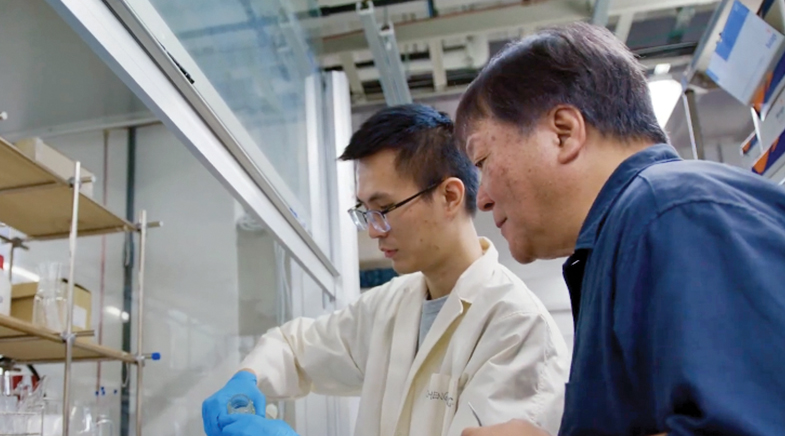
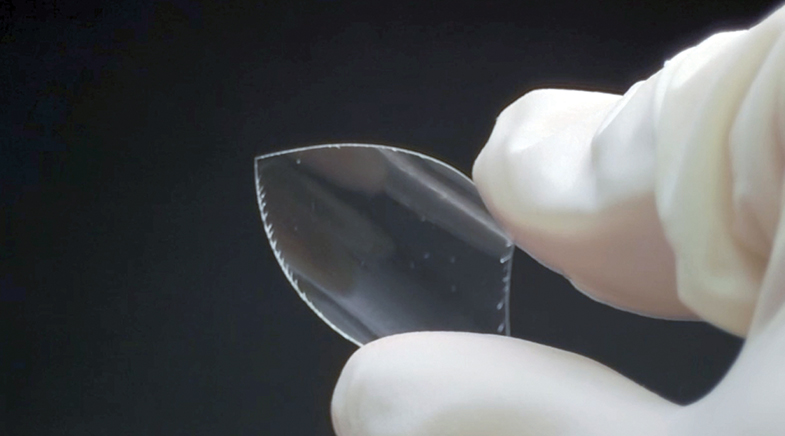
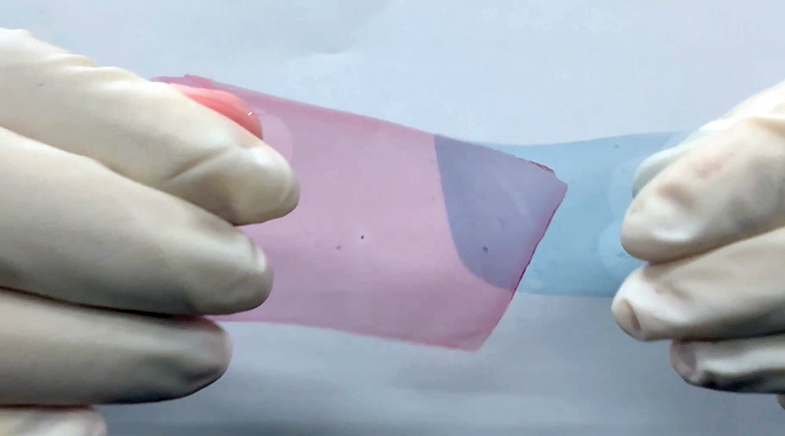
The team, together with Demirel, co-founded a start-up called Tandem Repeat Technologies. A German institute specialising in polymer research achieved pilot-scale production of the fibre — producing nearly 500 kg — in a factory in Germany, with continuous and batch production for more than 100 hours per run of fibre spinning. Demirel, whose team has spent over a decade developing a process to produce fibres from proteins, says this fibre, produced biomimetically, is durable and free of the chemicals that other fibres leave behind in the environment for years. According to him, there won't be a dearth of raw materials as proteins are abundantly available in nature. "We can pull the proteins as an aggregate from the yeast, dissolve the resulting pulp in a solution, and push that through a device called a spinneret that uses tiny spigots to make continuous fibres," says Demirel.
A technoeconomic survey carried out by the team showed that such fibres can be produced at a mass scale at $6 per kg, against $10-12 per kg for wool.
TRAPPING THE WASTE
Environment-friendly materials will find their way into daily use over time. However, microplastics continue to build up in terrestrial and marine ecosystems. Research groups around the world are developing technologies to help mop up these microplastics, with some success. Indicatively, Hongbing Deng, Professor and Vice Dean of the School of Resource and Environmental Sciences at Wuhan University, has developed a microplastic filter made of chitin and cellulose, which traps more than 99% of microplastics released into water.
Deng showed (bit.ly/microplastic-biomass) that a reusable and biodegradable foam can be developed from the self-assembly of material obtained from squid bone and cotton. This structure contains several chemical groups that allow it to self-assemble into a highly porous interconnected network. These groups make the foam surface rough and positively charged, providing numerous sites for plastic particles to interact with and adsorb, ranging in size from less than 100 nm to over 1,000 microns. According to Deng, multiple mechanisms are at work during this process, including physical interception, electrostatic attraction and intermolecular interactions. The intermolecular interactions include hydrogen bonding, van der Waals forces, and weak hydrogen bonding interactions.
Takuzo Aida's team at RIKEN is looking for benign ways to make and degrade plastics so they do not leave microplastics in the environment.
The team found that the foam can adsorb a variety of nanoplastics and microplastics, including polystyrene, polymethyl methacrylate, polypropylene and polyethylene terephthalate found in everyday objects. The foam can adsorb these plastics even in water bodies polluted with toxic metals such as lead and chemical dyes. "We are actively exploring the path to market and are in the early stages of technology transfer and prototyping. We have demonstrated the feasibility of scaling up foam production and have begun discussions with potential industry partners interested in environmental technology," says Deng.
At the heart of this technology is a 3D hydrogel composed of three polymer layers, making an interpenetrating polymer network. This matrix is infused with nanoclusters of another material. These nanoclusters are catalysts that can use ultraviolet light to degrade the microplastics. The combination of polymers and nanoclusters yields a strong hydrogel that can adsorb and degrade large amounts of microplastics. Such filters can be fitted onto the tailpipe of washing machines to trap microplastics generated during the wash. The technology can similarly be deployed at Sewage treatment plants (STPs). Currently, treated water from STPs is considered safe for washing cars, gardening, and so on. But they are not free of microplastics. "We think that if the treated STP water, devoid of other contaminants, is passed through our sponges, microplastic particles can be trapped with very high efficiency," says Suryasarathi Bose, Professor of Materials Engineering at the Indian Institute of Science, Bengaluru.
Bose and his team also developed a novel chemical process to recycle waste from fishing nets and automotive parts. These waste products often contain a type of polymer called nylon-66, which is very challenging to reprocess. The method (bit.ly/fishing-net-waste) involves introducing a chemical cross-linker, melamine, into the melted waste containing nylon-66 in the presence of a catalyst. The resulting reaction occurs fast enough to be carried out in high-throughput industrial extruders. The nylon produced by the recycling process was found to be quite strong and can be used to make products that require rigidity. "We are trying to see if it can be converted into park benches, road dividers or pavement tiles," Bose explains.
Finding a tangible solution to the problem of microplastics may not be easy: synthetic polymers have permeated our lives in ways we can't imagine. But that effort continues, and is making incremental progress.
See also:








While the sun shines...
For India to realise its solar power ambitions, it must rethink issues across the grid - from pricing to regulation to innovation.

Mind it!
An atlas of 6.3 million brain cells reveals secret rhythms and common disease pathways.




Have a
story idea?
Tell us.
Do you have a recent research paper or an idea for a science/technology-themed article that you'd like to tell us about?
GET IN TOUCH