

Airflow and water droplets
-
- from Shaastra :: vol 05 issue 01 :: Jan 2026
Scientists show how a droplet behaves on different patterns, and how to remove it.
Hydrogen vehicles are often described as the future of clean transportation. Unlike electric vehicles, which still face charging challenges, hydrogen vehicles can be refuelled, just like petrol and diesel cars, and are eco-friendly when powered by green hydrogen. Now, a new study by researchers at the Indian Institute of Technology (IIT) Kharagpur has shown the way to improve the performance of proton exchange membrane fuel cells, which convert hydrogen into electricity to power hydrogen vehicles.
Proton exchange membrane fuel cells are the lungs of hydrogen vehicles. These fuel cells produce electricity by combining hydrogen and oxygen, producing water as a byproduct. A typical fuel cell consists of an anode, a cathode and a proton exchange membrane. Hydrogen enters through the anode gas-flow channels and splits into hydrogen ions, releasing electrons. The membrane allows only hydrogen ions to pass, and so the electrons pass through external circuits, generating electrons. Oxygen enters via cathode gas-flow channels; hydrogen and oxygen combine to form water at the cathode. Removing water from the gas channels is necessary because it causes flooding, blocking the oxygen supply to the cathode and decreasing the reaction rate and, thereby, the fuel cell performance.
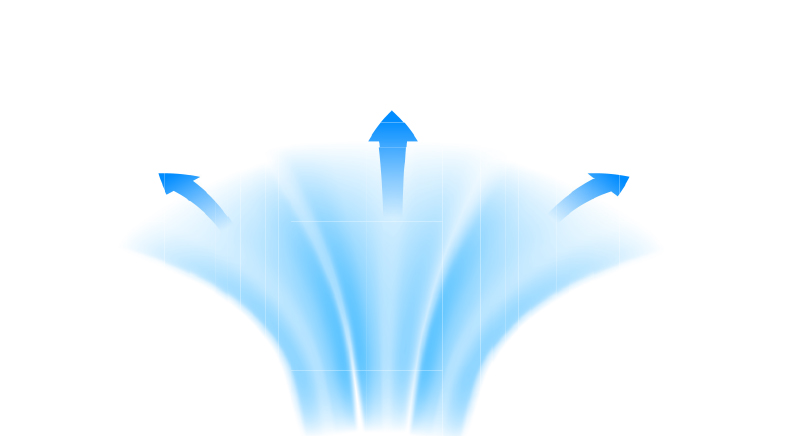
Currently, this water is removed from the cathode by airflow. The removal of a tiny droplet on the surface depends on whether the surface is smooth or patterned, the size of the water droplet and the air velocity used. In this study, published in the International Journal of Hydrogen Energy (bit.ly/hydrogenvehicles), Chirodeep Bakli's research group has shown, through computer simulations, how a water droplet behaves on different patterned surfaces and the optimal pattern height and air flow velocity that facilitate its effective removal. They found that when the pattern height is low, the airflow is unable to lift the droplet off the surface, as it remains stuck by adhesion forces. However, if the pattern height is high, the airflow can turn the droplet into smaller drops. The study identified an optimal combination of surface pattern height and air velocity that lifts the droplet off the surface and carries it through the centre of the gas channels at high speed without touching the walls, which they believe is the most effective way to remove water.
Bakli says that intelligently designed surfaces can remove water efficiently at lower airflow rates, preventing droplet breakups and unnecessary energy loss, shifting water management from an energy-intensive problem to a design-driven one.








The floppy disk that revolutionised computing
IBM’s 8-inch ‘memory disk’ catalysed the ‘personal computer’ revolution and contributed to the birth of the software industry.
Computers come alive
Fungal bodies may help make analogue computers one day.



Have a
story idea?
Tell us.
Do you have a recent research paper or an idea for a science/technology-themed article that you'd like to tell us about?
GET IN TOUCH