

Bringing back the blue
-
- from Shaastra :: vol 05 issue 11 :: Nov 2026
Innovators use ultrasonic waves, robotic skimmers, and microbial mix to clean water bodies.
Aditi Mullick, a chemical engineer, had her focus on sustainable technologies for water treatment. While pursuing her PhD at the Indian Institute of Technology (IIT) Kharagpur, she was presented with a problem that needed her to treat algal growth in water storage tanks in the industrial plants of Haldia, West Bengal. She began by using mild ultrasonic waves, which disrupted algal growth. Algae typically move vertically in a water column, rising towards the surface in the day to capture sunlight for photosynthesis, and descending into the water at night to trap nutrients. Uncontrolled algal growth in nutrient-rich water spurs blooms, turning the water surface green and blocking sunlight for other flora. Bacteria feeding on dead algae consume dissolved oxygen in the water, choking other aquatic life.
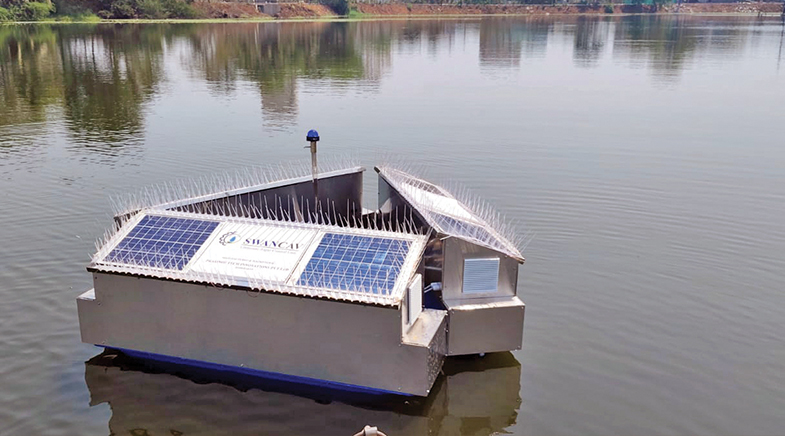
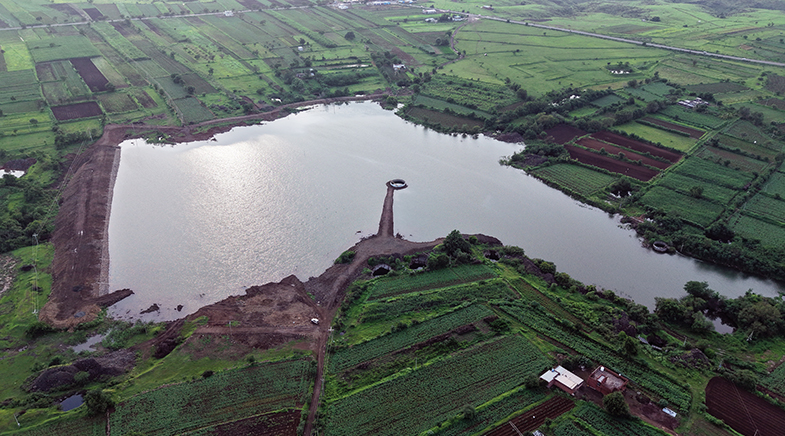
Continuous, low-dose ultrasound waves in water disrupt the vertical movement of algae, their growth and reproduction, but do not affect fish and other aquatic life (bit.ly/algae-fish). Mullick's prototype worked well. The technique became the basis of SwanCav, a solar-powered installation developed by Prasinos Tech Innovations, which she co-founded in 2022 in Hyderabad. Their 2023 pilot project tackled the biofouling of Chikhali Lake, near Pune, after conventional approaches such as algicides provided limited and temporary relief, and produced adverse effects. "SwanCav brought about marked improvement in water quality in 40 days," claims Mullick. The start-up deployed the installation to clean the Kaza East Lake at Mangalagiri, Andhra Pradesh, and the COWE Industrial Park reservoir in Hyderabad.
NanoCav generates nanobubbles in water bodies, and helps degenerate algae.
India's water bodies face continuous assault and varied degradation; turned into watery dump sites for garbage and construction debris, they silt up, are eutrophicated by fertiliser run-off and untreated sewage. The nutrient loads lead to algal blooms and water hyacinth proliferation. Toxic chemicals from industrial plants add to the pollution. Lakes have shrunk, and water inlets have been blocked by indiscriminate urbanisation, and their degraded state has drawn attention from multiple quarters. The Atal Mission for Rejuvenation and Urban Transformation, an urban renewal scheme by the Central government, oversees multiple revival projects. Innovators, researchers, and voluntary groups are devising environmentally friendly, sustainable revival mechanisms.
Nano, but potent bubbles
Apart from its ultrasound wave intervention, Prasinos has also developed NanoCav, a device that generates nanobubbles in water bodies, and helps degenerate algae. The intervention, which won the India Nano Innovation Award 2026, uses nanobubble technology — water treatment using microscopic bubbles — to aerate water columns, which helps beneficial aerobic bacteria thrive, and edges out anaerobic blue-green algae. Large bubbles tend to coalesce, float to the surface and pop. Nanobubbles have neutral buoyancy and follow Brownian movement (random motion of particles suspended in a medium), and can stay suspended in a water column for weeks. Their hydrophobic surfaces prevent bubbles from coalescing, and owing to surface charge, algae clump around them, making it easy to skim them out. Nanobubbles also break the cell walls of algae.
When Lucknow boy Krishna Purwar moved to Bengaluru to join R.V. College of Engineering, he spent evenings by the Vrishabhavathi River, which flowed near the campus. The river was an abysmal sight, reduced to a ribbon of filth. Young engineering students that they were, he and his friends decided to make a robot to clean the water. After a few failed starts, they built and patented a solar-powered, autonomous device that can be launched into a lake to skim surface algae and flotsam. They later created improved versions, with a weed cutter to slash roots of floating plants. Though autonomous, the robots also have a remote-control option.
In April 2026, Purwar, Siddhant Singh and Atharva Agrawal, final-year students juggling academic demands, founded SCRUB Robotics, a start-up they incubated at college. They have built two devices — V1, which has a conveyor-belt mechanism to scoop debris from a water body into an attached bin; and V2, which uses a gate-closing mechanism, similar to a crocodile's mouth, to guide debris into a bin. The devices, powered by solar batteries, can collect 25kg per cycle. "There is a lot more to do, like operating the device in the absence of sunlight. But we have found our calling: to create solutions instead of lamenting about problems," says Purwar.
Punyasloke Bhadury's team at the Indian Institute of Science Education and Research Kolkata creates microbial mixes for bioremediation of polluted lakes. The Centre for Climate and Environmental Studies at the institute, where Bhadury is Professor, is a repository of microbes from across India. The research team identifies those best suited to resolve a problem and creates a bespoke mix of locally found microbial species that work together. The mix, packed into specialised devices, is inserted into the water column, and pollutants entering through its sieve are eaten up by microbes, clearing contamination.
Tailor-made solutions
Treatment is tailor-made to suit the requirements of each water body. To clear a heavily poisoned water body at Bantala, near Kolkata, the group chose a bacterium adept at destroying chromium, a pollutant from nearby tanneries that killed resident biota. Aquatic life, says Bhadury, is slowly returning to the lake. The tidal Buckingham Canal in Chennai is being cleaned with a mix of marine and riverine microbes. At around ₹50 lakh to decontaminate a mid-sized lake, microbial solutions are cost-effective, says Bhadury. There is no need for a "recharge" once the microbial population is established in good numbers, he reasons.
Many lakes have slid back to their pre-revival state; the healthy ones are sustained by local communities.
Rejuvenating water bodies is about addressing multiple problems at the same time, says Varun Batra, Lead for Strategy and Innovation at SayTrees, a not-for-profit that works on revitalising water bodies and afforestation. "The lake is often so far gone that it has to be de-watered first, and de-silted, as was the case with the Choodasandra Lake in Bengaluru," he says. A suite of technologies is used to clean and monitor lake health. Bokashi balls — cow dung, rice bran, clay and effective microorganisms — are sunk at sites for in situ sludge remediation. The organisation has revived 35 lakes countrywide in the last decade, says Batra.
SayTrees approached Chennai-based bespoke tech solutions start-up Enarxi Innovations to create a digital platform to monitor lakes round the clock. "We made 3D digital twins of every lake using drone surveys to map the bed, and then calculated their volume. Changes in the volume are now recorded with a solar-powered radar positioned on a pole at the deepest point of the lake; the recording is done every 15 minutes," explains Ayaz Shaik, Co-Founder, Enarxi. The data, supplemented with pictures, provide real-time information about the health of rejuvenated lakes. Enarxi plans to incorporate water sampling techniques into the set-up next.
Return of biodiversity follows the revival of a lake. SayTrees partnered with Map of Life Solutions, an interactive web platform incubated at Yale University, to track biodiversity in 10 lakes. "These lakes were almost dumps with no visual or acoustic record of bird visitors," says Batra. Post revival, 109 bird species were observed at the lake, he says, including the migratory Eurasian oystercatcher, the black-tailed godwit, and the Eurasian curlew.
Reviving a water body has far-reaching benefits, says Radheyshyam Tyagi, consultant environmental engineer to the Delhi Technological University and to several other organisations. In 2020, the Delhi Jal Board (DJB) began to clean a lake in Rajokri, along the city border, and eventually turned a dumping site for untreated sewage and garbage into a local recreational avenue. "The water table rose by 5 metres in the surrounding areas, and it scores well on quality parameters, but is still not recommended for drinking," says Tyagi, who was associated with the project.
However, the success of rejuvenation projects eventually depends on local involvement, restorers agree. An analysis by the Energy and Wetlands Research Group at the Indian Institute of Science, Bengaluru, revealed that most of the city's cleaned lakes had slid back to their pre-revival state, while those that remained healthy were sustained by local communities. "Sarakki Lake remained filled even in 2024 when most water bodies in the city dried up," says T.V. Ramachandran, who leads the group and was involved in the lake's restoration. "People's participation is key,'' he emphasises.



Feeling the heat
India's preparedness to face a warming world hinges on some cool solutions.
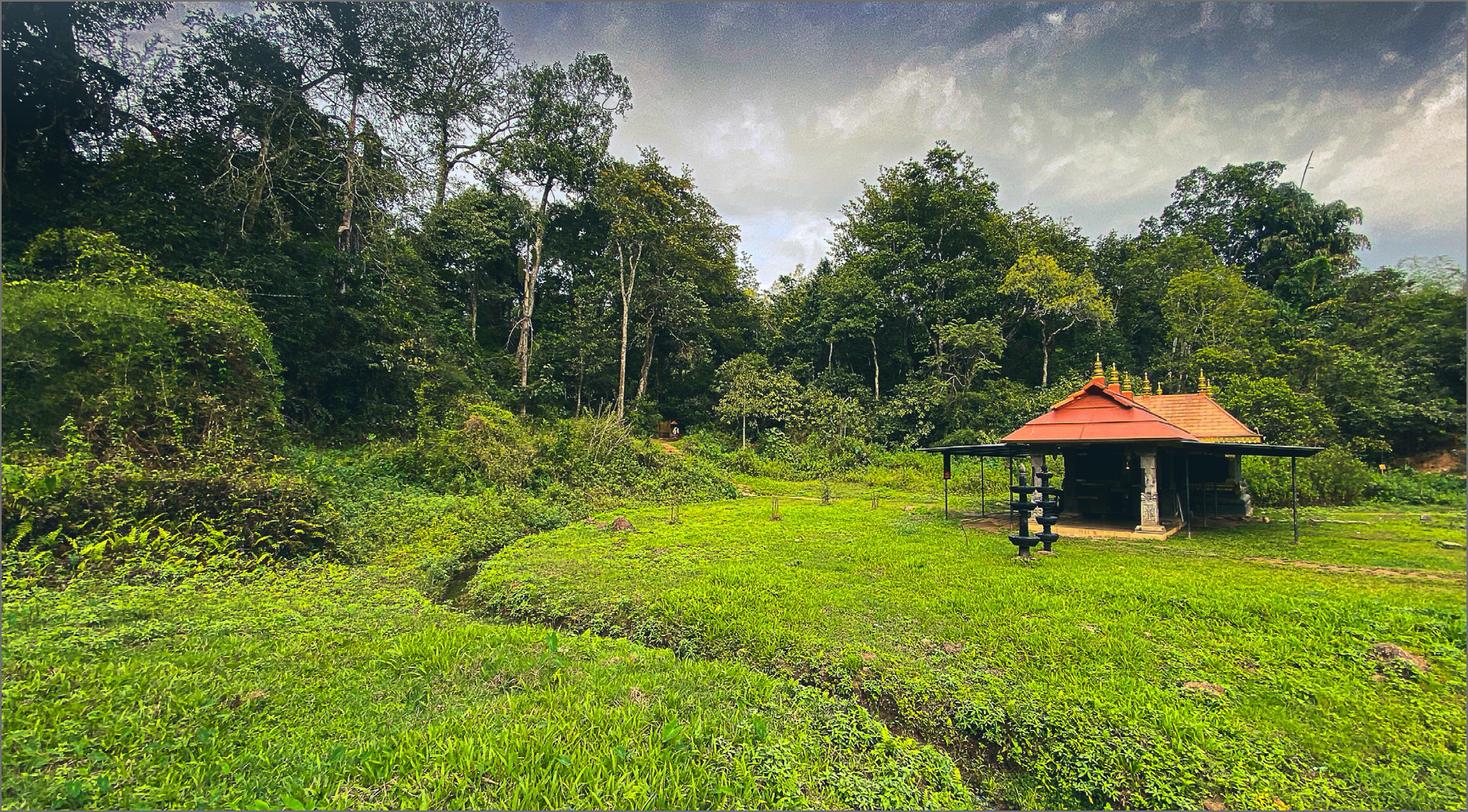

A Kerala village shows the way
Harnessing technology, and drawing on enlightened ecological policies, Meenangadi is on the path to becoming India’s first carbon-neutral village.

The hole truth
Do many black holes grow even when obscured? A survey will tell.



Have a
story idea?
Tell us.
Do you have a recent research paper or an idea for a science/technology-themed article that you'd like to tell us about?
GET IN TOUCH