

Cooling race hots up
-
- from Shaastra :: vol 05 issue 11 :: Nov 2026
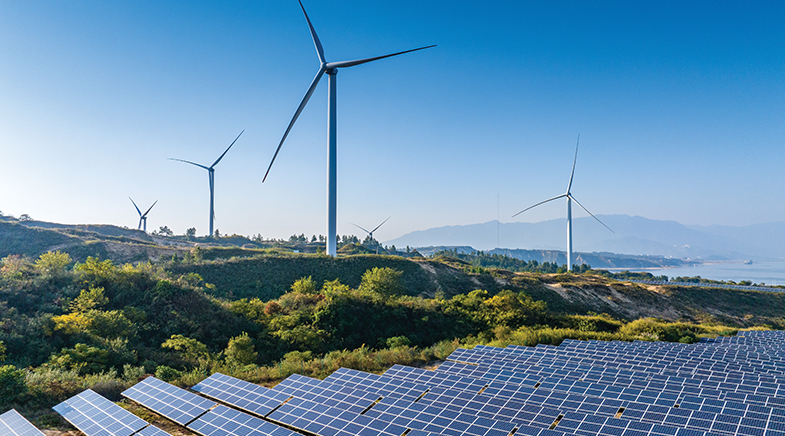
A return from the point of overshoot demands urgent and committed steps.
The year 2026 has held up a grim mirror to life in an 'overshoot' world. Unprecedented heat waves across Europe, North America and Australia, wildfires in Europe, Canada and Indonesia, and a glacier-tipping avalanche that spurred a devastating flash flood in Nepal. Add to it droughts in South America, storms across the U.S., and back-to-back cyclones in the Bay of Bengal... the textbook case of an overshot world is upon us.
When the United Nations' (U.N.) annual Emissions Gap Report 2026: The Point of Return, published in October, stated the inevitability of the average global temperature overshooting the 1.5°Celsius threshold from pre-industrial levels, it did not come as a surprise. Whether the events of the year were directly related to global warming, or influenced by El Niño, is for researchers to deliberate. For people at large, negotiating and surviving the extreme weather events are the primary concern.
Given the pace at which nations' commitments to climate action are progressing, the report says, warming could reach 2.8°C within this century, and then rise further. Yet, the report places hope in this picture of gloom; even when it projects an overshoot, it charts a point of return. "Overshoot is not surrender. We can still keep it as small and as short as possible — and bring temperatures back below 1.5 degrees by the end of the century," U.N. Secretary-General António Guterres said in his message on the report. The good news is that the best-case scenario mentioned in the report — peaking at 1.8°C by mid-century, and then pulling back to 1.5°C — seems possible; the U.N. report gives this scenario a 50% chance.
"India, the third-largest emitter, is on track to meet its 2035 climate action goals," says Vaibhav Chaturvedi, Senior Fellow at the Council on Energy, Environment and Water. The country's renewable energy generation rose by 98 terawatt-hours (TWh) while energy demand rose by 49 TWh in 2025 (bit.ly/india-emissions). "India not just met the new demand, but displaced some of the coal-fuelled supply," he adds. In fact, coal-fuelled energy generation fell by 44 TWh.
PAST ISSUES - Free to Read





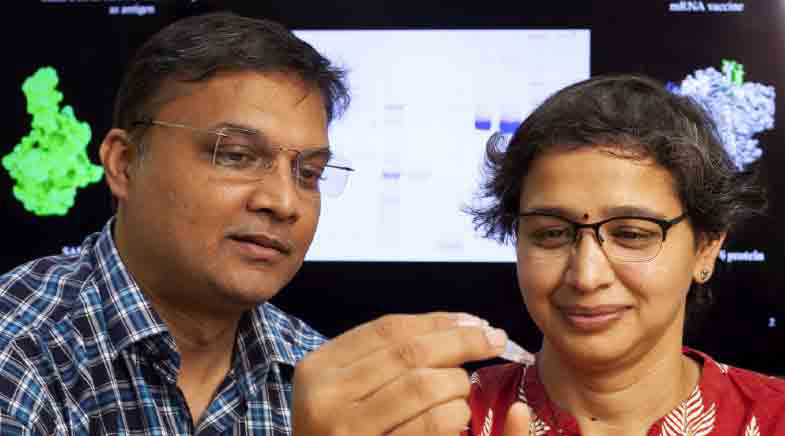
It's not just a vaccine
mRNA also lends itself to therapeutics, but the technology’s flaws need to be fixed.




Have a
story idea?
Tell us.
Do you have a recent research paper or an idea for a science/technology-themed article that you'd like to tell us about?
GET IN TOUCH