

Green invaders
-
- from Shaastra :: vol 05 issue 09 :: Sep 2026
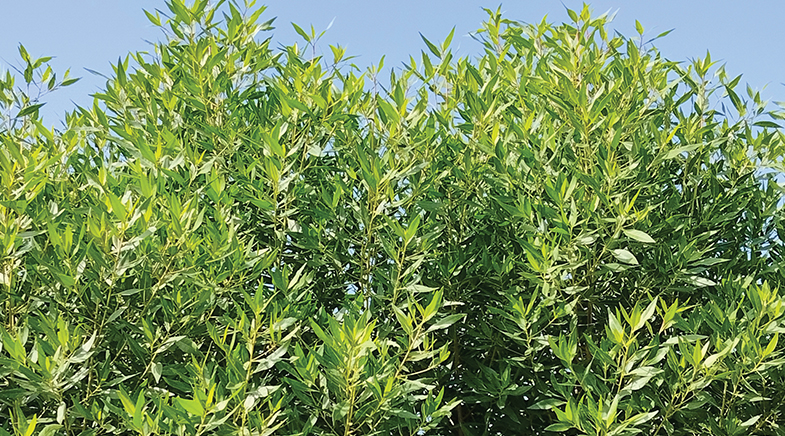
An inapt import of Conocarpus turns a botanical dream into an ecological nightmare.
In 2017, three research scholars on a field trip to study the flora of Pudukkottai, a coastal region in Tamil Nadu, came across a cluster of mangrove trees bearing "globose fruits". The researchers, from Bharathiar University in Coimbatore, identified the lone clump – with trees that were 10-15 years old – as Conocarpus erectus or buttonwood, a new mangrove-associated species to be recorded in Tamil Nadu. They subsequently published their findings in Current Botany (bit.ly/conocarpus-TN).
Almost a decade on, A. Sarvalingam, one of the researchers, is leading awareness campaigns against the species he had recorded. "None of us had imagined this would be the future,'' says Sarvalingam, Assistant Professor of Botany at NGM College, Pollachi.
In a span of a few years, Conocarpus has gone from the preferred tree for greening projects to the villain of the piece. In January 2025, the Tamil Nadu government ordered an immediate halt to the planting of the tree in the State. In August that year, the Central Empowered Committee urged the Supreme Court to direct the Centre to issue an advisory against planting the tree. There is no national advisory yet. But many States have issued suo motu bans on planting Conocarpus. Chhattisgarh is the latest; in July 2026, it banned the fresh planting of the tree, citing impacts on the ecology and human health.
Conocarpus dominates the urban milieu, and is a presence in forested regions too. It flanks urban avenues and grows on road medians. It became a sound and visual screen in housing societies, office complexes, and hotels. The tree is found even in jungle resorts. A quick grower and tenacious survivor, it easily shapes into artistic topiaries and has endeared itself to greening projects.
But the flip side of Conocarpus has been on slow reveal in recent years. A species that spreads aggressively and has high survival rates, it elbows out native flora, appropriates moisture from soil, and upsets local ecology. Its ability to make habitat-specific adaptations (bit.ly/conocarpus-adaptation) means native species have little chance against the aggressive interloper. The tree's roots grow through microcracks into water and sewage pipes, choking them. They also creep over utility cables, and damage roads and pavements. Conocarpus pollen is said to trigger allergies. It doesn't provide much refuge for local fauna either.
The management of the Conocarpus landscape is turning out to be a scientific, ecological, and administrative nightmare.
PAST ISSUES - Free to Read











India needs a national fusion energy mission: IPR Director Dinesh Aswal
IPR Director Dinesh Aswal outlines an Indian roadmap for commercial nuclear fusion power.

Beating back the cyberattacks
Going digital enhances productivity, but it comes with rising cybersecurity risks. Strategies to win the cat-and-mouse game.



Have a
story idea?
Tell us.
Do you have a recent research paper or an idea for a science/technology-themed article that you'd like to tell us about?
GET IN TOUCH