

Material, heal thyself
-
- from Shaastra :: vol 05 issue 05 :: May 2026
Everyday products get a shine with an eco-friendly coat that disperses in water and repairs on its own when scarred.
Animal hide — used for a wide array of leather products — needs a protective coating to ensure that the items are durable, easy to use, and visually consistent. Polyurethane, a polymer-based finishing system, is typically used for such leather coatings. This polyurethane-based coating has several shortcomings. First, the polymer is derived from fossil fuels, which runs counter to the global movement towards a circular economy that requires environmentally friendly manufacturing processes and the use of renewable feedstocks. Second, scuffs and scratches on these leather goods leave a permanent mark.
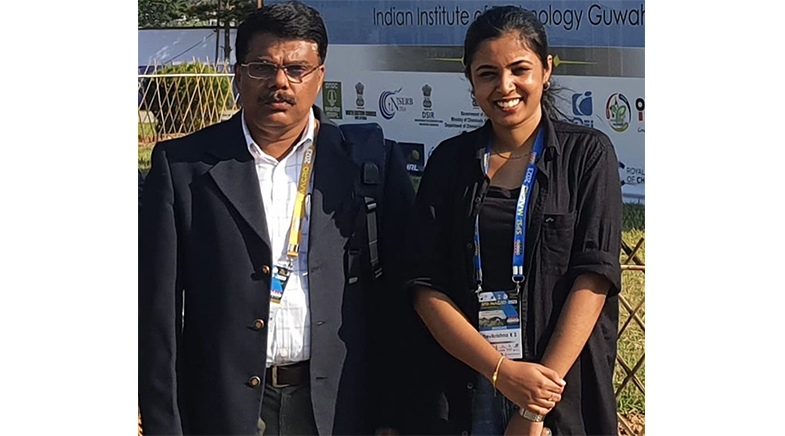
Now, a team of researchers led by K.I. Suresh, a materials scientist at the Council of Scientific & Industrial Research-led National Institute for Interdisciplinary Science and Technology (CSIR-NIIST) in Thiruvananthapuram, has developed a coating that heals when scarred. More important, the material, which the scientists reported recently in Chemical Engineering Journal (bit.ly/CNSL-Suresh), is an eco-friendly version of polyurethane as it disperses in water rather than in organic solvents, thereby reducing volatile organic compound emissions and regulatory concerns.
One of the key ingredients used to make this water-borne polyurethane is cardanol, a phenolic lipid naturally occurring in the liquid found in cashew nut shells. "Cardanol-containing products were used for making polyurethane earlier too, but this is the first report of a water-based system," says Suresh.
PAST ISSUES - Free to Read
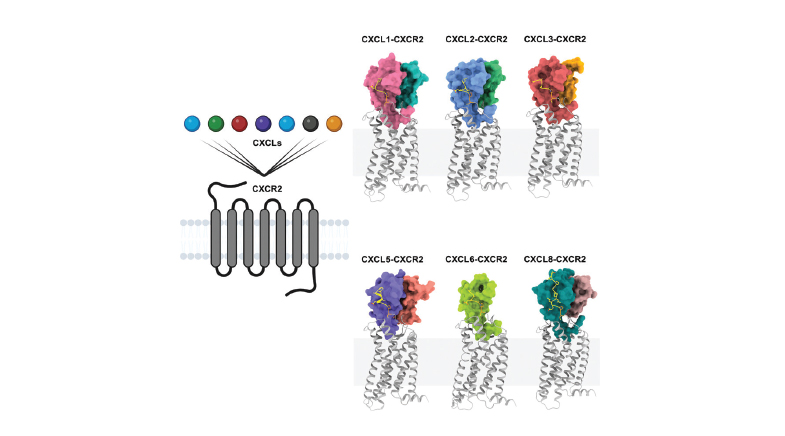








Keys to a puzzle
A 3D map of a 'promiscuous' protein opens a pathway to new drugs.
They pass the acid test
By tweaking amino acids, scientists are formulating better drugs, adding alphabets to the book of life, and solving real-world problems.

Music, and a milestone
As Shaastra becomes a monthly magazine, we commit ourselves anew to top-notch sci-tech journalism.



Have a
story idea?
Tell us.
Do you have a recent research paper or an idea for a science/technology-themed article that you'd like to tell us about?
GET IN TOUCH