

May we have some ore?
-
- from Shaastra :: vol 05 issue 08 :: Aug 2026
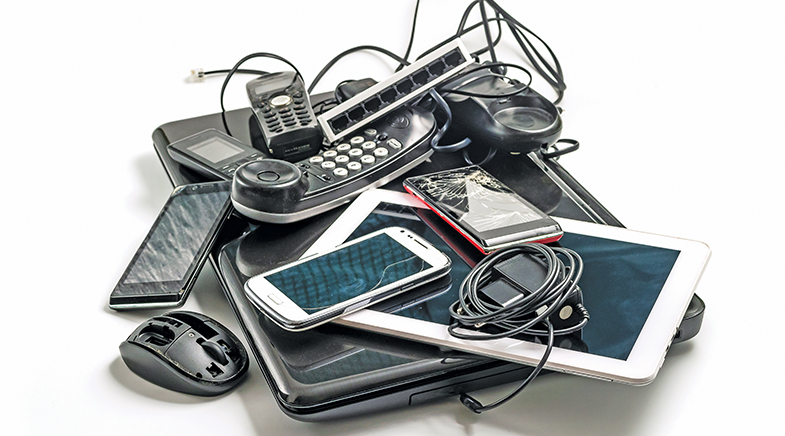
Urban miners prospect for gold, and more, from India's burgeoning e-waste.
Some 20 years ago, brothers Rohan and Nitin Gupta got chatting over what to do with an old laptop. The conversation began as an environmental concern, but as they delved deeper into the subject, the siblings realised that given the right technology and business model, there was a financial opportunity awaiting them.
In 2008, they founded Attero (Latin for 'wearing away'). Today, it is one of India's leading companies in the sunrise sector of urban mining — collecting minerals from waste. The firm gets the 'ore', comprising discarded consumer appliances and electronics, through its two major collection streams, Selsmart and MetalMandi. Selsmart is a doorstep service to pick up discarded appliances from homes, and MetalMandi is a digital platform for aggregating scrap from scrap dealers.
While Attero may be a market leader, it is not the first in the sector. The first e-recycling company in India, E-Parisaraa, opened in Bengaluru in 2004, and has now expanded to two recycling facilities, with a pan-India collection network. Several start-ups have entered the scene in the past decade, and even though the mineral recovery at present comprises only a fraction of the nation's demand, the sector is rapidly increasing in capability and capacity.
E-WASTE HEAP
India generates 14 lakh tonnes of e-waste annually (bit.ly/quantum-ewaste). "The figures are growing, with the turnover in appliances becoming quicker. There is huge potential for growth in urban mining," notes Rahul Anand Gogi, Vice President, Recyclekaro, an urban mining company established in Maharashtra in 2011. It can currently recycle 24,500 metric tonnes of e-waste annually.
Urban mining is an umbrella term for processes to recover valuable material and minerals from waste, largely electronic waste. It offers solutions to several present-day problems. It clears up accumulating e-waste. It recovers expensive and critical minerals needed for manufacturing newer electronics, rather than extracting them from natural ores through a hazardous process. And it is a source of minerals in countries which do not possess such elements. From creating a looped economy to promising some freedom from dependence on foreign suppliers, urban mining is highly valued — environmentally and as a geopolitical strategy. The shift towards clean energy alternatives has pushed the development of urban mining globally; China is the current market leader.
The Indian government has been encouraging the sector with a slew of measures. In April 2025, the Ministry of Mines launched the National Critical Minerals Mission (NCMM), under which the Incentive Scheme for Promotion of Critical Minerals Recycling allocated ₹1,500 crore to reach a target capacity of recycling 270 kilo tonnes of urban waste. Launched in December 2025 by the Ministry of Heavy Industries, the Sintered Rare Earth Permanent Magnet scheme aims to augment mine-to-magnet capabilities. It is aligned with the NCMM, thus recognising anthropogenic deposits as mining material, too. The Ministry of Environment, Forests and Climate Change's Extended Producer Responsibility (EPR) mandate incentivises schemes to encourage material recovery from discarded appliances, batteries and cars. In addition, the government has designated seven premier institutes — four Indian Institutes of Technology and three R&D labs — as Centres of Excellence under the NCMM to provide the technology boost.
Urban mining offers solutions to several present-day problems. It clears up accumulating e-waste and recovers expensive and critical minerals needed for manufacturing electronics.
Minerals are extracted from e-waste in multiple steps, starting with stripping appliances to remove plastic and metallic components such as iron and aluminium, which are sent to their respective scrap markets. The leftover is then mechanically crushed into a fine powder called black mass. Two traditional methods of metallurgy — hydrometallurgy (where the black mass is dissolved in chemical solutions to precipitate the minerals) and pyrometallurgy (in which it is subjected to high temperatures) — are employed to recover critical minerals such as lithium, cobalt, neodymium, nickel and manganese. Copper, gold and other minerals are also recovered.
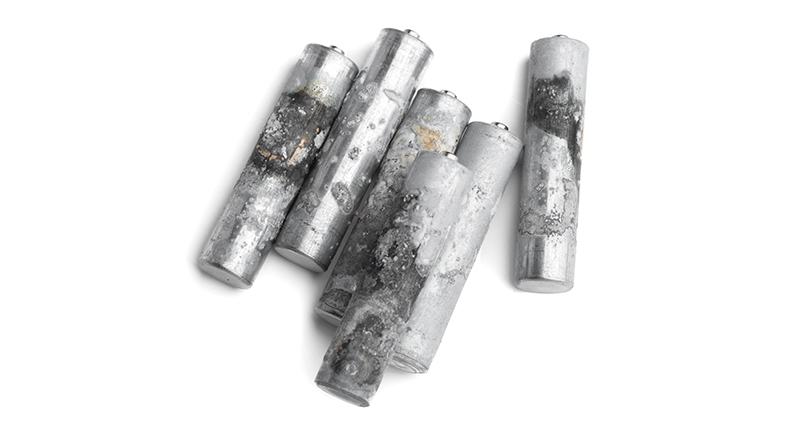
Pyro processes show a good recovery of minerals such as cobalt and nickel (90%). The installation of such plants, however, requires high capital. Through traditional hydro processes, the recovery of cobalt and nickel might be lower at 85%, but it is the preferred method for recovering lead and graphite. Under pyro processes, graphite vaporises and much of the lithium, due to its low melting point, gets trapped in the slag. "Attero has patented technology that can recover more than 97% of battery-grade lithium carbonate and over 97% of battery-grade cobalt, nickel, and manganese," says Attero Co-founder Nitin Gupta. It is among the few in the world to recover battery-grade graphite from spent batteries.
CHALLENGES TO BE MET
Jayasree Biswas, who heads IIT Bombay's urban mining and metal recycling vertical, stresses that while urban mining is "brimming with potential", the challenges are many. One challenge is ensuring that the minerals recovered are battery-grade, with a purity of 99.55%. At the same time, the recovery efficiency should be above 85% to ensure financial viability. Ensuring energy efficiency and controlling the discharge of toxic effluents are other concerns. These are areas of industry-academia tie-ups. Recyclekaro recently entered into a technology licensing partnership with IIT Bombay for improving recovery efficiency while reducing energy consumption by 30%. In May 2026, the institute also signed an agreement with Maharashtra-based Evergreen Lithium Recycling to improve the extraction of minerals, largely through membrane technology.
The greater challenge for the industry is not technology, but collection… The more mixed the scrap, the costlier it is to refine it.
Processes such as molten salt electrolysis, used for extracting rare minerals from ores, are now being tweaked to recover these from waste material. The black mass is used as the electrolyte, with the mineral precipitating at the cathode. However, the process has not yet entered India's urban mining sector. Another area of research is bioleaching and biomining, in which microbes are deployed to extract minerals from waste streams. The CSIR-National Environmental Engineering Research Institute (NEERI), Nagpur, is among the institutes researching this subject. It says in a study published in March 2026 that it has created microbial consortia to extract metals from lithium-ion batteries (bit.ly/microbe-mining). The microbes produce acids that facilitate the dissolution of metals. The process is greener and has no toxic effluents, but the challenge is in recovery efficiency and scalability. The NEERI experiment showed a maximum recovery efficiency of 86% for lithium, barely enough to be financially viable. Biomining critical minerals has not progressed beyond laboratory proof of concept.
The greater challenge for the industry, however, is not technology, but collection. "Our industry loses $4-5 billion annually, with the informal sector being the primary collector in India," notes Gogi. Improper segregation and unscientific extraction methods contribute largely to the loss. The more mixed the scrap, the costlier it is to refine it. Recyclekaro, which so far got its 'ore' directly from companies wishing to dispose of appliances, has started an app-based consumer-to-producer collection system, Reloop. Organisations such as CERO (a Mahindra Accelo and Steel Ministry joint venture) dismantle scrapped cars and send the battery components to mineral-extracting firms. The EPR mandate is shifting flows to formal recycling. Gupta estimates that in the last five years, it has gone up from 1% to 40%.
Industry sources say that at present, urban mining meets barely 1% of the nation's total mineral requirement. But, they point out, with every tonne recovered, the reliance on imports reduces. India imports almost every metal it needs except iron.
Capacity is building up in anticipation of the time when critical minerals will be required in the production of indigenous e-batteries. Right now, India's battery production is negligible, and the recovered minerals are sold to the paint and pharmaceutical industries. With large industry players such as Reliance now setting up giga-factories, the domestic demand for critical minerals is expected to rise. Clearly, where there's waste, there's a way.








Salve from the soil
Streptomycin saved countless lives, but its October 1943 discovery by a PhD student at Rutgers was mired in a bitter battle.




Have a
story idea?
Tell us.
Do you have a recent research paper or an idea for a science/technology-themed article that you'd like to tell us about?
GET IN TOUCH