

Pigment power
-
- from Shaastra :: vol 05 issue 07 :: Jul 2026
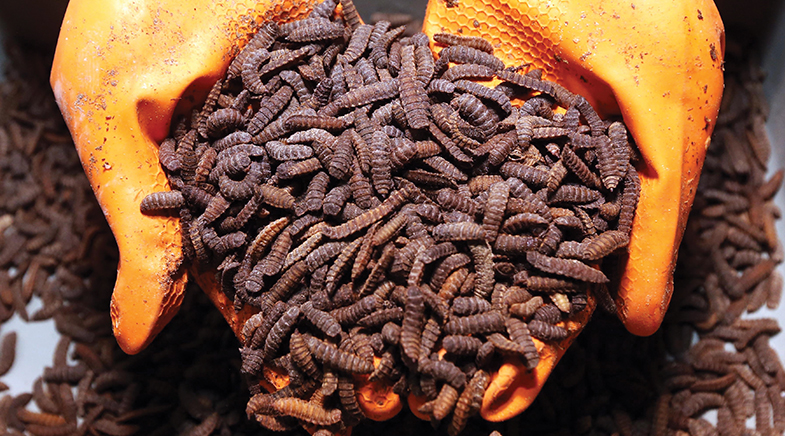
Melanin is being used in a host of fields — from beauty and biology to chemistry.
When the Earth formed roughly 4.5 billion years ago, the Sun was both a benefactor and a threat to the origin of life on the planet. While it provided energy for chemical reactions that formed the building blocks of life, such as nucleotides and organic molecules, its intense ultraviolet (UV) radiation on an Earth devoid of an ozone layer destroyed fragile biomolecules. As life forms moved from the oceans to the surface of the Earth, melanin, a pigment that protects from UV rays, became the saviour of life, found widely across several species of bacteria, fungi, plants and animals.
Yet, despite safeguarding life for billions of years, melanin was still not the first choice for sunscreens when they were first developed in the 1930s and 1940s. Early sunscreens — used to block the harmful effects of the Sun on the skin — were based on para-aminobenzoic acid. Then came organic UV filters such as oxybenzone and octinoxate. Zinc oxide and titanium dioxide followed. Currently, nano versions of these minerals are being used in sunscreens. But as these pose risks of nanoparticle inhalation and water pollution due to their non-biodegradable nature, the cosmetics industry and consumers are seeking a safe, natural, biodegradable, and sustainable sunscreen. Melanin fits the bill.
The cosmetics industry and consumers are seeking a safe, natural, biodegradable, and sustainable sunscreen. Melanin fits the bill.
"Melanin has the advantage of replacing 12-13 ingredients that you use in a sunscreen," says Abhinav Chauhan, Founder of Promecens Entosystems, a Haryana-based start-up that manufactures melanin. He adds that while chemical sunscreens only protect the skin from specific UV wavelengths, melanin safeguards it against UVA and UVB (two kinds of UV rays), does not degrade in strong sunlight, and has antioxidant properties. It also protects against the harmful blue light emitted by screens.
PROBLEMS OF SCALE
Manufacturing melanin at scale has always been difficult. Extracting it from its natural sources — such as cuttlefish ink, animal hair, feathers, and fungi — yields small amounts; its insolubility makes it difficult to purify it and make formulations. "It stays entangled with other inorganic compounds very heavily, and is bound with chitosan as well," Chauhan says.
Chauhan, who earned his Bachelor's in Biotechnology and PhD in Oncology, was working as the Chief Scientific Officer at an Ireland-based company, which farmed and processed black soldier fly larvae to sustainably convert food and agricultural waste into high-quality protein and other material, when he decided to start his own venture in 2024. He farmed black soldier flies to produce melanin and chitosan, as they were easy to rear. The flies grow on cheap organic waste such as food scraps or agricultural by-products, and produce melanin as part of their immune response. His start-up has optimised larval growth conditions so that larvae produce high levels of melanin during pupal development. An artificial intelligence pipeline can predict the amount of melanin to be produced. The team uses a patented process to remove impurities from melanin, utilising specific enzymes to extract it with a purity of 99.9%. Currently, at their pilot facility, they produce 500-800 grams of melanin a month, which is expected to increase to 12 kg once the company scales up the process after raising funds. The company has also developed a sunscreen using its manufactured melanin, resolving the insolubility issue through encapsulation. It expects its melanin sunscreens to be launched soon.
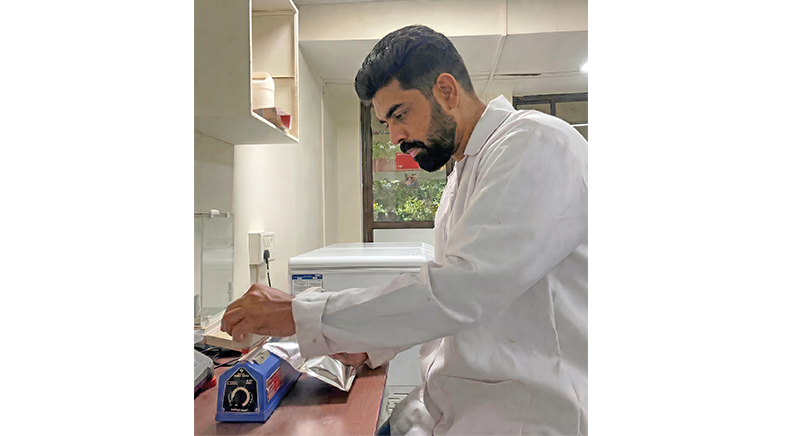
Start-ups are taking different routes to produce melanin at scale. U.S.-based Melazyme uses genetically engineered microbes to produce melanin. Avisa-Myko, a U.S.-Indian start-up, has developed proprietary fungal strains optimised for high yields and low-cost production. U.S.-based Melatech grows a natural fungus to produce melanin, and Singapore-based Insectta uses soldier flies.
BEYOND THE BODY
The global market size of melanin, valued at $162.77 million in 2025, is expected to reach $318.84 million by 2035 (bit.ly/melanin-market). The primary demand for melanin is in cosmetics, where it is a component in sunscreens and anti-ageing creams, and in the medical industry, where it is used as a carrier for drug delivery. In cancer therapy, for instance, melanin converts near-infrared light into heat, allowing the localised destruction of tumour cells. It is used for antioxidant therapy, medical imaging, and wound healing.
Researchers and start-ups are developing a slew of applications. Some are working on melanin's chemically complex structure and chemical affinity for metals. Raj Mohan Balakrishnan's group at the National Institute of Technology Karnataka is coating membranes with melanin extracted from bacteria such as Pseudomonas stutzeri to filter mercury, chromium, lead, and other toxic heavy metals from industrial wastewater (bit.ly/melanin-metal). Similarly, Jyoti P. Jadhav at the Kolhapur-based Shivaji University has used melanin extracted from Aeromonas bacteria to develop a memristor device that exhibits synaptic behaviour similar to that of the brain, owing to its ability to switch between different electrical states in response to voltage (bit.ly/melanin-brain).
Chauhan's start-up has studied how its manufactured melanin, owing to its radiation-safe properties, may be used for electromagnetic shielding applications. It has also developed a self-healing coating using its melanin for aircraft because it possesses strong metal-binding ability, and dynamic chemical bonds that can reform after damage induced by the extreme conditions of outer space. In another study, Kamal Kar's team from the Indian Institute of Technology (IIT) Kanpur converted melanin-rich human hair waste into activated carbon. It used the nitrogen and oxygen-rich structure of melanin to create more active sites for storing electricity in supercapacitors (bit.ly/melanin-human-hair).
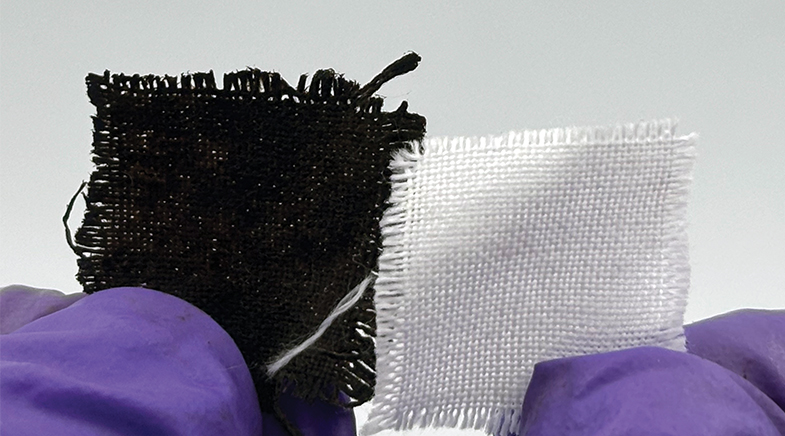
In a similar vein, chemical engineer Karthik Subramaniam Pushpavanam, an Assistant Professor at IIT Gandhinagar, has found a way to produce textile fibre and dye it black using melanin-producing bacteria. He has developed a genetically engineered strain of Komagataeibacter rhaeticus that produces bacterial cellulose by adding the tyrosinase enzyme gene, which, in the presence of L-tyrosine, produces melanin. He and his team first let the bacteria grow and produce bacterial cellulose, then added L-tyrosine, causing it to simultaneously begin producing a black colour. The fabric is later heat-pressed to ensure that the microbes die and the dye stays on the fabric.
The pigment and dye industries are water guzzlers, Pushpavanam says, pointing out that using bacteria for dyeing saves water. The biocolour, he adds, is non-toxic and helps reduce chemical pollution from dyeing.
FROM BIO TO CHEMISTRY
While biologists have been focusing on the role of melanin in different organisms, and their use in therapy, chemists are intrigued by its optical, electrical, and electrochemical properties. Theoretical chemist Debashree Ghosh finds it interesting that, unlike other biomolecules such as chlorophyll, carotenoids or green fluorescent proteins, which absorb specific wavelengths, melanin can absorb almost all wavelengths of light. Her team at the Indian Association for the Cultivation of Science has shown how melanin can dissipate the Sun's energy, which spans different wavelengths, to protect the skin. Melanin is a complex molecule composed of many monomers, and it has been shown that each monomer uses a different route to dissipate the Sun's energy, enabling faster energy removal and less cellular damage.
Lately, she has been interested in establishing structural and functional relationships of different melanin monomers. In a study published in 2025 (bit.ly/melanin-chemistry), her team trained a machine learning model to predict the absorption spectrum of a melanin monomer from its emission spectrum, and vice versa. This study could help scientists develop tailor-made melanin-like materials for electronics, protective coatings, and other future technologies.
Melanin, clearly, is more than just a sunblock. For scientists, the pigment is full of promise.










Game-changing moves
The lens is on detection, imaging, and therapy.

Get set for Dr Algo
The full transformative potential of AI in healthcare can be realised by adopting electronic health records.



Have a
story idea?
Tell us.
Do you have a recent research paper or an idea for a science/technology-themed article that you'd like to tell us about?
GET IN TOUCH