

Print a ring o' coral
-
- from Shaastra :: vol 05 issue 02 :: Feb 2026
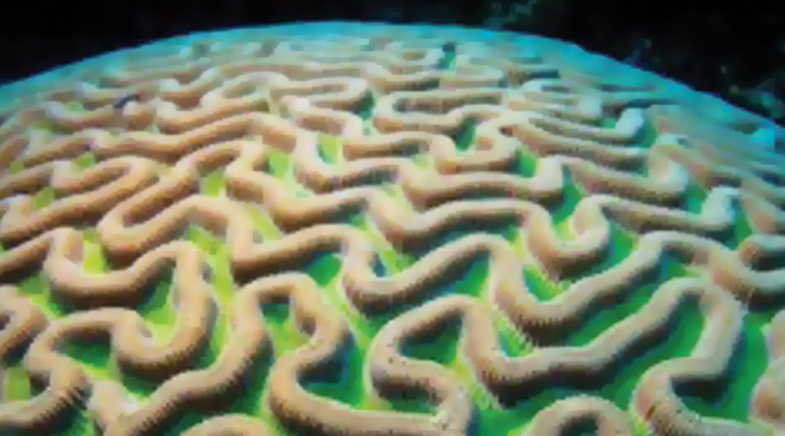
An artificial coral reef seeks to restore ocean health.
To restore ocean health and boost underwater tourism, a team of scientists has developed India's first 3D-printed coral reef, which will be assembled and submerged in the Andaman waters. Like natural reefs — in steep decline the world over — the artificial structure is expected to shelter various marine animals, while providing the right environment for corals to lay their larvae. Coral reefs are believed to support at least 25% of marine species.
Artificial reefs are not a new tool for habitat conservation, but they have gained prominence in recent years due to the devastation of coral reefs, caused mainly by climate change. According to a 24-year-long study, the coral cover in the Lakshadweep archipelago declined by 50% from 1998 to 2022 due to marine heatwaves (bit.ly/Coral-Decline). In the past, artificial reefs were developed by casting concrete structures. These, however, were bulky and thus difficult to position in the sea. Their impact was limited as their pH was high, and they looked very little like reefs. "Compared to casting, 3D printing can give you more lightweight designs. You can also play around with the design," says Indian Institute of Technology Guwahati (IITG) Assistant Professor Biranchi Panda, who led the development of the 3D-printed reef.
WITHSTANDING STRESS
Advances in 3D concrete printing technology in the past few years have enabled scientists to design complex geometries. However, the real challenge was developing printable material that could withstand underwater stresses, such as waves, currents, abrasion from sediment and rock, biological colonisation, and changing water temperatures. Further, the material had to have a low pH, as coral larvae can only grow in low-pH environments. Scientists around the world have been testing various formulations of concrete, terracotta, ceramic, sandstone composites, calcium carbonate and more to develop artificial reefs. Such 3D-printed artificial reefs have been deployed in Destin-Fort Walton Beach, Florida, U.S.; Seeb, Oman; the Kattegat waters between Denmark and Sweden; and Cooper Island, the British Virgin Islands, in the Caribbean. The initial assessment of the endeavours shows positive outcomes in the biological colonisation of these reefs.
As reef materials vary across oceans, countries are investing in developing artificial reefs suited to their ocean environments. In India, mechanical engineer Panda's IITG team collaborated in this effort with the Chennai-based National Institute of Ocean Technology. They tested various formulations for the printing material and found that replacing 65% of Portland cement (a basic ingredient of concrete and mortar) with 60% silica and 5% limestone yielded a material with a low pH and high resistance to seawater chlorides. They also found that adding 0.75% polyvinyl alcohol (PVA) fibres improved abrasion resistance, strength and ductility. Curing concrete with carbon dioxide lowered the pH, bringing the structure closer to natural reef pH levels (bit.ly/Artificial-Reef). The team tested slabs of varying thicknesses made from this new material in seawater and found them durable, as they didn't deteriorate in seawater, and biocompatible, as biomass successfully deposited on them.
COMPLEX DESIGN
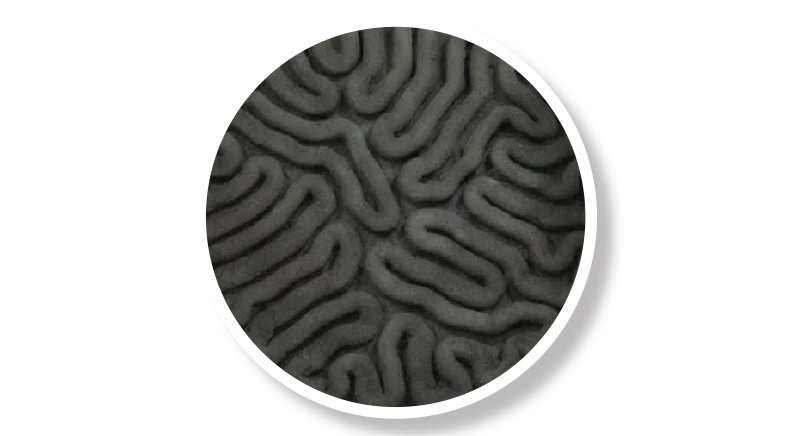
The next challenge was to mimic the reef's design. As coral designs are too complex to be scanned and 3D printed, the team had to look for an alternative approach. It used the growth-based path generation technique, a mathematical algorithm, to successfully print the geometry of brain corals, a coral species. The team has printed around 60 brain coral modules, which are like LEGO blocks, to be assembled into a pyramid-like structure underwater in the Andaman waters.
Panda, who looks forward to seeing how marine life will respond to the artificial coral reef, says he was amazed by nature's creations while working on the project. "Nature always creates something that is lightweight and has functionality. It does the best thing out of a small piece of material," he says.








This vaccine can take the heat
The Mynvax vaccine is particularly suited for Indian conditions: it is stable at high temperatures, which eliminates the need for a cold chain during…

Why 'sickcare' needs healing
An advocacy of scientific wellness via healthcare that is predictive, preventive, personalised, and participatory.



Have a
story idea?
Tell us.
Do you have a recent research paper or an idea for a science/technology-themed article that you'd like to tell us about?
GET IN TOUCH