

Looking ahead
-
- from Shaastra :: vol 05 issue 03 :: Mar 2026

Turning the light on graphene, cancer and clean water.
Gigaton Research
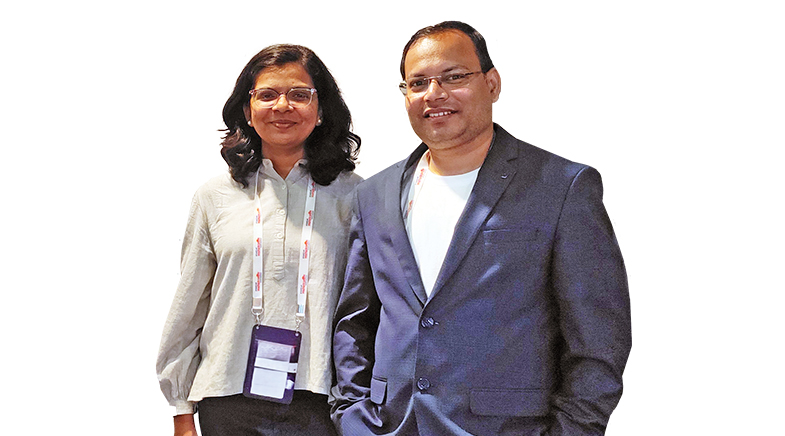
Founders Arvind Kumar and Nishita Chhipa
Year 2023
Big idea To produce high-purity graphene
Arvind Kumar had over the years worked on multiple applications of graphene, especially in polymer composites, and knew that even a small amount of graphene could alter their properties. After his PhD in applied physics from the Defence Institute of Advanced Technology, Pune, he further explored the subject during a postdoctoral fellowship in China.
He returned to India during the COVID-19 pandemic to join a company producing batteries with agricultural waste in Bhubaneswar. This is where he met Nishita Chhipa, a mechanical engineer who had graduated from the MCT Rajiv Gandhi Institute of Technology, Mumbai. Having understood the versatility of graphene, Kumar and Chhipa started Gigaton Research to produce high-quality graphene for commercial applications.
Incubated at the Society for Innovation and Entrepreneurship (SINE) at the Indian Institute of Technology Bombay, Gigaton Research produces small batches of high-quality graphene in the laboratory. Extracted from graphite and made of pure carbon, graphene is used in flexible electronics, composites, paints and coatings, tyres, energy storage, concrete, aerospace and defence. Kumar says the company is working with partners in these fields to test out its lab-scale product.
The company produces graphene from high-quality natural graphite using a three-step process: controlled graphite intercalation, high-energy exfoliation, and liquid-phase separation. The process, Chhipa explains, enables the controlled separation of defect-free graphene with large flake sizes and fewer layers. Proprietary chemical formulations and custom-designed reactors and equipment, which allow control over critical process parameters, are at the core of the technology. Most graphene production technologies involve burning hydrocarbons or carbon-based gases at high temperatures and a chemical vapour deposition process, resulting in small-flake graphene and amorphous carbon. Many commercial products contain amorphous carbon, residual chemicals or process-related impurities. Gigaton's technology addresses this challenge at the source. "We start with high-quality natural graphite and use a carefully controlled chemical exfoliation process that separates graphene layers without introducing unwanted foreign materials or excessive structural damage," says Kumar.
Gigaton uses multiple washing and purification cycles to remove residual chemicals and by-products. Its graphene has been evaluated in conductive ink formulations with a focus on applications in flexible and printed electronics. The company has tested its dispersion behaviour, electrical conductivity, formulation stability, and compatibility with commonly used substrates. The start-up's initial focus is on bringing graphene-based conductive ink to the market as the first commercial product, with full-scale commercial production planned over the next two to three years.
Atom360
Founders Reuben Fernandes and Rizma Banu
Year 2018
Big idea Using AI to detect oral cancer
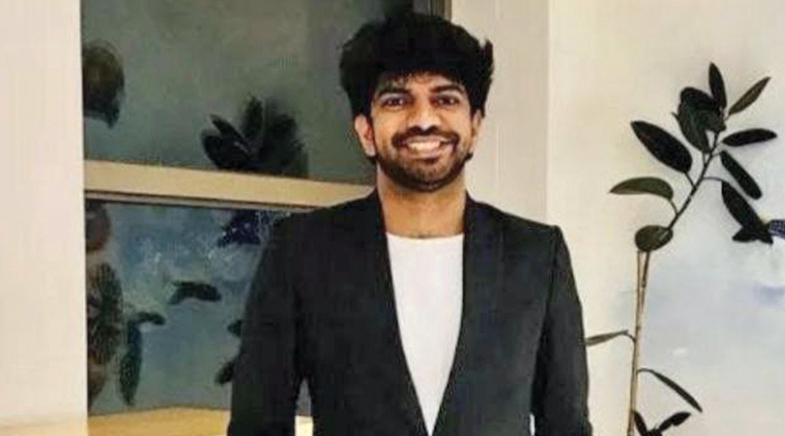
When two people close to Reuben Fernandes died from cancer, he decided he wanted to work in cancer screening. Fernandes, who had studied mechatronics at SRM University, went on to set up Atom360 with Rizma Banu, who had graduated in information science and engineering from the Mangaluru-based Bearys Institute of Technology. The two had earlier entered the IBM Watson AI XPrize contest, which required the use of artificial intelligence (AI) to develop solutions to problems facing humankind. They submitted a proposal for microbots and screening for oral cancer, the sixth-most common cancer in the world.
Oral cancer has the third-highest cancer mortality in India. Regular screening helps in early detection and treatment, but the start-up founders learnt from health experts that the cancer often goes undetected. So, they decided to develop a screening tool: a mobile app that uses AI to detect cancer. Lesions in the mouth are scanned using a smartphone camera, and the app diagnoses whether the lesion is or can be cancerous. The result is made available within a minute, Fernandes says. While a biopsy remains the gold standard for cancer detection, Atom360's AI-powered app has 95% accuracy, he adds.

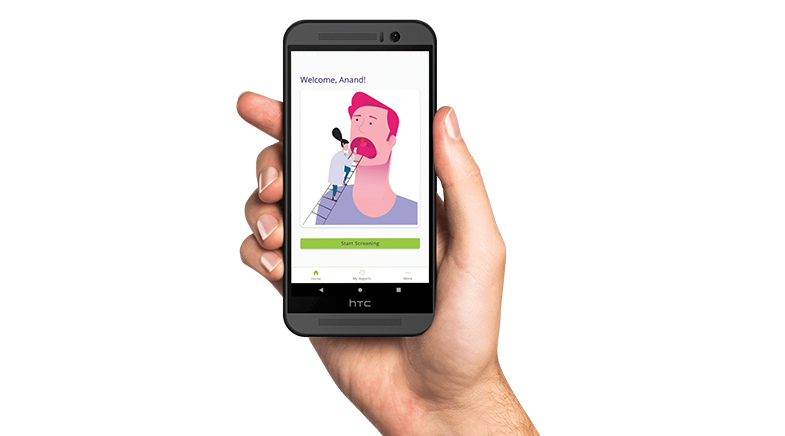
Atom360's flagship product is called Berry.care. Fernandes says the company fed nearly 1 lakh images of lesions to train the proprietary software to detect cancer. It took Atom360 a couple of years to collect the relevant data from non-governmental organisations (NGOs) and hospitals and train AI algorithms, after which the company developed its own annotation solution.
The company is doing large-scale validation studies in collaboration with hospitals and NGOs. Screening for oral cancer needs to become more widespread, which is possible only through hospital- and NGO-conducted camps, says Fernandes. Atom360's business model will be to work with medical institutions and other interested parties to screen for oral cancer, and the company will generate revenue through a pay-per-screening model. It hopes to launch the product commercially shortly.
CLUIX
Founders Robin Singh
and Chitranjan Singh
Year 2021
Big idea To develop a portable water quality monitoring device
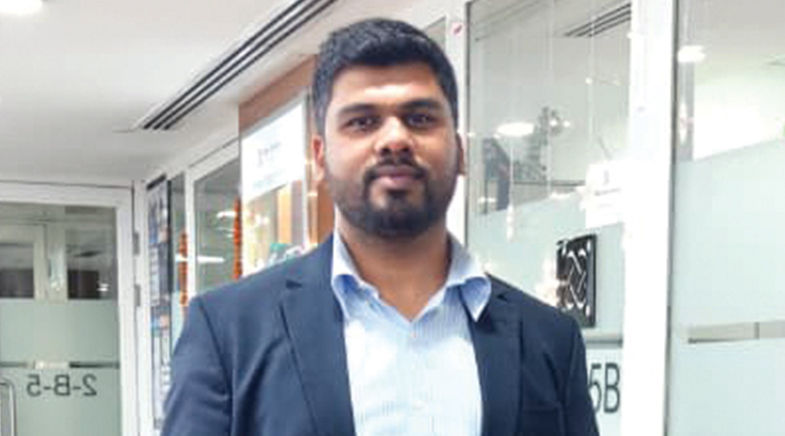
When Robin Singh entered a contest, organised by the government's Jal Jeevan Mission, on ways to assess impurities in water, the serial entrepreneur visited villages in Haryana to assess how field staff tested water quality. He found that the village-level workers had test kits that required them to follow instructions and then record the results. The process, Robin Singh felt, was too cumbersome; he wanted to develop a portable device that was simple to use and carried lucid instructions.
So, the electrical and electronics engineering graduate from the Thapar Institute of Engineering & Technology, Patiala, teamed up with his engineer father, Chitranjan Singh, to start a venture called CLUIX. They designed a water quality monitoring device but realised that the screen of the gadget needed to be larger — bigger than a smartphone's — and that the instructions had to appear on it.
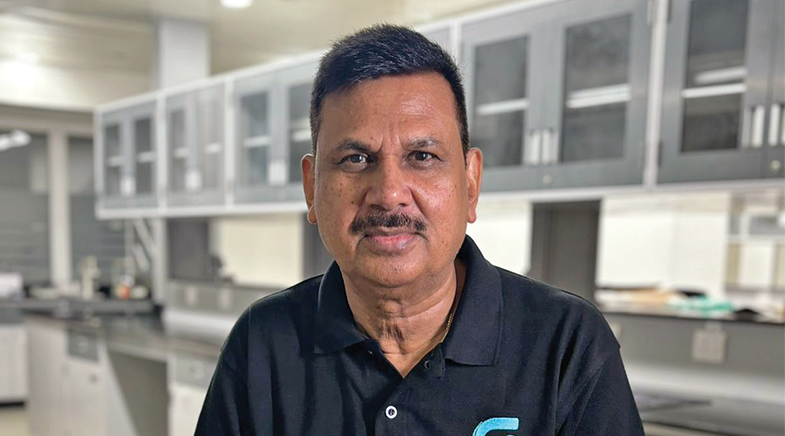
The improved device — CLUIX C012 — is a portable, multi-parameter water quality analyser that combines multiple sensing principles, so users do not have to rely on a single method, Robin Singh says. An array of photonics (mini spectrometry) can be used for spectrophotometric tests, with parameters best measured via reagent-based colour changes. For this, the device uses a controlled light source and optical detection to measure how much light the sample absorbs at relevant wavelengths. Nephelometry — which measures the intensity of light scattered by suspended particles — helps assess turbidity. The device shines light into a sample and measures scattered light at an angle (a nephelometric principle) that correlates with the suspended particles.
The device uses electrochemical sensing for conductivity, total dissolved solids, salinity and pH. The device runs calibration models, temperature/conditions compensation, signal filtering and quality assurance checks. The data are stored digitally.
The device has been commercially launched and is at an early revenue stage. The company's customers include State water utilities, industrial users, and organisations with large water systems — such as the Railways, Defence, hospitals, educational institutes and housing communities. According to Robin Singh, there is an overseas market, including in South-East Asia, Africa and West Asia, for the device. CLUIX has another product, Varunaa, an Internet of Things (IoT) device that monitors groundwater levels. Fitted to a borewell, it provides details on how much water has been drawn and the rate of groundwater replenishment. If attached to a motor, it sounds an alert when the volume of water extracted from the borewell exceeds the replenishment rate, he says.









Monsoon musings
New research and new technology for data gathering and computation are driving a rapid evolution of the science of monsoon forecasting.

Leap in the dark
Is the universe growing weary? New DESI data suggest it is.


Have a
story idea?
Tell us.
Do you have a recent research paper or an idea for a science/technology-themed article that you'd like to tell us about?
GET IN TOUCH