

Atomic secrets
-
- from Shaastra :: vol 05 issue 01 :: Jan 2026

Scientist who worked on the bomb peeled the layers back on nuclear structure.
In the late 1940s, Maria Goeppert Mayer faced a singular challenge. A physicist at the Argonne National Laboratory and The University of Chicago, she was curious about why isotopes of some elements were more stable and therefore more abundant than their counterparts. Elements with specific numbers of protons or neutrons (nucleons) — called 'magic numbers' — were unusually stable, but nobody knew why. She was determined to find out.
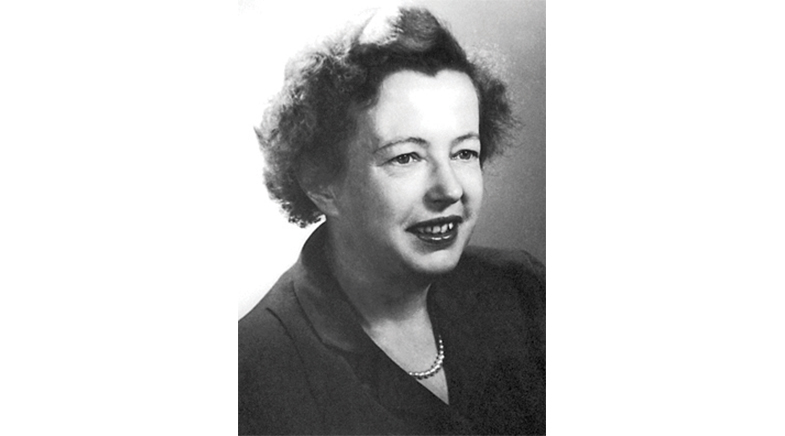
Growing up in Kattowitz or Katowice (now in Poland), Goeppert Mayer was encouraged to be "more than a woman" by her father, a sixth-generation university professor (bit.ly/Maria-Father). She initially studied maths, but after attending a seminar by physicist Max Born — who later became one of her PhD examiners — she switched to physics.
After her PhD at the University of Göttingen, she married chemist Joseph Mayer and moved to the United States. While he secured faculty positions first at Johns Hopkins University and later at Columbia University, she struggled to get hired.
During the Second World War, physicist Harold Urey recruited Goeppert Mayer to work on the Manhattan Project, a secret U.S. government programme to develop nuclear weapons. Her job entailed separating uranium-235 from natural uranium via photochemical reactions, a crucial effort towards building the atomic bomb. She also worked on Edward Teller's team, studying material properties at high temperatures.
BATTLING SEXISM
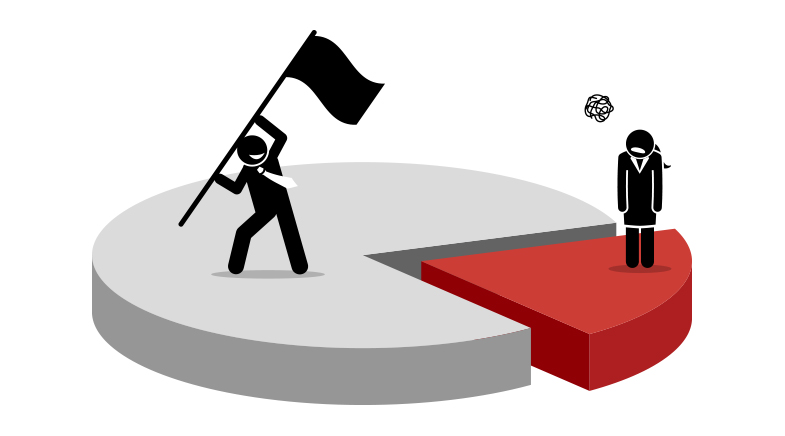
Like other women scientists, Maria Goeppert Mayer was denied deserving roles for decades. Universities that hired her husband claimed that anti-nepotism rules prevented them from employing spouses. When she won the Nobel, a San Diego newspaper published the news with the headline: "S.D. Mother Wins Nobel Prize" and referred to her as "Mrs Mayer" (bit.ly/SD-Mother). She became a full professor only at 54.
When the war wound down, the Mayers moved to Chicago. By now, she had brushed up on nuclear physics and collected a trove of data on nuclear properties. At that time, scientists thought the atomic nucleus was like a liquid drop in which nucleons collectively influenced its properties. But she believed in a different theory: the nucleus was composed of shells, much like onion layers, in which nucleons moved independently, just like the electrons outside. Nuclei with filled outer shells were the most stable. But why?
The answer apparently came to her one day in 1949 while chatting with her colleague, Enrico Fermi. As Fermi stepped out to take a phone call, he casually asked her whether she considered spin-orbit coupling in her calculations. It was the 'Eureka' moment she was waiting for. When Fermi returned, she bombarded him with her characteristic excited chatter, at which he smiled and replied, "Tomorrow, when you are less excited, you can explain it to me" (bit.ly/Maria-Fermi).
SPARED GUILT
Goeppert Mayer was conflicted about her work on the Manhattan Project. Although she understood its importance and was staunchly against Nazism, she worried about how the atomic bomb might be used against friends and family in Germany. She admitted years later that, when her uranium separation project failed, she was secretly relieved (bit.ly/Maria-Relief). She said: "We found nothing, and we were lucky... we escaped the searing guilt felt to this day by those responsible for the bomb."

What Goeppert Mayer had realised was that if the direction of the nucleon spin and motion were aligned, the particles were bound more strongly. Scientists had earlier dismissed this idea because the coupling had little effect on electron shells. But inside the compact nucleus, this effect was magnified. At specific nucleon numbers (2, 8, 20, 28, 50, 82, 126), the coupling created energy levels with large gaps that prevented the nucleons from becoming free easily, making the nucleus more stable.
A German team led by Hans Jensen also made this discovery around the same time; in a rare instance of collegiality in scientific circles, Goeppert Mayer befriended Jensen and published a book with him. The two, along with Eugene Wigner, won the Nobel Prize for Physics in 1963, making Goeppert Mayer the second woman to receive it after Marie Curie.
Ranjini Raghunath is a Bengaluru-based science writer and editor.










Economist as engineer
Why tech companies are building strong teams of economists.



Have a
story idea?
Tell us.
Do you have a recent research paper or an idea for a science/technology-themed article that you'd like to tell us about?
GET IN TOUCH