

Fruitful exercise
-
- from Shaastra :: vol 05 issue 11 :: Nov 2026

New technological tools are helping scientists better understand how physical workouts work their magic.
The benefits of exercise are not hard to fathom for any observant human being. Go for a 30-minute brisk walk, and you feel its impact soon after. Walk every day and then stop for a few days, and the reduced sense of well-being is hard to miss. So, it is not surprising that exercise had been prescribed for good health by ancient physicians even 2,000 years ago. Susruta, the Indian surgeon and physician who lived around 600 BCE, gave the first recorded prescription of exercise to his patients, carefully noting that each person needed to be aware of his or her capacity. The Chinese, the ancient Greeks, and the Romans all knew that exercise could work miracles if done properly and diligently. They didn't know how or why exercise worked, but this lack of knowledge didn't prevent them from designing effective exercise regimens. Intuition is one of humanity's greatest assets.
It took a long time, more than two millennia after Susruta, for doctors and scientists to investigate exercise from physiological and molecular points of view. A key breakthrough was the understanding of gas exchange in the lungs, which led scientists to note the connection between breathing and exercise, and later between heart rate and exercise. This happened in the late 18th century, and it took more than another century for biologists to look at exercise from a physiological perspective. In the early decades of the 20th century, scientists began to understand the core concepts of metabolism, how the body converts food into cellular structure and energy — and thus motion. British physiologist Archibald Hill made a breakthrough when he understood, in numerical terms, how muscles use energy. He shared the Nobel Prize in Physiology or Medicine in 1922 with German physiologist Otto Meyerhof for this work.
Molecular understanding is facilitating a new use for exercise: as a prescription for disease.
Hill, who was deeply interested in exercise physiology, had been measuring his oxygen intake while exercising, and noticed an unusual fact: his oxygen intake plateaued after a while. This led him to develop the concept of VO2 max, the maximum amount of oxygen a person can use. It remains a key concept in exercise science even now and a measurable indicator of health and longevity. Soon after Hill developed his ideas, Harvard University opened a dedicated lab for exercise science, which pushed the field ahead for the next two decades. By the 1960s, technology had advanced enough for scientists to take tiny muscle tissues using needles for analysis before and after exercise. By the 1990s, molecular biology was rapidly developing as a science, with sophisticated tools that helped scientists to probe health and disease at the molecular level.
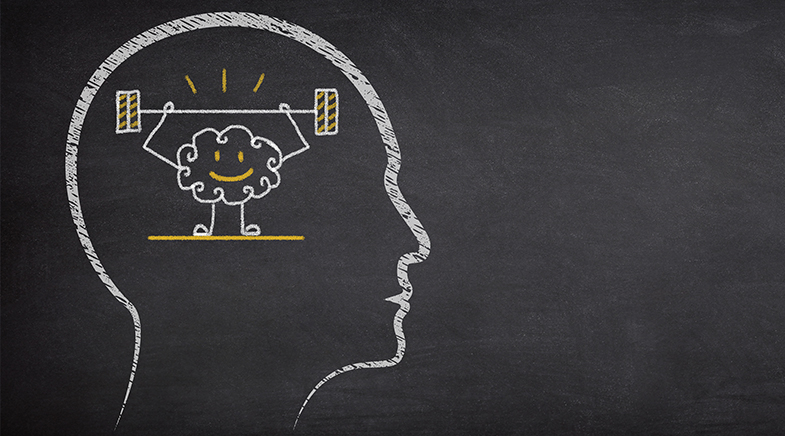
As the world moved into the new century, scientists discovered a set of molecules called myokines, released by muscle during exercise, which travelled to several tissues — the brain included — and improved metabolism and reduced inflammation. In the two decades since then, tools have improved enough for scientists to peer into tissues and cells as someone exercised. Wearables let them get information in real time. A combination of tools called metabolomics lets them analyse how molecules behaved in the body during exercise and at rest. Now, these tools have matured enough for scientists to understand how exercise works its magic. And why it does it in specific ways.
Richa Malhotra's Cover Story from A stretch in time... describes the developments in the field over the past five years. Although molecular tools have been available for a decade or more, they have matured recently, and scientists have been using them more widely to study the molecular signatures of exercise. The result is an explosion of knowledge, with profound implications for health and disease. While the overall recommendations for exercise are not likely to change, molecular understanding is bringing about a new use for exercise: as a medical prescription. This is because scientists can now distinguish the molecular changes in the body caused by different kinds of exercise. Doctors can tell their patients not just to exercise and for how long. They can specify what kind of exercise to do, for how long, at what intensity, and at what time. They can adjust these recommendations based on the patient's needs. Exercise has truly become a part of medicine.
See also:



Believe it or not
Detectors are upping the ante to spot realistic-looking deepfake videos.

A million-dollar question
OpenAI's award-winning solution to the Navier-Stokes equation opens up a debate.

The science is sound
Sound waves are being increasingly channelled to probe nature, with significant potential applications.



Have a
story idea?
Tell us.
Do you have a recent research paper or an idea for a science/technology-themed article that you'd like to tell us about?
GET IN TOUCH