

Getting in shape
-
- from Shaastra :: vol 05 issue 11 :: Nov 2026

Exercise science takes on a new form with brief bouts of activity.
A decade ago, after the downsides of prolonged sitting became widely known, an encouraging piece of research came out in The Lancet. It found that individuals who did 60–75 minutes per day of moderate-intensity physical activity did not have an increased risk of premature death — even if they sat for more than eight hours. "It's quite a lot of physical activity," says Ulf Ekelund, Professor at the Norwegian School of Sport Sciences and lead author of the 2016 study (bit.ly/undo-sitting). Physical activity can likely eliminate the detrimental effects of too much sitting, he says, but it requires one to be active at a high level.
The 2020 physical activity guidelines of the World Health Organization (WHO) recommend that adults get at least 150–300 minutes of moderate-intensity, aerobic physical activity per week. But if you have to sit a lot, then you should strive to do more than the upper limit of the recommendation, says Ekelund, who leads the Norwegian School's WHO Collaborating Centre (Physical Activity and Population Health). According to a WHO analysis, though, one-third of the world's adults do not meet its recommended levels of exercise — which also include at least two days of strength training targeting all the major muscle groups — let alone go above and beyond.
To get people to move, scientists are now warming up to the idea of improving activities of daily living and introducing brief bouts of exercise that break up long hours of sitting. These non-traditional ways to exercise may well offer some, if not all, of the known health benefits of regular exercise. And thanks to wearable devices, scientists can keep watch.
Step up
Ekelund's January 2026 research, also published in The Lancet, addressed a different concern than his 2016 study on sitting: "We wanted to understand how small increases in physical activity on population level may prevent deaths." Previous studies have estimated deaths theoretically prevented if all the individuals who did not meet the recommended guidelines were made active as per the guidelines. "Not everybody can be physically active according to the recommendations," Ekelund says. Yet, there are benefits to be had from small changes among the inactive. That is because research shows that the largest reductions in health risks are seen when someone goes from doing nothing to something.
‘Exercise snacks’ aren’t snacks that fuel exercise and recovery, but short bouts of high-intensity exercise that you can nibble on.
Increasing moderate-to-vigorous physical activity time, through brisk walking for instance, by just 5 minutes per day — in the least active — can theoretically avert 6% of deaths in the population, Ekelund's study found (bit.ly/five-more-minutes). If everyone in the population (except the most active individuals) increased their activity time by 5 minutes, it would prevent 10% of the deaths. In other words, the least active make up 6% of the deaths, and the remaining contribute only 4%. The question then arises if the focus should be on the least active or everyone in the population. It is a long-standing debate in the field, Ekelund says, but with these results one could argue both ways. Introducing population-level interventions to increase activity will require environmental and societal changes that create opportunities for physical activity in everyday life — like making it easy to walk and cycle. That approach may also include the least active.
Another science-backed way to break the cycle of sitting and inactivity is with snacks.
Snack o'clock
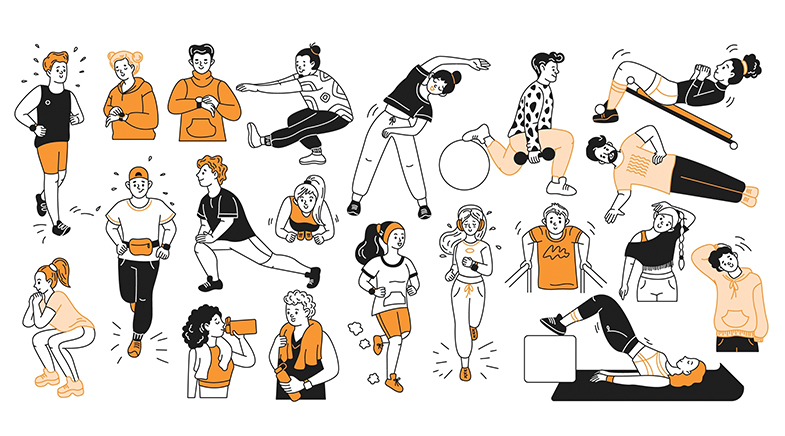
Contrary to their name, 'exercise snacks' aren't snacks that fuel exercise and recovery — those would be pre- and post-workout snacks, such as protein bars and shakes. Exercise snacks are short bouts of high-intensity exercise that you can nibble on a few times in a day. Two key features make them attractive, says Jonathan Little, Professor at The University of British Columbia, Canada. Other than being very short, they are done at a high intensity to harness some of the benefits of more vigorous exercise. While Little considers bouts that last up to one minute as ideal snacks for his research, some researchers count 5- and 10-minute bouts as snacks, too.
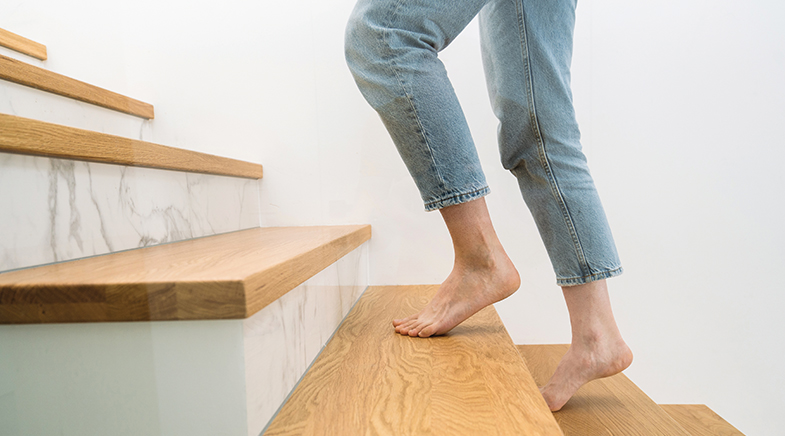
Snacks include mountain climbers, jumping jacks, squats, burpees, lunges, marching on the spot and high knees, or activities such as climbing stairs that can be done at home or in the office. It's like high-intensity interval training (HIIT) but scattered throughout the day — instead of a dedicated session. Under HIIT, a high-intensity exercise is followed by a brief period of recovery, and the pattern is repeated.
Although this is an emerging area of research, studies prove that exercise snacks can improve cardiorespiratory fitness or VO2 max (maximal oxygen uptake) — a measure of fitness that's become increasingly popular. "That's essentially a way of assessing how good are your heart, lungs and muscles at generating the energy you need to perform exercise," explains Little. It's not the same magnitude of improvement as seen with HIIT or progressive endurance training, he says. "Good benefit, but it's not maxing out the benefit, and it's certainly not the same as traditional type of exercise strategies."
Still, it has something to offer. "We know that sitting too long or being sedentary is bad for you, so exercise snacks can naturally break up some of that," says Little. His research shows that exercise snacks improve blood sugar regulation (bit.ly/snacking-benefits), insulin sensitivity (bit.ly/sitting-breaks), and blood flow to the legs (bit.ly/stair-snacks). Though the underlying mechanisms of snacking are not yet known, going out of breath from short exercise bouts might trigger cardiovascular fitness adaptations. And carrying them out at a vigorous intensity might engage more muscle mass. Little explains that when muscles are activated, they take up more glucose and are more sensitised to insulin.
Non-exercise exercise
A short-form activity concept that's taken hold alongside snacks is VILPA: vigorous intermittent lifestyle physical activity. VILPA and exercise snacks complement one another, says Emmanuel Stamatakis, Professor of Physical Activity, Lifestyle and Population Health at Monash University, Australia, who conceptualised VILPA. "Exercise snacks are essentially the more structured equivalent of VILPA." VILPA is short bursts of incidental activity embedded into daily living that reach vigorous intensity for up to a minute. "It's not systematic; people do them, and they don't always know that they're doing them as part of their occupation or their transportation from place to place." VILPA is also based on the same physiological principle that's behind HIIT: the body responds to a high-intensity stimulus when followed by rest.
Stamatakis's colleague Matthew Ahmadi, an Associate Professor at Monash University, says that VILPA can include any number of activities of daily living, but the easiest example is if you're going for a comfortable stroll, you mix in brief bursts of fast walking for 30–60 seconds at a time. "At the end of the day, you've actually accumulated around three to five minutes." Taking the stairs, doing household chores at a fast pace, carrying shopping bags and backpacks or walking uphill, all count as VILPA.
The current environment isn’t built to encourage activity. Having all our daily needs door-delivered keeps people from moving.
Ahmadi specialises in wearable devices and using pattern-recognition machine learning techniques to make sense of the lifestyle activity data. With wearables, be they research-grade accelerometers or consumer-grade devices such as fitness bands, scientists can collect data at a granular level, down to the sub-second. "You can look at not only total volume, but different patterns of accumulation, impacts of different timing of day or consistency of activity or sleep, [and] how those relationships can impact risk of diseases," Ahmadi says. "Through wearables, we've been able to actually identify substantive decreases in disease risk that are comparable to the studies that do focus on exercise."
In a study published in January 2026, the Monash researchers reported that middle-aged and older adults who do 5–8 bouts of VILPA per day have a much lower risk of death, in the range of 40–55%, than those who don't engage in VILPA (bit.ly/VILPA-2026).
"Beyond just the non-exercise versus exercise, we're also now looking at daily steps and step accumulation," says Ahmadi. The researchers found that the pace of walking (intensity) and pattern of step accumulation matter. "In physical activity epidemiology, in the last 5–7 years, we have started appreciating that the pattern of how exercise and physical activity is done is critical," says Stamatakis. "It's not about how much we do — the amount of activity — it is about how we move as well." High-intensity physical activity, whether done as part of structured exercise or day-to-day living, seems to go a long way, he says. "It's very time-efficient."
How to support the population to adopt this behaviour, turn it into a habit and maintain it in the long term is a different story, and perhaps the most challenging part, according to Stamatakis, who is developing a set of interventions using consumer-grade wearables and artificial intelligence conversational coaches for inactive people who aren't keen on, or don't enjoy, structured exercise. Another goal of his is to incorporate exercise snacks and VILPA interventions in the same package. Because exercise snacks are intentional and include strength-promoting exercise, they help maintain muscle mass and strength to a larger extent than VILPA, which is mostly walking-based, he says. Together, they offer behavioural flexibility and choice.
There are other ways to get exercise without thinking of it as exercise, and one involves an activity people already enjoy — gaming.
Exercise but make it fun
Exergaming, short for exercise gaming, may not sound new if you think back to gaming arcades and the movements needed to play those games. But lately it has taken on a new life as a tool to encourage physical activity at home, especially among the young and old. "If we can integrate movement in a way that's really fun, then people are able to be physically active while they're playing the game — without even realising it," says Amanda Staiano, Professor and Director of the Pediatric Obesity and Health Behavior Laboratory at the Pennington Biomedical Research Center, U.S.
Staiano has been applying exergaming as part of health programmes to fight obesity and physical inactivity among children and adolescents. She has worked with young people diagnosed with mental health conditions such as depression and anxiety. Staiano relies on popular, commercially available video games that require upper- and lower-body movements to play. These are not meant to replace other physical activity, she says, but to help the young meet their activity goals. Children and adolescents need an hour of moderate-to-vigorous intensity physical activity every day for growth and development.
Gaming platforms such as Xbox also offer geriatric wellness in the comfort of the home. Research shows that exergames can help improve balance, mobility, and coordination among older people. The WHO recommends that adults over 65 years do multicomponent activity that promotes balance and strength to prevent falls, which can stop them from doing any activity at all.
Motivation, or the lack of it
The human body has 206 bones, some 600 skeletal muscles and more than 250 joints. These evolved so humans could move around, says exercise physiologist Baskaran Chandrasekaran. Even today, members of a hunter-gatherer population living in Northern Tanzania average a daily step count of 15,000 (bit.ly/15Ksteps). And yet, the modern, desk-bound human can muster only about 5,000 steps per day. Chandrasekaran, who is Associate Professor at the Symbiosis School of Sports Sciences in Pune, says he was shocked by the Indian office worker's average step count in his recent study (bit.ly/office-steps). Despite the physiological effects and health benefits of exercise, he says, it is difficult to get people to move.
The current environment isn't built to encourage activity, either. Earlier, occupational activities were purely manual in nature, and people used to carry heavy loads; nowadays most jobs are mechanised or computerised, Chandrasekaran says. According to Stamatakis, exercise requires special arrangements and motivation. "In certain contexts, people need to spend money, so there is a socio-economic barrier." Having all daily needs available at the doorstep, from groceries to cooked meals, also allows people to be sedentary. Evolutionarily, catching a deer would have meant getting exercise and a snack together.
Even though the field of exercise science is heading in the direction of improving lifestyle activities, Ahmadi says it is also not going away from the established modalities, which is primarily exercise. "We want to promote the two in tandem." Stamatakis is optimistic that the WHO will update its guidelines by 2030. "It is critical that this update happens," he says. "There has been no other time in the history of physical activity and exercise science that so many things happened, and there's been such a fast pace of progress, within a decade."
See also:


Looking ahead
In the New Year, we zero in on some long-term trends and fields that will change business and society.
Reimagining plastic
Researchers are fashioning innovative solutions to the perilous problem of plastic pollution.


Have a
story idea?
Tell us.
Do you have a recent research paper or an idea for a science/technology-themed article that you'd like to tell us about?
GET IN TOUCH