

More than a gut feeling
-
- from Shaastra :: vol 05 issue 05 :: May 2026

The gut-brain axis is likely to be the harbinger of several combinatorial evolutions over the next decade.
In 1962, in his book The Structure of Scientific Revolutions, American philosopher of science Thomas Kuhn challenged the scientific community by stating that science did not advance by slow accumulation of knowledge. Instead, he said, it advances in spurts, when periods of slow growth – normal science – are interrupted by periods of revolutionary changes. He called this sudden change a paradigm shift, which is a complete conceptual change in the way scientists look at the world. Kuhn received considerable resistance in the academic community to his ideas. The Structure, as Kuhn called his book, was not easy reading, but it became a bestseller over time. By the 1980s, more than a million copies had been sold. It was translated into 16 languages. The phrase paradigm shift moved out of the academic world into the world of business.
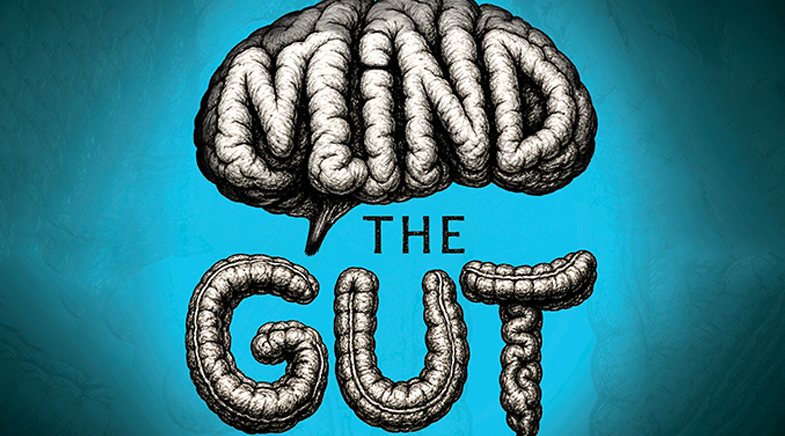
Our Cover Story celebrates a paradigm shift in the fields of biology and medicine, centred on the gut-brain axis. The shift results from the combined effects of several sub-disciplines.
The key idea of the book was that during most periods in science, anomalies accumulate in observations and ideas that scientists have about the world. These anomalies are initially dismissed as unimportant or kept aside for future investigation. Over time, they accumulate, and force science into a crisis. Then, new concepts arise that are totally different from those that preceded them. After this paradigm shift, science soon returns to its normal mode once again.
His examples were picked from early scientific history to the modern age. The Copernican Revolution was a paradigm shift: the Sun became the centre of the universe instead of the Earth. Newton's Laws are not an extension of the Aristotelian paradigm; they are a completely new way of looking at motion. Antoine Lavoisier developed a new theory to explain combustion, rejecting the old notion about phlogiston, a substance that many believed was released when things burned. Both quantum mechanics and relativity were new paradigms in physics.
Almost all of Kuhn's examples had been drawn from physics and chemistry, disciplines with strong theoretical frameworks. Despite paradigm shifts such as the germ theory of disease and the structure of DNA, Kuhn was sceptical that his ideas applied to biology.
Later thinkers extended his ideas to more specific situations. The idea of disruptive innovation, formulated by Harvard Professor Clayton Christensen, is an extension of paradigm shift thinking. So was the concept of techno-economic shifts developed by British-Venezuelan economist Carlota Perez, who worked at Cambridge.
A COMBINED EFFECT
This month's Cover Story celebrates yet another example of a paradigm shift adapted to the modern world and the fields of biology and medicine. Here, somewhat like the theories of American economist and complexity researcher W. Brian Arthur, the shift is not characterised by one single discovery; it results from the combined effects of several sub-disciplines. Seen through Arthur's lens, it is a good example of combinatorial evolution.
The key idea of the gut-brain axis is self-explanatory: the gut and the brain influence each other in health and disease. It was anticipated by several ancient cultures, but modern medicine lacked the tools till recent decades to observe the precise mechanisms of their mutual influence. In the late-20th and early-21st centuries, high-throughput sequencing enabled the mapping of complex and interacting gut microbiomes. The development of germ-free animals enabled biologists to introduce specific bacteria into the gut and examine their metabolic effects. Although the vagus nerve was discovered in the 19th century, its true size and function were appreciated only from the 1990s. Beginning early this century, technology allowed scientists to map the interactions of gut bacterial metabolic products on the human brain.
Manupriya's Cover Story combines all these influences to show how decoding the gut-brain axis has become an important part in researching and treating brain and psychiatric disorders. On the other hand, it also shows how mental states (or brain states) can influence gut bacteria and, therefore, overall health. Moreover, recent knowledge also points to new ways of treating neurodegenerative diseases like Parkinson's and autism. Some of these treatments are already showing promise. The gut-brain axis is the perfect example of combinatorial evolution as explained by Brian Arthur. It is likely to be the harbinger of several other such evolutions over the next decade.
See Also:
Mind the gut
'It's hard to treat the brain isolated from the gut'









This glass may be scratch-proof
A graphene oxide-based coating promises to make glass scratch-resistant.

The rise of quantum.in
Start-ups are gearing up for a new era of computing, sensing and communications in the field of quantum.

A cosmic riddle
An afterglow from a neutron star merger has astrophysicists aflutter: could this be a unique 'superkilonova'?



Have a
story idea?
Tell us.
Do you have a recent research paper or an idea for a science/technology-themed article that you'd like to tell us about?
GET IN TOUCH