

Mind the gut
-
- from Shaastra :: vol 05 issue 05 :: May 2026
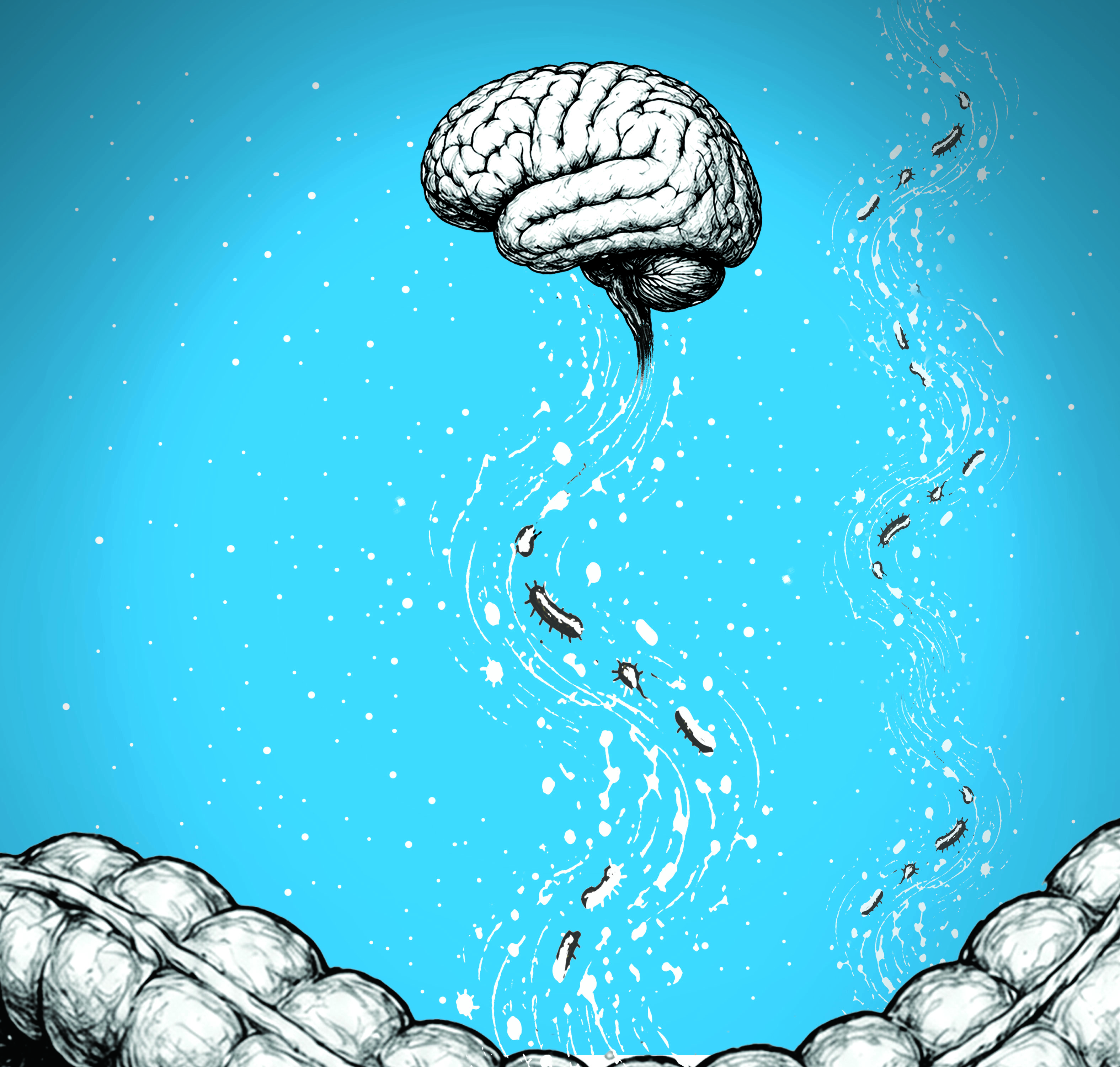
New research into the gut-brain axis shows how gut microbes and their signals affect brain health, paving the way for novel experiments and new therapies.
Mayukha's father had sensed trouble just five days after she was born. The baby wasn't latching properly and had recurring constipation, vomiting, and colic pain. She was about 18 months old in 2016 when she was diagnosed with autism. Her paediatrician could only provide her with symptomatic care. By the time she turned five, she had developed nephrotic syndrome, a serious condition in which a substantial amount of protein is lost through the kidneys into the urine. Her father — Hyderabad-based cardiologist Chandrashekhar Thodupunuri — scoured around for solutions to Mayukha's problems. During his research, he came across articles published by Japanese scientists suggesting that the absence of certain gut bacteria, such as Clostridium butyricum, may be linked to conditions like nephrotic syndrome.
He ordered Clostridium butyricum probiotics from Japan. At that time, Mayukha's nephrotic syndrome was being treated with steroids. "If we stopped the treatment, within a week, or 10 days, it (the syndrome) would come back," says Thodupunuri. By the time the probiotic arrived, Mayukha had already had seven episodes of the syndrome; the last of them was particularly serious. However, after starting the probiotic, she showed signs of improvement. In a few months, the intervals between the episodes began to grow. Her gross motor abilities improved.
This was before the COVID-19 pandemic. Once the pandemic spread, Thodupunuri couldn't get the probiotic shipped from Japan. He knew it was time to try a new approach. He had been thinking about Faecal Microbiota Transplantation (FMT) for a while, reading up on it, and talking to experts and parents of autistic children who had opted for it. FMT is a medical procedure in which healthy microbes obtained from the faeces of a carefully screened donor are transferred into the recipient's colon. In other words, it is a stool transplant. In the last decade or so, it has been most successfully used to treat recurrent Clostridioides difficile (C. difficile) infections of the colon. In the last five years, research, pilot studies, and even trials on the use of FMT to treat neurological diseases have grown in numbers.
In 2020, Thodupunuri decided to try FMT on his daughter, with the excreta of his 8-year-old niece. He and his wife figured out a simple home-based protocol and gave an extract of their niece's faeces, after testing her health markers, as enemas to their daughter. They did it every day for the next 15 days. It was an unconventional approach and came with risks. "Luckily, it worked," he says. "Her gut issues settled, her nephrotic syndrome stopped." To sustain the effect of FMT, they continued with the practice almost every day for six months. They added more children to their donor pool for "better efficacy", he says. The donors were all children of their friends and family, who were in good health. Thodupunuri prefers children as donors because their exposure to harmful chemicals and environments is lower than that of adults, implying that their gut microbiome is more likely to be healthy.
The FMTs had a positive impact on Mayukha's health. Her muscle tone improved, as did her cognitive and learning abilities, sleep and sensory issues, food allergies, and even her response to her therapist. Although she remained autistic, her day-to-day experience improved significantly.
GROWING INTEREST IN FMT
Studies show that FMT is beneficial for many other diseases. Research points to an association between dysfunctional gut bacteria and disorders, such as Alzheimer's and Parkinson's. A 2024 study (bit.ly/Parkinsons-gut) led by Trisha Pasricha, a physician-scientist at Beth Israel Deaconess Medical Center in the U.S., showed that patients with damage to the lining of their upper gastrointestinal tract were more likely to develop Parkinson's disease — on average after 14.2 years — suggesting that the disease process may begin in the gut long before the first tremor appears. A double-blind, placebo-controlled trial on FMT (bit.ly/FMT-Impact), reported in 2024 in The Lancet, has shown positive outcomes in people with Parkinson's disease.
FMT is a medical procedure in which healthy microbes obtained from the faeces of a carefully screened donor are transferred into the recipient's colon.
Studies abound across the globe on the use of FMT for managing autism. The ongoing global work — and Mayukha's experience — created such a deep impression on Thodupunuri that he left cardiology to concentrate on microbiome research. He now runs the Resplice Institute in Hyderabad, which provides care for autistic children and conducts research on gut microbiome. As part of a pilot study, the institute looked at the impact of FMT on 50 autistic children. He is now preparing for a full-scale randomised controlled trial to study the impact of FMT on autistic minors.
One of the children, who was part of the pilot study, was seven years old when he received the FMT therapy. He was severely autistic, largely non-verbal and incontinent. His family was based in Canada, and his mother, S. Nausheen, says they spent thousands of dollars on therapy over the years, but nothing helped. A few weeks of FMT at Resplice Institute, however, proved transformative for her son. He started accepting and eating a varied diet comprising vegetables and other foods. More important, he started voicing his need to visit the bathroom. "The fact that my son developed the life skill to go to the washroom… that itself is excellent," Nausheen says.
Nausheen and Thodupunuri's experiences are not isolated. In a widely cited 2017 study (bit.ly/FMT-Study), researchers from Arizona State University (ASU) in the U.S. and other institutions conducted a microbiota transfer therapy study on 18 autistic children. The participants saw a substantial reduction in gastrointestinal problems and improvements in behavioural symptoms. The gains lasted at least eight weeks after the treatment ended. The children also showed increased bacterial diversity and more beneficial bacteria, such as Bifidobacterium and Prevotella, in their gut. The improvements continued for two years, a follow-up study on the same participants revealed. A 2022 study by Chinese researchers on 49 children showed that FMT relieved constipation and improved sleep disorders in children with autism.
THE GUT AND THE BRAIN
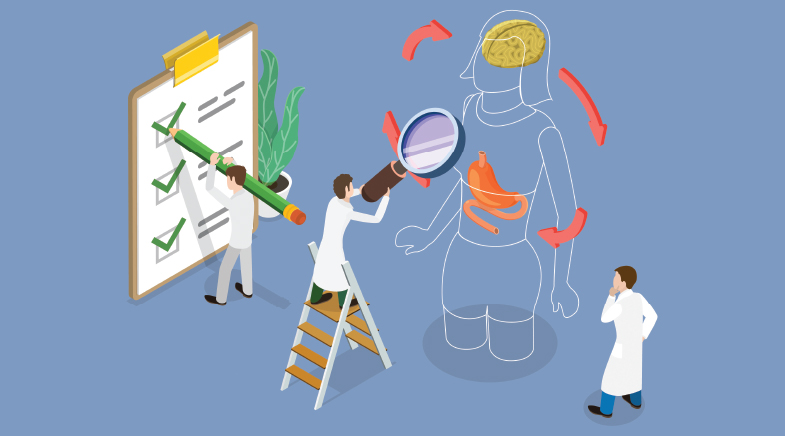
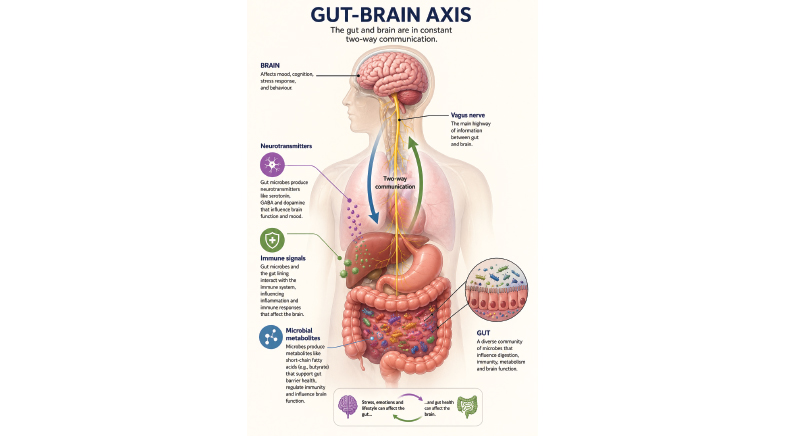
What connects these scattered experiments — from Hyderabad to Arizona — is a radical idea: that the gut and its residents can act as a tool to modify brain activity and behaviour. This is part of the broader concept of the gut-brain axis (GBA), which posits two-way communication between the gut and the brain. This axis is purportedly why procedures such as the FMT, where the gut microbial population is modified, help people with autism or Parkinson's.
The gut and the brain have two major conduits of information. One is the direct physical connection via the vagus nerve and the enteric nervous system. The vagus nerve is like a highway sending sensory information from the gut to the brain and motor signals from the brain back to the gut. The second conduit is via the innumerable chemicals and by-products of gut microbial metabolism, called metabolites. The metabolites exert their influence by working as chemical messengers or by modulating the immune system. Notable examples of such chemicals are neurotransmitters — serotonin and gamma-aminobutyric acid (GABA) — and short-chain fatty acids (SCFAs), such as butyrate, which help maintain gut barrier health and support immune cell development. The axis is like a constant feedback loop: mental upheaval can show up as gut problems, and gut issues can influence mood, cognition, and mental health.
The GBA is like a constant feedback loop: mental upheaval can show up as gut problems, and gut issues can influence mental health.
The basic idea of the gut-brain axis is ancient: historically, medical practitioners in many cultures had linked emotion and mood to digestion. Modern medicine has been slow to embrace the concept. Medical practitioners began noticing the gut-brain connection in the 19th and early 20th centuries, but many gut problems — such as the Irritable Bowel Syndrome (IBS) — were shrugged off as psychosomatic. Serious research into gut flora began in the 1990s, and the knowledge has grown rapidly in the last two decades. The field has evolved from recognising that the gut and brain talk to each other to understanding that gut microbes have a significant say in this conversation. Now, efforts are on to turn that conversation into insights into better health or treatments.
NEW CONNECTIONS
Anuradha Kumari, postdoctoral fellow at the Emory National Primate Research Center, Emory University, U.S., entered the field of gut-brain axis research with an unusual observation in the lab. She and her colleagues observed some mice in their lab spinning continuously in their cages. After examining the mice, the researchers found that the brains of the spinning mice harboured gut-associated bacteria. This was a surprise. "The brain is traditionally considered a sterile organ. We thought it was probably contamination," says Kumari. They repeated the experiments several times — five different people in the lab did them independently over a few years. But the results remained the same. Finally, they were ready to believe what they saw. The control group of mice, used for comparison in these experiments, didn't have bacteria in their brains.
They later found that mice with bacteria in the brain had gaps in the mucosal lining of the intestines that allowed metabolites, microbes, and food particles to escape from the gastrointestinal tract. This gap was functional rather than structural. When the researchers artificially induced such a gap in some mice, they again found bacteria in the mice's brains. Their next job was to figure out how the bacteria were travelling from the gut to the brain. The obvious answer was blood. However, when the scientists cultured the blood, they found no bacteria. Over time, no matter how many different methods they tried, they could not find the bacteria moving through the gut into the blood. When the scientists examined scientific literature, they found that some proteins travel from the gut to the brain via the vagus nerve. This information gave their research a new direction.
They examined the vagus nerve and found bacteria in it. Eventually, in a study published in March 2026 in PLOS Biology (bit.ly/Brain-Bacteria), Kumari and her colleagues reported that bacteria could physically travel to the brain via the vagus nerve in mice, suggesting that the gut-brain axis may involve not just chemical signals but direct microbial movement. The researchers also detected low levels of gut-associated bacteria in the brain and along the vagus nerve in mouse models of Alzheimer's, Parkinson's, and autism. Although the findings have yet to be tested in humans, the study adds a new layer to research on the gut-brain axis.
Earlier studies mostly examined how signals (chemicals, inflammation) travel across the gut-brain axis, but did not examine the physical migration of microbes. A 2025 study (bit.ly/Cells-Behaviour) by researchers from McMaster University, Canada, has also shown that in the absence of the right gut microbes, immune cells in the gut can physically travel to the brain and affect the behaviour of mice. Together, these studies suggest that the gut-brain axis may involve not just signalling but also biological traffic between the gut and the brain.
FROM WHO TO WHAT
Many early studies on the gut microbiome sought to identify the organisms that lived there. By comparing gut microbial composition between individuals with and without a health condition, researchers hoped to identify microbes associated with specific diseases. But, increasingly, research has shown that the presence or absence of certain microbes does not always lead to disease.
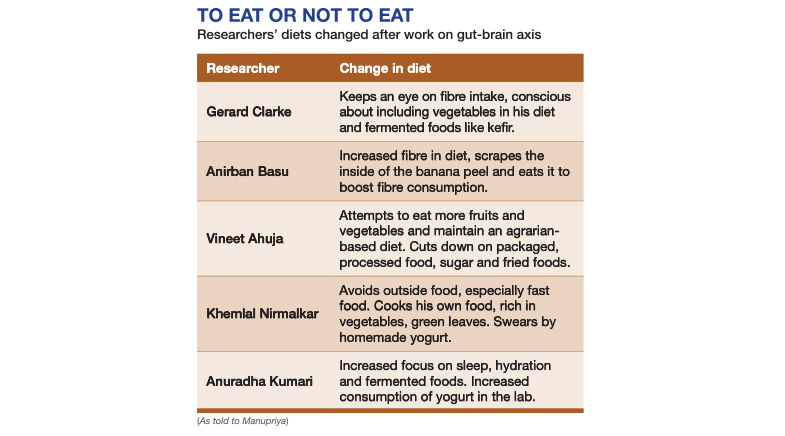
"The specific functional outputs of the microbiome may be more important than the composition per se because sometimes different microbes can do the same thing," says Gerard Clarke, Professor of Neurobehavioural Science in the Department of Psychiatry and Neurobehavioural Science at University College Cork (UCC) in the U.K. "So even if I'm missing a microbe that you have, I could still have a similar functional output, because the microbes that I have in the community have a repertoire of functions that render the microbiome sufficient for what's needed," says Clarke, who is also the Principal Investigator in the UCC's research centre, APC Microbiome Ireland.
According to Clarke, this is why more and more studies in the field now look beyond sequencing bacterial DNA. Metabolomics, the study of metabolites, enables researchers to understand the microbial metabolites produced. "Members of our microbiome are little mini factories. They're churning out these microbial metabolites from the raw materials we give them in our diet to create metabolites that can interact with the host and have an impact on physiology and then work at sites beyond their production in the gut," he says.
In a 2025 paper, researchers from Belgium showed that different nutrients triggered distinct patterns of activation in enteric neurons.
In the last decade or so, several studies have supported this idea. In a widely cited 2015 study (bit.ly/Gut-Fatty-Acids) in Nature Neuroscience, researchers showed that short-chain fatty acids produced in the gut were key to the maturation and activation of microglial cells in the central nervous system. More recently, in a 2025 paper in Nature (bit.ly/Distinct-Patterns), researchers from Belgium showed that different nutrients triggered distinct patterns of activation in enteric neurons. The researchers used different nutrients, glucose, amino acids, and short-chain fatty acids, and found that each activated a different neuronal ensemble. The researchers also showed that it was the gut epithelial cells — the outermost layer of cells — that first sensed the different nutrients in the gut, and then relayed the information to the gut neurons.
In addition to gut-brain axis diseases, studies show that microbial metabolites can also affect outcomes in infectious diseases. In a 2024 study, Anirban Basu, Director of the National Brain Research Centre in Manesar, and his colleagues showed that short-chain fatty acids could play a protective role in viral infections by reducing inflammation. They injected mice with a mixture of three short-chain fatty acids for seven days. When these mice were infected with the Japanese encephalitis virus, they had a delayed onset of symptoms and higher survival than regular mice.
Studies focusing on metabolites provide a sharper view of the effects of the gut microbiome, offering practical opportunities for treatment. The shift from cataloguing microbes to decoding their chemistry is slowly redefining the field.
PERSONAL AND PRECISE
Despite the progress in understanding the minutiae of how the gut-brain axis works, microbiome-based therapies are not in routine clinical use. One major challenge is variability: no two microbiomes are identical, even under identical conditions. "Different microbiomes may respond differently to different interventions. I think there's a lot of work at the moment on trying to understand how we can create more precise interventions based on personalised microbiome profiles," says Clarke.

The issue is not just what's in one's gut microbiome, points out Kara Margolis, a paediatric gastroenterologist and the Director of the NYU Pain Research Center, U.S. "It's also how your immune system is reacting to that microbiome, what other medical conditions you have, what medications you're on, what kind of diet you're taking in." She stresses that designing effective and safe microbial therapeutics, such as FMT, requires precision. "There are so many complicating factors that I think there's good reason that it's taking so long to figure out what works" (see interview).
This complexity is now shaping how new therapies are being designed. At ASU, where one of the early trials of FMT for autism was conducted, researchers are working on a Phase-2 trial — a randomised, double-blind, placebo-controlled study examining the effects of a version of FMT called microbial transplant therapy (MTT) in people with autism. Unlike many conventional FMT approaches that use minimally processed faecal preparations, MTT provides a structured protocol, including antibiotic pre-treatment, bowel cleanse, and administration of standardised microbiota preparations, often delivered as oral capsules, explains Khemlal Nirmalkar, Research Scientist at the Biodesign Institute's Center for Health Through Microbiomes, ASU. "These preparations are highly enriched for bacterial cells (~99%) derived from highly screened healthy donors," he adds.
According to Nirmalkar, in conditions such as autism, it is very hard to say which particular bacterium is actually the driving factor behind the disorder. Broadly, autistic microbiomes are deficient in beneficial bacteria.
Nirmalkar compares the gut microbiome to a university. A university can't be run by a president alone; it needs a team of people with different backgrounds, ethnicities, geographies, genders, ages, and so on. Similarly, the gut needs a full team of players.
A key challenge is ensuring safety; donor microbes must be rigorously screened to eliminate harmful pathogens. Equally important is engraftment, how well the transplanted microbes establish themselves in the recipient's gut. "We still don't know what proportion actually takes hold," says Nirmalkar. "Even if 20-30% end up getting transplanted, that's significant." Understanding these dynamics — between donor microbes, host biology, and immune response — will be critical to making these therapies more precise and reliable.
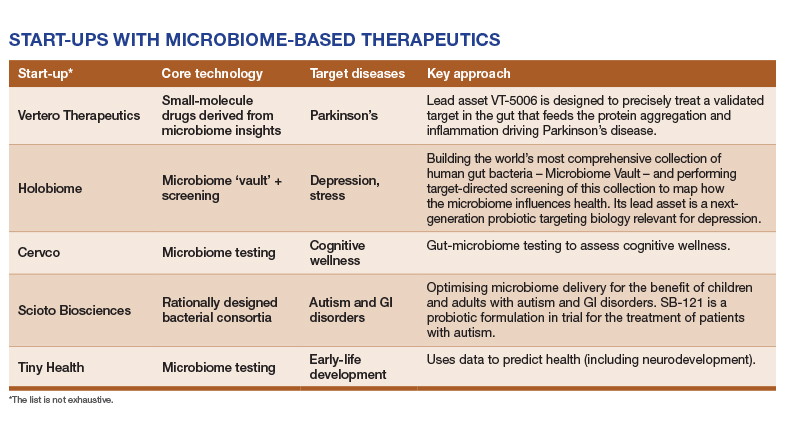
The ASU team is seeking FDA approval for the MTT and has also launched a start-up, Gut-Brain Axis Therapeutics, to take it forward. Several other start-ups (see table: 'Start-ups with microbiome-based therapeutics') in the field are developing new therapies based on the idea that gut microbes influence brain function through metabolites, immune signalling, and neural pathways. Many are still in early-stage trials. Whether these approaches can translate into reliable, scalable treatments remains to be seen.
A PERSPECTIVE SHIFT
An important outcome of gut-brain science is that clinicians no longer view disorders of the gut and brain in isolation. They are ready to treat brain problems with gut modification, and gut problems by addressing mental health issues.
At Margolis's clinic, sometimes patients come in with severe constipation that cannot be treated by medication. Probes into their background reveal a history of anxiety. Margolis explains that anxiety has been a protective mechanism for humans for a long time. When hunter-gatherers in the woods saw a bear chasing them, their sympathetic nervous system went into overdrive. In such moments, the last thing they wanted would have been to squat and defecate. Anxiety today causes the same reaction from the gut. "You have to treat not only that constipation, but you have to treat the brain, too," she says.

Researchers from the Asian Institute of Gastroenterology, Hyderabad, noted in a recent paper (bit.ly/IBS-Anxiety) that up to 50% of IBS patients suffered from anxiety, including gastrointestinal-specific anxiety (GSA), an anticipatory fear and preoccupation with gastrointestinal symptoms. The researchers emphasise the need to integrate mental health and sleep management into IBS prevention and treatment strategies. "In diseases like irritable bowel syndrome, it has been well recognised that you may have to treat the stress and anxiety part associated with it," notes Vineet Ahuja, Professor in the Department of Gastroenterology, All India Institute of Medical Sciences, New Delhi.
The relationship between the gut and stress is a cycle that drives itself, explains Ahuja. At one end, there are people who need to address their mental health to fix long-standing gut issues, and on the other end are people such as Thodupunuri's daughter and Nausheen's son, who experienced a relief in autism-associated symptoms via gut modification. The children underwent a tangible change in their daily lives. And yet, their experience sits in an uncomfortable space, still awaiting full scientific backing. However, research into the gut-brain axis has opened up a whole new way of thinking about health and disease.
See Also:
More than a gut feeling
'It's hard to treat the brain isolated from the gut'








Proton therapy: the beam of hope
A new centre harnesses high-energy proton beams to transform the way certain cancers are treated.

Wading into the gene pool
An ongoing study of India's genetic landscape will help researchers understand disease better.

Why engineering, science institutes are setting up med schools
Top engineering and science institutes are setting up medical schools in India.



Have a
story idea?
Tell us.
Do you have a recent research paper or an idea for a science/technology-themed article that you'd like to tell us about?
GET IN TOUCH