

'It's hard to treat the brain isolated from the gut'
-
- from Shaastra :: vol 05 issue 05 :: May 2026
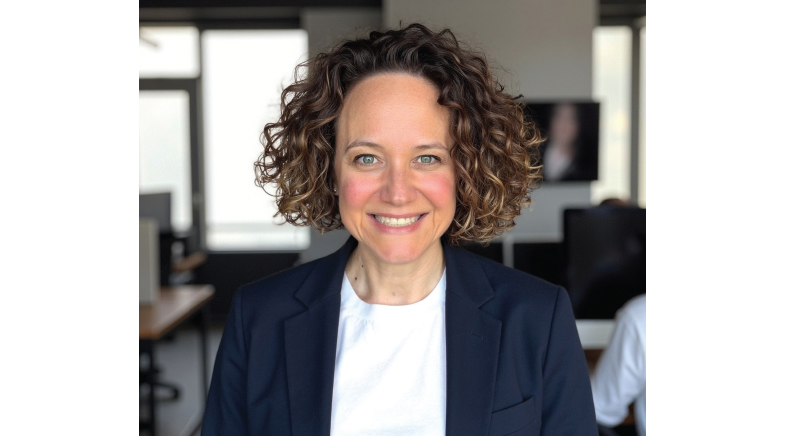
Kara Margolis on the ties between gut health and whole-body health.
Paediatric gastroenterologist Kara Margolis studies the gut to understand its role in mood and gut disorders, and to explore how gut signalling can be altered to treat disorders of the brain and the gastrointestinal (GI) tract. Margolis is Director of the NYU Pain Research Center, and a Professor of Paediatrics and Cell Biology at the NYU Grossman School of Medicine, U.S.
Her work has revealed how in utero exposure to antidepressant medications — selective serotonin reuptake inhibitors (SSRIs) — can increase the risk of the development of gut disorders in children. Research in her lab has helped delineate pathways through which gut serotonin and microbes affect anxiety and depression, and has also shown that early-life exposure to stress is connected to gut disorders in later life.
Margolis has deep clinical expertise in gut-brain axis disorders, including abdominal pain- associated disorders of gut-brain interaction and autism spectrum disorders. She is working on developing novel drugs and drug delivery systems to treat gut-brain axis conditions. Excerpts from a video interview:
What are your thoughts on microbiome-based therapies such as Faecal Microbiota Transplantation (FMT) for autistic children?
The jury is still out, and we don't know definitely yet. If double-blind placebo-controlled studies show it works, I would certainly support it. But, at this point, not yet.
When you're putting something in your body like that, you may not only be giving good bacteria, but you may also be giving negative bacteria. In animal studies, we see that depression can be transmitted through the gut bacteria, that weight changes can be transmitted – (and) potentially even autoimmune diseases. So you really want to be careful with this.
"Early-life trauma changes the way your gut and brain communicate. It leads to an increased risk of developing disorders."
One person can have a miraculous outcome, but there may be people who don't – or have a worse outcome. And you don't generally hear from those families.
There's no one autism microbiome; there's no one autism. It's such a complex, heterogeneous disorder. And figuring out which kids or adults may respond will be a very important factor in figuring out who really benefits from it.
Is there a way of knowing who might respond to a microbiome therapy and who may not?
We don't know that yet.
I even think about the diets that have been out much longer than the microbiome-directed therapies. The Ketogenic diet, we know, is good for seizures: so, that can be a targeted therapy. Gluten-free diet: some parents swear by it, and say their kids have changed and improved significantly.
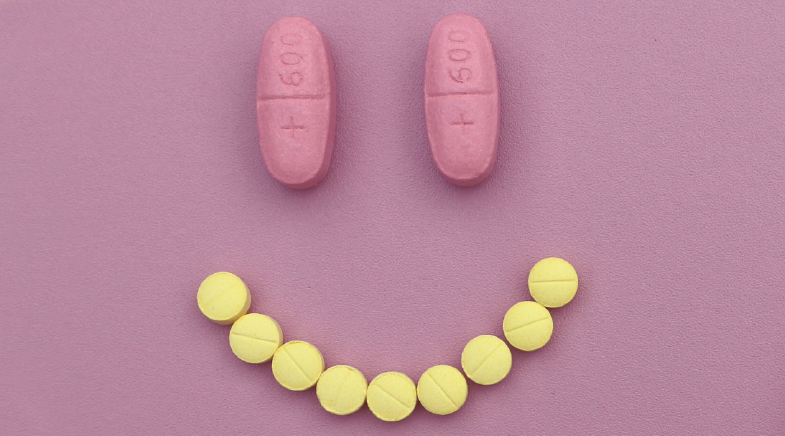
But if you look at the trials that have been done, they show that (the diets) don't work. I think the problem is this: it may work for some kids, but we have no idea right now what microbiome-targeted therapies may work. I get a lot of questions about probiotics, and the answer is the same.
How critical is it to have good gut health in early life?
We actually just published a paper where we show that early-life trauma changes the way your gut and brain communicate. It leads to an increased risk of developing disorders of gut-brain interaction. Early in life, your gut and gut nervous system are developing, and so are your brain and the gut-brain communication axis. Any kind of exposure then, good or bad, is more likely to have a larger impact. Particularly in those first few months, when both brain and gut nervous system development is occurring at a relatively rapid rate. You can certainly have gut and brain changes throughout your life, but they tend to be more changes in connections and not changes in the whole system.
"We're going to see a movement towards using the gut not only to treat gut health, but also to treat brain health and body health."
When we look at disorders of gut-brain interaction, we see that early-life infections and antibiotic exposure can potentially cause symptoms. And then, of course, (there are) other early-life stressors such as maternal neglect. The earlier (the stress) happens, the more likely there will be changes in development. By two years of age, your gut microbiome is established and is pretty stable.
There are plenty of people who are exposed to these things (but) don't have gut-brain or gut disorder. Even if these things do happen, and you do have these symptoms, there are ways to help (people with such symptoms) and to help change those connections and make them better. There are medications and different types of therapy. Even sleep, exercise, and a good diet help: they have been shown to improve gut-brain communication.
The major point of understanding is how early-life exposures impact the development of your gut-brain connections. When someone comes into my office with really bad Irritable Bowel Syndrome or some other disorder of gut-brain interaction or significant abdominal pain, I not only ask them if they have anxiety now or have had it for the last few years, I start right at pregnancy of the mom, because you have to look throughout life.
Are there instances where you look back in time and figure out that there was a period of stress, and then you address that through psychiatric treatment?
There are patients who come in, and all I prescribe is therapy as a first line. Similarly, I've had patients with long-term GI issues and then a more recent development of anxiety or depression. We know that some patients start with GI problems, and the gut can talk to the brain. When I see cases like that, and I start to treat the GI issue, the mood disorder goes away.
Often, by the time people get to me, they've had both (GI disorder and mood disorder) for so long that I treat both at the same time. I work with psychiatrists and psychologists regularly because it's very hard to treat the gut isolated from the brain. And, honestly, I think it's hard to treat the brain isolated from the gut, too. I think we need to come together to give that kind of a holistic treatment.
Looking ahead, what are you excited about in this area?
I'm really excited about the data showing that we can use the gut to modulate the brain. The data are increasingly showing that psychotropic drugs may impact the mood by working on the gut. The gut is a tractable organ.
There's so much potential in the gut we haven't learned yet. We're going to see, in the next several decades, a movement towards using the gut not only to treat gut health, but also to treat brain health and, really, whole-body health. As a neurogastroenterologist and a gut-brain scientist, this is tremendously exciting for me. I think it's going to open up new avenues of therapies, drug targeting and the like.
In all this time you've been working on the gut-brain axis, and working with patients, has there been a moment of big surprise for you?
There are two things, one scientific and one patient-based.
When I started looking at the impact of SSRIs such as Prozac and Paxil on the gut, I would have thought that the SSRIs travel through the blood to go to the brain and induce their mood effects. I was surprised to see that the gut epithelium tended to be that modulator because it's not inherently part of the nervous system. So, the idea that the gut epithelium itself could be so important in controlling mood was very, very surprising to me and exciting because, again, you can access that.
In the clinic, over the last couple of decades that I've been a doctor, I've seen that hope moves so much. A lot of kids who come to me are autistic or have gut-brain axis conditions; the families are frustrated, they're scared. They've tried a lot of treatments that haven't worked.
Having physicians who believe them and understand that there's a physiology underlying their symptoms is so important. A lot of what I do every day is not rocket science: it's empathy and understanding the physiology, and telling families and patients that they are not crazy, that there's physiology underlying all of these things and that we can work on it in different ways to make them better.
See Also:
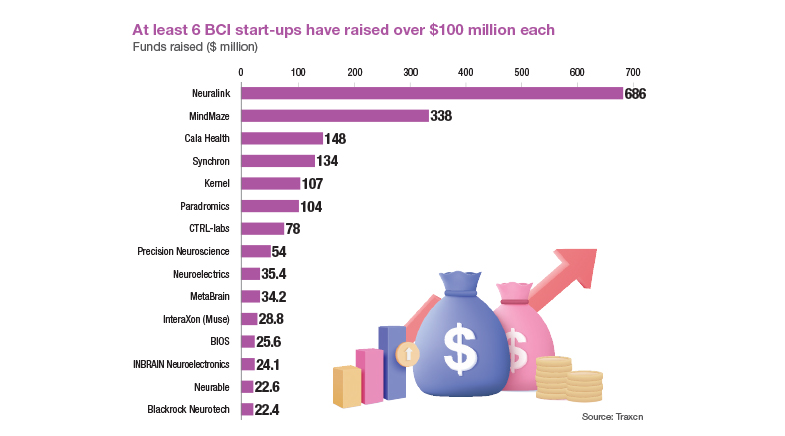








Plugged into the future of brain-computer interface
Investments in brain-computer interface are driving new technologies.
Slim chances
A homegrown bacterial cocktail may blunt fat's effects.
Print a ring o' coral
An artificial coral reef seeks to restore ocean health.



Have a
story idea?
Tell us.
Do you have a recent research paper or an idea for a science/technology-themed article that you'd like to tell us about?
GET IN TOUCH