

New lease of life
-
- from Shaastra :: vol 05 issue 01 :: Jan 2026
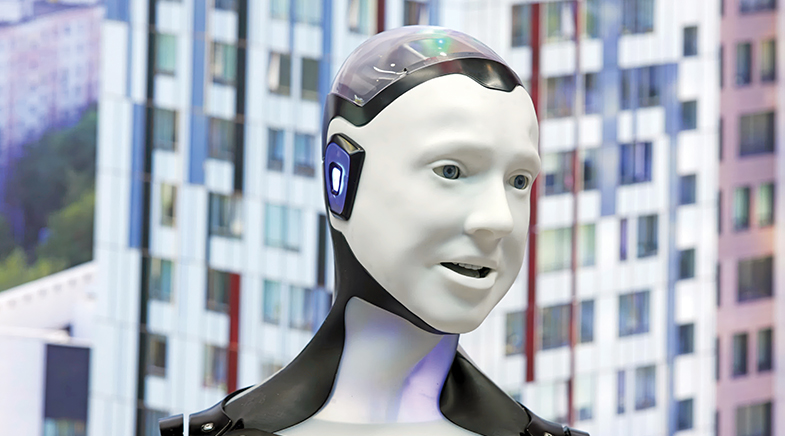
Engineers are looking at a great model for design that had been ignored for centuries: life.
Life began on Earth around 3.7 billion years ago, soon after the planet cooled down and conditions became favourable. For about two billion years after that, an organism had only one cell. Specialisation began around 2.5 billion years ago within cells, as single-cell organisms started to work in colonies, but it may have taken another billion years for true multicellular organisms to appear, and yet another 800 million years for complex life to form. From then on, there has been rapid evolution in adaptation and complexity.
In the 21st century, learning from life can redesign every device that the world uses. The effect may be felt soon.
Although life has flourished on Earth, living beings have had to respond to hostile conditions. Food and water were not always available on demand. Since food was scarce, organisms have had to learn to use energy efficiently. The Earth's surface for land animals provided challenges for movement and temperature regulation. They had to learn to walk under testing conditions and cool themselves when temperatures rose. Moving in groups required constant communication without a control centre. The brain needed to distinguish signal from noise. Living bodies needed flexibility and strength. They needed to repair themselves.
Life didn't start from a set of equations. There is no mathematical blueprint for an organism to operate, much less change. Although biology does have beautiful mathematics, none of the organisms knows it, and no one has used it to design a part or the whole. Change in the natural world is a slow and haphazard process, with several false starts and blind alleys before the right path emerges. However, in the long run, such a process produces very efficient soft machines, perfectly adapted to the environment in which they operate.
Engineering has a different history and operates very differently. Early structural designs in human history didn't come with an understanding of physics or advanced mathematics. Before formal science, humans designed through empirical knowledge, and trial and error, but over time, they built complex buildings. Like how life evolved, they needed to build, see, and then tweak the design constantly. Science and mathematics transformed engineering from an empirical craft to a discipline that could be done precisely, while also being predictable and scalable. Modern engineering created a sophisticated and friendly world for people to live in with comfort. However, for centuries, engineers ignored a great design model that was right in front of them: life.
There were good reasons for that. Engineers had realised that there was existing knowledge that could be put to good use, knowledge that was itself expanding rapidly. Energy was not at a premium for a long time, as there was no pressure to reduce carbon dioxide emissions. Humans worked in difficult terrain, not robots. There was always a human in control of machines. As the 21st century advanced, there was pressure to change in all these areas. Engineers had to look more closely at life.
To begin with, the rise of data centres and their need to scale with AI created tremendous pressure to reduce energy consumption in devices. Many devices now must operate remotely, with no central control, not dissimilar to some life environments. Robots are increasingly required to walk and work in challenging areas, and therefore, they need the flexibility of animal bodies. The military sector is pushing engineers hard, demanding new capabilities for their products. As engineers mulled over these problems in the last few decades, Moore's Law created powerful chips. Materials science developed flexible and strong materials. Mathematicians understood biology more deeply. Life became a serious model for design.
Our Cover Story on The life digital is about this change. Aditi Jain had spotted it while working on other stories. She spoke with many researchers driving this change in the country. Her story is about a fundamental shift in engineering, as devices move from high energy consumption to energy efficiency, from rigid to flexible structures, from central control to autonomy, from serial processing to parallel processing. This change is as much in hardware as in software, in design and materials as in algorithms and control systems. Over the 21st century, learning from life can redesign every device that the world uses. The effect can be felt in human lives soon enough.
See also:
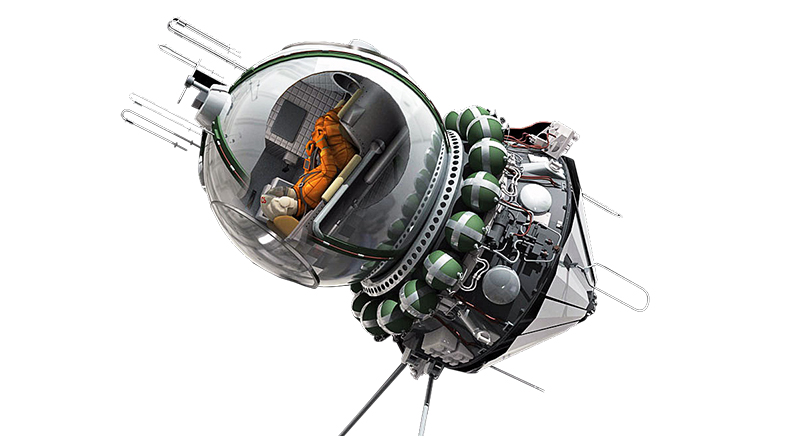








The 'Seagull' who soared to space
Sixty years ago, Valentina Tereshkova became an unlikely symbol of Soviet space ascendance.
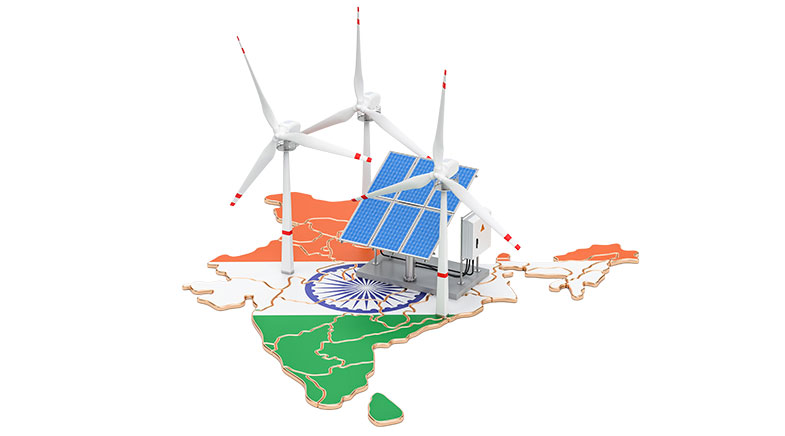
The sooner, the better
Lowering greenhouse gas emissions now will give low-emissions countries time for more gradual reductions in the future.
 Click to play podcast


India must create a knowledge-driven economy
Kris Gopalakrishnan speaks his passion for brain research, innovation, entrepreneurship – and philanthropy.



Have a
story idea?
Tell us.
Do you have a recent research paper or an idea for a science/technology-themed article that you'd like to tell us about?
GET IN TOUCH