

Oh, get a grip!
-
- from Shaastra :: vol 05 issue 11 :: Nov 2026
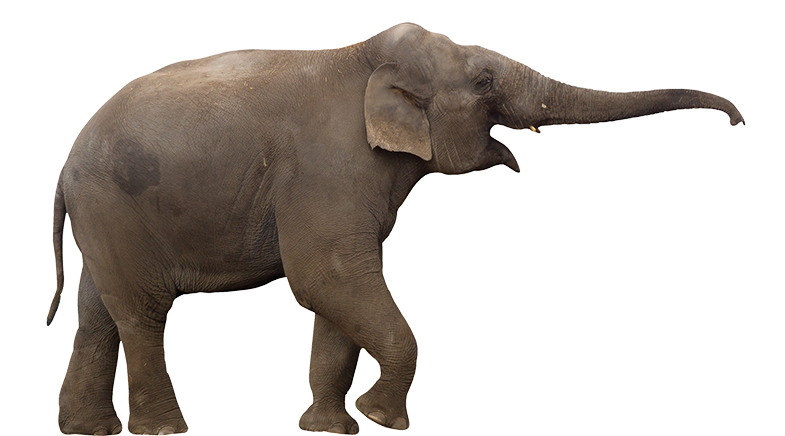
How evolution shaped tails, trunks, thumbs, and the brain to negotiate and manipulate the environment.

former Principal Scientific Adviser to the Government of India, is emeritus professor at the National Centre for Biological Sciences, Tata Institute of Fundamental Research.
Squirrels, cats, dogs, monkeys, cows: animals with tails are so common around us that we barely register them. A young binturong hanging by its tail from a branch in an Assam forest is another matter, if you are lucky enough to see one. Tails that can grasp are called prehensile, from the Latin prehendere, "to seize", and they have evolved independently many times: in spider monkeys and kinkajous in Central and South America, in tree pangolins in West and Central Africa, and in binturongs in North-East India and South-East Asia, all of which hold on to branches with them as if with a fifth limb.
The elephant's trunk grasps, too, but it is built on another plan altogether. A prehensile tail is a chain of vertebrae wrapped in muscle; the trunk has no bones, only a column of muscle around the two nasal passages that run its whole length. Tapirs have a short mobile snout for pulling in leaves, and the black rhinoceros a grasping upper lip, but neither comes close to the trunk in reach or dexterity.
PAST ISSUES - Free to Read




Stroke of luck
A political scientist argues that more things are wrought by fluke than we realise.

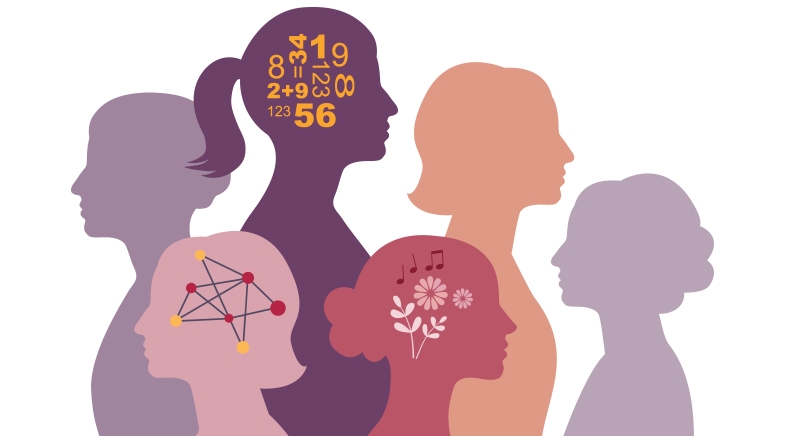
Attention, please!
Late diagnosis of ADHD in women has medical and social implications.



Have a
story idea?
Tell us.
Do you have a recent research paper or an idea for a science/technology-themed article that you'd like to tell us about?
GET IN TOUCH