

Gene cocktail: stirred, shaken
-
- from Shaastra :: vol 05 issue 08 :: Aug 2026
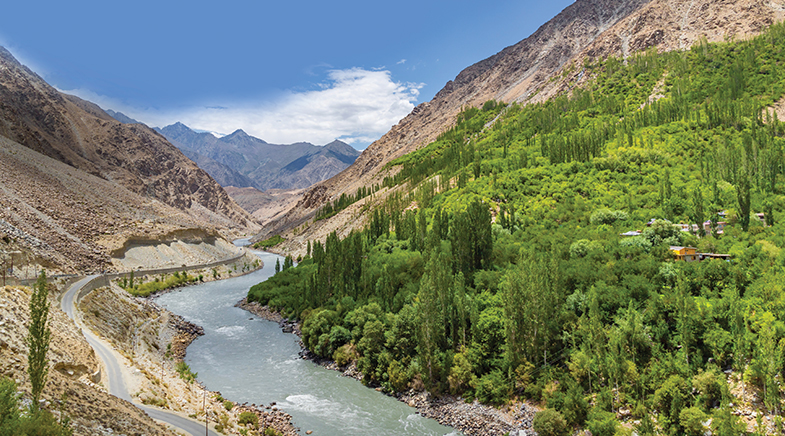
Skeletons in a cave reveal ancient genetic surprises.
Around 2,800 years ago, when India stepped into the Early Iron Age, a population emerged in Ladakh, formed by the admixture of two distinct ancestries — South Asian and Tibetan-related. This lost population was recently identified after a DNA analysis of skeletons from a mass burial at Abi Srinjamo Bao or Old Lady Spider Cave in a pastureland 4,000 m above sea level in Western Ladakh.
Researchers extracted DNA from the skeletons of 10 individuals and concluded they were 1,500 years old. A paper in Science Advances (bit.ly/Old-Ladakh) reports that further analyses showed the population was created by a genetic admixture that had occurred over a millennium earlier. The discovery has caused considerable excitement as ancient genomic data from South Asia are extremely scarce, for weather conditions do not allow preservation.
DNA from skeletons showed they were 1,500 years old. The population was created by a genetic admixture that had occurred over a millennium earlier.
It also establishes that the Himalayas were not an impermeable barrier. They were a corridor for human interaction even 2,800 years ago, says investigator Veena Mushrif-Tripathy, from Pune's Deccan College Post-Graduate and Research Institute, who excavated the remains and took them to Harvard University, U.S., for analysis. "By integrating archaeological evidence, radiocarbon dating, osteology, and ancient DNA, the study reconstructs population movements and interactions that cannot be inferred from archaeology or genetics alone," says Mushrif-Tripathy, who collaborated with Harvard geneticist David Reich and his colleagues.
The individuals carried an almost equal ancestry related to populations represented today by North Indians (Dogras, North Indian Brahmins), and ancient Tibetans. "This represents the earliest direct genomic evidence of long-term biological interaction between populations of the Indian subcontinent and the Tibetan Plateau, demonstrating that such interactions predated the rise of the Tibetan Empire by several centuries," notes Mushrif-Tripathy.
This Old Ladakh population is not well represented among today's South Asians, suggesting that ancient India contained populations that do not exist in their original forms today. Significantly, present-day Ladakh people bear no genetic resemblance to the Old Ladakh group. However, that ancient population has not been obliterated. The researchers found that it was absorbed into later populations, leaving signatures in present Himalayan communities. Today's Balti people retain 56% Old Ladakh ancestry, and the Mineros have 45%. The remaining ancestry for both groups is Dogra-related.
The peopling of India created heady genetic cocktails way back in time, and continues to do so.
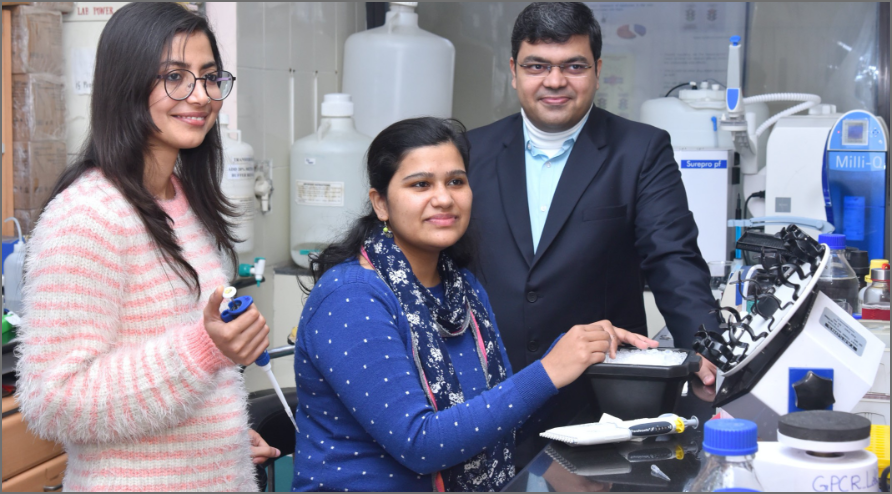








A prescription for safer drugs
A path-breaking study, led by scientists at IIT Kanpur, uncovers a critical protein mechanism that holds promise for regulating drug effects.

Risky business
The challenges that humanity faces are easily detailed. But what about the solutions?



Have a
story idea?
Tell us.
Do you have a recent research paper or an idea for a science/technology-themed article that you'd like to tell us about?
GET IN TOUCH