

Peptide turns the tide
-
- from Shaastra :: vol 05 issue 06 :: Jun 2026
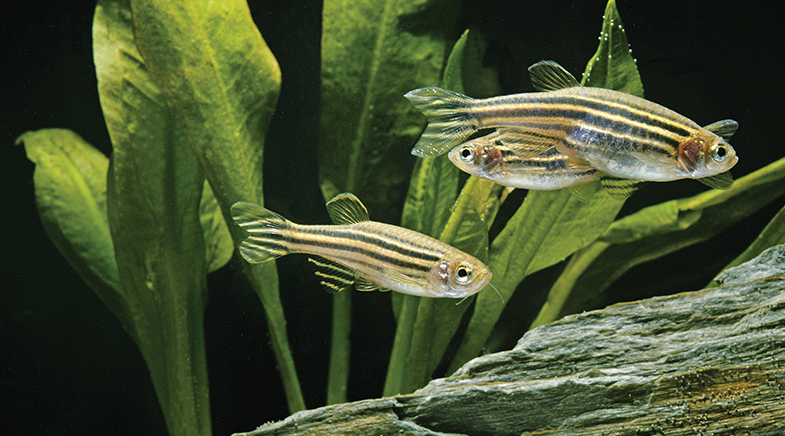
Amino acid chains may help fight deadly bacteria.
Researchers have developed peptides that can fight the potentially fatal antibiotic-resistant Staphylococcus aureus. In a collaborative study, teams from the Indian Institute of Technology (IIT) Kanpur and National Yang Ming Chiao Tung University, Taiwan, designed three peptides to target bacteria resistant to methicillin antibiotics. Their study (bit.ly/peptide-antibiotics) was published in ACS Applied Bio Materials in May 2026.
According to the World Health Organization, antibiotic resistance could claim about 40 million lives from 2025 to 2050. Researchers worldwide have been looking for new ways to treat such infections. Peptides, chains of amino acids, are considered a possible solution because they exhibit broad-spectrum activity against microbes and minimal toxicity towards human cells. "They act mainly by disrupting bacterial membranes, making it harder for bacteria to develop resistance, compared to conventional antibiotics that target specific biochemical pathways," points out Sandeep Verma, Professor at IIT Kanpur and corresponding author of the research paper.
For their study, the researchers focused on the three peptides, each of which began with the same five-amino-acid sequence that specifically targeted Staphylococcus aureus but did not kill beneficial gut microbiota. Apart from this starting sequence, each of the three contained six tryptophan amino acids, which enabled them to penetrate the oil-rich layer of the bacterial membrane. The peptides, however, varied in their content of arginine, another amino acid. One peptide had no arginine, another had one, and the third had two.
The team tested these peptides on pig skin and zebrafish infected with the methicillin-resistant strain of Staphylococcus aureus. They found that the peptide with more arginine amino acids cleared infections more effectively — the one with two arginine amino acids eliminated 92% of bacteria from pig skin and 97% of infection in a living zebrafish.
"Increasing arginine content enhances membrane binding and permeabilisation," reasons Yu-Chie Chen, Professor at National Yang Ming Chiao Tung University and a corresponding author of the research paper.
Seeking to take this research from the laboratory to the clinic, the team is now working to improve peptide stability in a physiological environment, optimise dosage and delivery, and evaluate its long-term safety. They also plan to test these peptides in advanced animal infection models and against a broader range of multidrug-resistant pathogens by modifying the targeting sequence.









Inside the biology maze
Scientists are pushing the envelope with mind-bending questions - and engineering bacteria to make complex computational decisions.

Like greased lightning
The bandwidth capacity of a kilometre-long optical fibre cable can be increased 25 times, scientists say in a new study.


Heat and crush
Start-ups work on cancer therapy, heated shelters, and sugarcane juice.



Have a
story idea?
Tell us.
Do you have a recent research paper or an idea for a science/technology-themed article that you'd like to tell us about?
GET IN TOUCH