

Unity in diversity
-
- from Shaastra :: vol 05 issue 09 :: Sep 2026
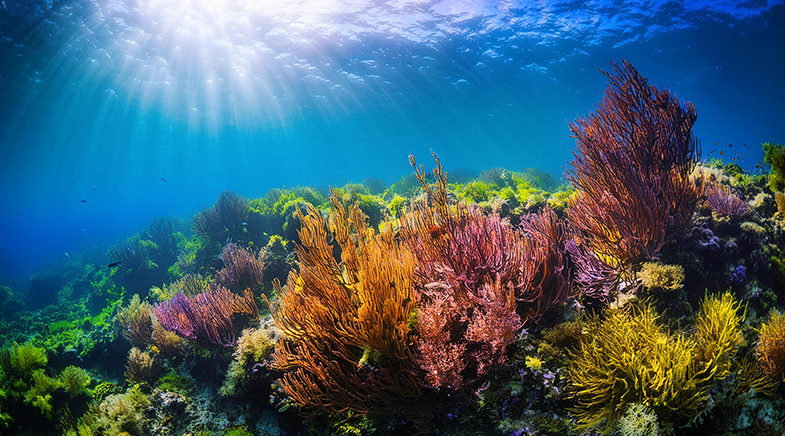
A group of microbes teams up to release carbon from seawater.
Every year, the oceans capture and store 5-10 gigatonnes of carbon dioxide, significantly impacting global climate. This sequestration has prompted scientists to study the dynamics governing carbon fixation and release in seawater. Now, scientists from India and Europe have shown how different microbes cooperate to degrade complex sugars produced during carbon fixation.
In oceans, microscopic plant-like organisms convert carbon dioxide into complex sugars. Brown algae, for instance, convert dissolved carbon dioxide in water into a complex sugar, fucoidan. Fucoidan does not degrade easily, and thus leads to long-term carbon sequestration in the oceans. Previous studies showed that microbes could break down parts of these complex compounds, but whether fucoidans could be completely broken down remained unclear.
To examine this (bit.ly/carbon-ocean), scientists collected seawater from a rocky shoreline which contained bacteria. These marine bacteria were grown on fucoidan as a food source for several generations to ensure they utilised this complex sugar to survive. The surviving community was then identified using their DNA. The scientists found 29 bacterial species in this community. Using mass spectrometry, they studied the part of the sugar a species consumed alone, and the part it consumed when with other species. They categorised the bacteria into three categories — degraders, exploiters and scavengers, depending on which substrate they fed on. The degraders acted directly on the fucoidan; exploiters consumed only the sugar degraded by degraders; and scavengers fed on the leftovers from exploiters.
The scientists have developed a mathematical model to predict how much fucoidan a bacterial community will break down.
Building on these results, the scientists developed a mathematical model to predict how much sugar a bacterial community would break down, based solely on which strains were present. They also found that these three types of bacteria that survived on fucoidan always co-occurred in ocean habitats.
Akshit Goyal, a faculty member at the International Centre for Theoretical Sciences and one of the authors, says the study shows how cooperation among microbial species makes this process efficient. The research suggests that for a single microbe to degrade such a complex sugar alone would have entailed the coordination of thousands of genes — highly energy-consuming for a single microbe. So, microbes joined forces to degrade the sugar.
See also:
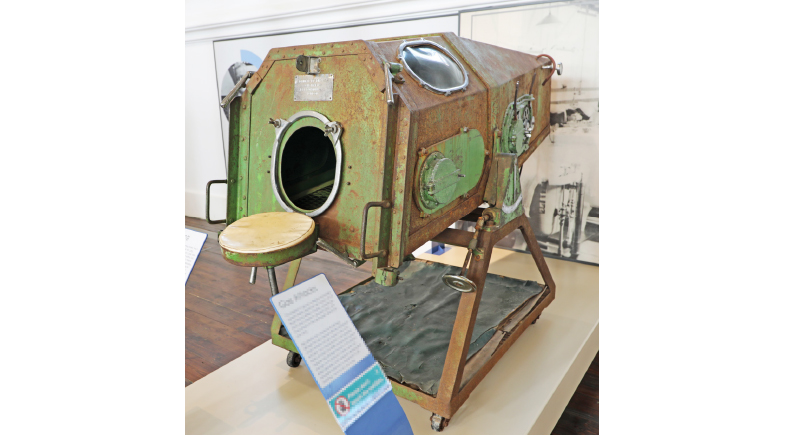








Breathing free
A metallic monstrosity, the 'iron lung' saved thousands of polio patients.
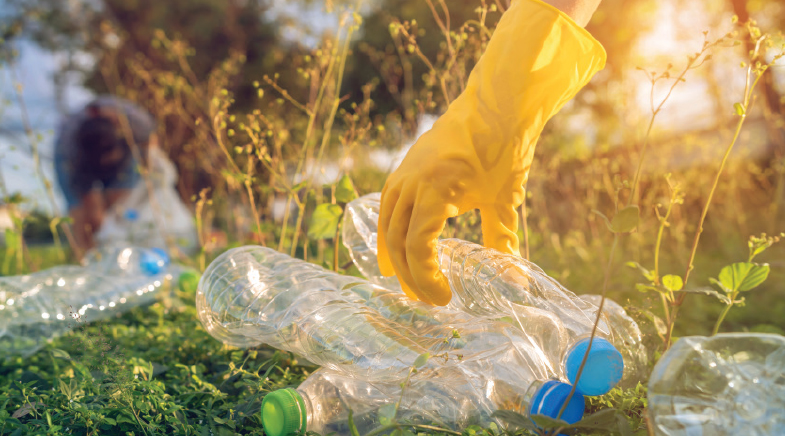
The pitfalls of plastic
A new study uncovers a number of unnoticed and toxic additives in plastic.

Teaching physics to AI
Data scientist Anima Anandkumar on the future of 'smarter' AI that is rather more grounded in reality.



Have a
story idea?
Tell us.
Do you have a recent research paper or an idea for a science/technology-themed article that you'd like to tell us about?
GET IN TOUCH