

Bellows to mend
-
- from Shaastra :: vol 05 issue 02 :: Feb 2026
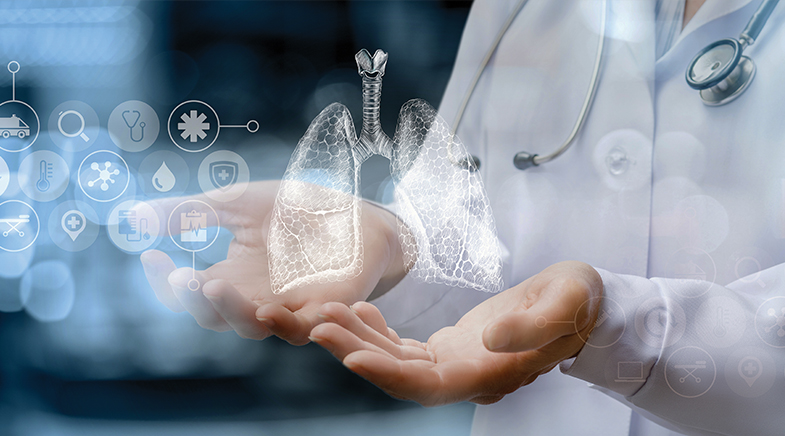
Lung disease diagnoses and treatment will be the focus of an Indo-German collaboration.
Respiratory medicine lags behind other fields in the approval of new drugs. A core challenge is developing in vitro and in vivo models that accurately reflect how respiratory diseases manifest themselves in humans, a factor that underlies the higher-than-average failure rate of drugs in human trials.
The creation of more accurate and relevant models is a key focus area of a new centre — an Indo-German partnership between the Indian Institute of Technology Hyderabad (IITH) and Germany's Institute of Lung Health (ILH), a global institution with expertise in lung and vascular biology, and translational lung research. Inaugurated in January 2026, the ILH-IITH Bioengineering Centre of Excellence for Lung Health, housed in IITH, will address research and clinical challenges facing lung disease diagnoses and treatment. The centre aims to blend IITH's engineering knowledge and infrastructure with ILH's expertise in biology and clinical medicine.
BETTER MODELS
One of their collaborative projects involves developing a viable drug-testing platform using Precision-Cut Lung Slices (PCLS). These are thin cross-sections of lung tissue obtained from animal or human lungs (from cadavers or lungs replaced in transplant surgery). PCLS are three-dimensional and retain the complex architecture and functionality of the lung, making them good candidates for creating lung-on-chip platforms to study disease biology, find novel biomarkers for targeted therapy, and test drugs.
ILH researchers have created PCLS arrays, but keeping the model viable for as long as required — often several weeks — is a challenge, says Renu John, Director of the new centre and Professor of Biomedical Engineering at IITH. "The main challenge is how to ventilate the lung and keep it active." Parameters, such as lung performance and the impact of circulated media, need to be closely monitored. IITH's expertise in ventilation technologies prompted the centre to look at "miniature ventilators" that could ventilate precision-cut lungs and keep them perfused. "We could build sensors on the chip to enable monitoring of the metabolites from the precision-cut lungs," he says.
Leveraging IITH's expertise in in situ and in vivo imaging, the centre could potentially integrate platforms based on sophisticated imaging techniques, such as 3D microscopy and optical coherence tomography, with the PCLS models for monitoring. "The project is still in evolution," John says.
AN UNMET NEED
Chronic respiratory diseases such as chronic obstructive pulmonary disease and asthma account for 10.9% of all deaths in India, according to the 2018 Global Burden of Disease Study (1990-2016). But there is not as much lung-related research and development in India as there is for, say, diabetes or cardiovascular disease, says pulmonologist and medical researcher Anurag Agrawal, Dean of the Trivedi School of Biosciences at Ashoka University. "This is primarily because of a smaller group of researchers," he says. "With awareness rising due to air pollution, hopefully this will change."
The new centre could emerge as one such change agent. "We are looking at gaps in lung health and trying to address challenges faced by India and the world," says John. He cites the high rates of mortality from lung cancer globally, and underdiagnosed and poorly treated pulmonary hypertension (PH) — high blood pressure in lung arteries — in India. The centre, he adds, aims to create a national network of lung health experts, hospitals, and government institutions to focus on lung health.
Doctors and hospitals would like to see such linkages lead to the development of much-needed indigenous equipment, says Hari Kishan Gonuguntla, Head, Pulmonology, at Hyderabad's Yashoda Hospitals. He cites single-use bronchoscopes and training modules that use artificial intelligence as two areas that could benefit from collaboration with engineers. Another area that deserves attention in lung health is timely access to new medicines for understudied diseases, such as PH.
As the ILH is extensively networked with the lung health research and clinical ecosystem in Europe, the centre could emerge as a hub for international collaboration. In addition to training young engineers, filing patents and publishing papers, it will develop products, says IITH's John. "It should emerge as one of the pioneering leaders of lung health in India."
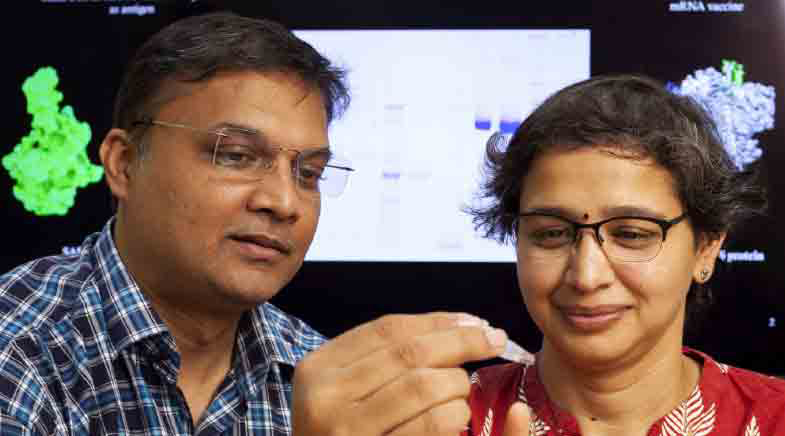








It's not just a vaccine
mRNA also lends itself to therapeutics, but the technology’s flaws need to be fixed.
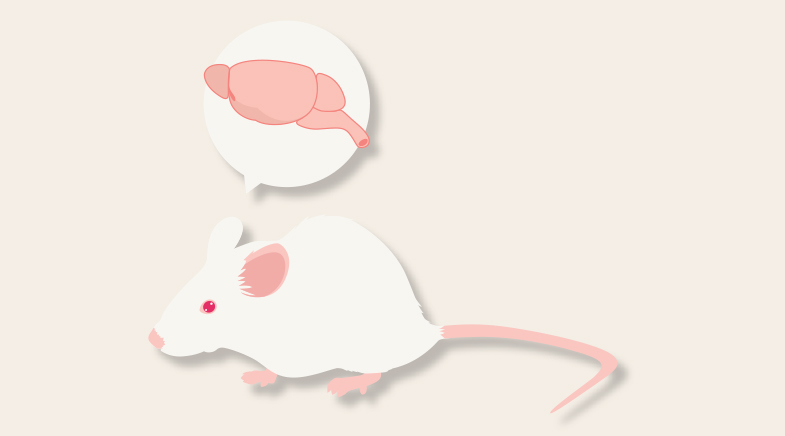
Class will tell
Neuroscientists have established that anxiety and social status reshape the brain's emotion centre.

He revealed bitter truths about sugar
In his time, nutritionist John Yudkin's views on the hazards of sugar were derided; they have since secured new life.



Have a
story idea?
Tell us.
Do you have a recent research paper or an idea for a science/technology-themed article that you'd like to tell us about?
GET IN TOUCH