

Bot see, bot do
-
- from Shaastra :: vol 05 issue 05 :: May 2026
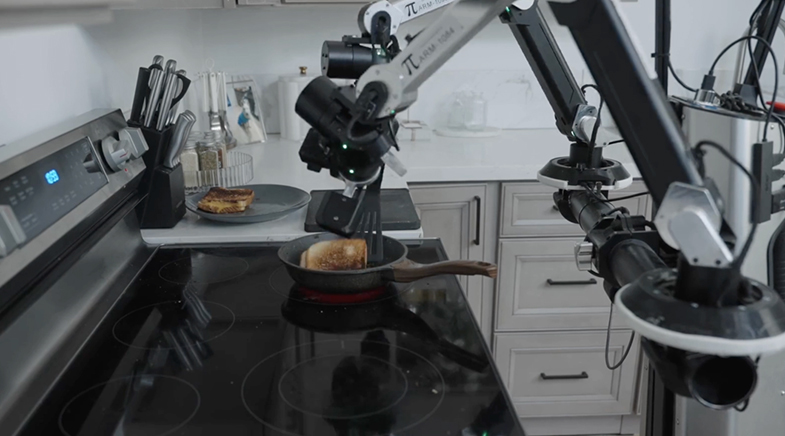
Robots are learning real-world tasks by watching workers perform a spectrum of jobs across industries.
When Raj Patel and Rushil Agarwal met at the University of California, Berkeley, three years ago, an easy friendship blossomed between them. Their first conversation, ironically, was about dropping out to build something of their own. In November 2025, the friends-turned-roommates did just that: they left college, and now, with two others, are creating a digital archive of human actions and tasks, fuelling the advancement of embodied intelligence.
At Berkeley, Patel and Agarwal interacted with researchers at robotics labs. They found that the biggest bottleneck for physical artificial intelligence (AI) — the use of AI to help robots navigate the real world — was the lack of datasets. Frontier large language models, for instance, are trained on approximately 15 trillion data inputs, enabled by datasets such as Common Crawl, which serve as a public library of the internet. "But there's no internet for robotics," Agarwal says. "There's nothing that entirely captures the structure of human physical intelligence as it is."
Now, their start-up, Human Archive, is collecting sensorimotor data from people performing diverse tasks across industries, including domestic, healthcare and manufacturing. In March 2026, Human Archive received its first seed funding from the start-up accelerator Y Combinator.
PAST ISSUES - Free to Read


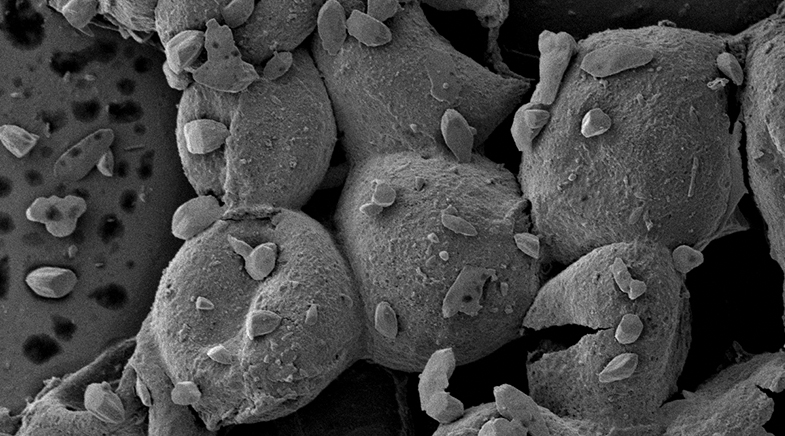








Fossil sheds light on early Earth
Researchers find traces of 2.85-billionyear-old microbes in MP rocks.



Have a
story idea?
Tell us.
Do you have a recent research paper or an idea for a science/technology-themed article that you'd like to tell us about?
GET IN TOUCH