

Coming down to Earth
-
- from Shaastra :: vol 05 issue 11 :: Nov 2026
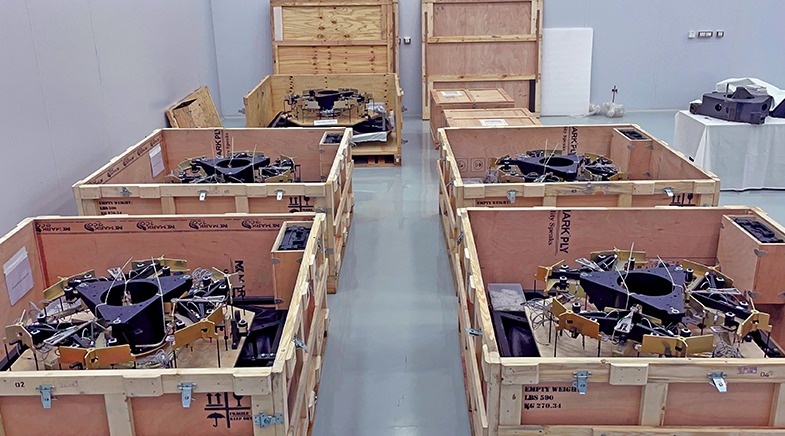
High-tech resources in astronomy are fostering Indian self-reliance.
Sugar crystals stream down from a vent while a smart camera measures their size distribution using classical image-analysis techniques. It captures crystals as tiny as 50 microns. For the industry where the camera was tested, it's good news: the images help detect false grains during batch processing and regulate uniformity of size, colour, and more.
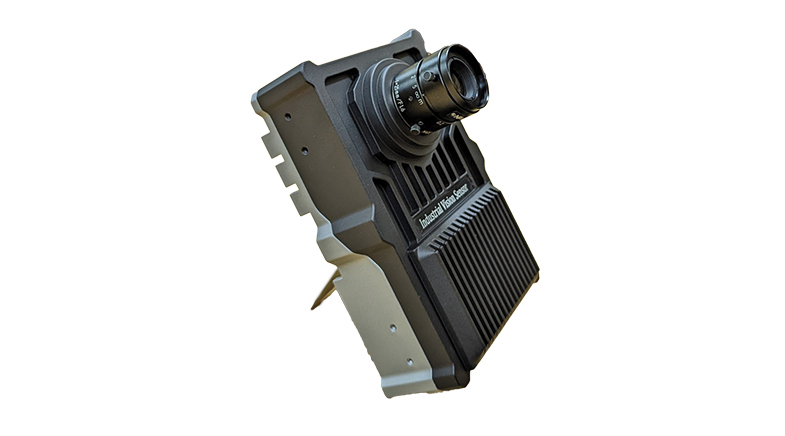
The device is an Industrial Vision Sensor (IVIS), which pairs a Complementary Metal-Oxide-Semiconductor (CMOS) camera with a powerful on-board computing platform. The platform runs advanced artificial intelligence (AI) and machine learning algorithms and real-time control operations, enabling next-generation machine vision in manufacturing, pharmaceuticals, retail, and automotive.
The IVIS — successfully tested in 2026 — is the outcome of an idea mooted in 2019. A.N. Ramaprakash, whose expertise is in astronomical instrumentation, was busy building an ultraviolet imaging telescope when he heard from G. Satheesh, head of the Intelligent Transportation Systems at the Centre for Development of Advanced Computing (C-DAC), Thiruvananthapuram. Could Ramaprakash help repurpose CMOS cameras used in telescopes for everyday commercial use?
Astronomy-grade CMOS cameras are rare. Ordinary CMOS cameras appear in everyday gadgets — from mobile phones to surveillance devices — but are mostly imported, increasing costs and the risk of data hacking. "It had been nagging me that we make these cameras for astronomy applications that are really demanding and challenging, yet we are unable to utilise these outside of astronomy," says Ramaprakash, who was with the Inter-University Centre for Astronomy and Astrophysics (IUCAA), Pune, when the collaboration with C-DAC began.
Cameras with a brain
Satheesh had spotted a discrepancy, too. The AI tools needed to understand video feeds were not built into the camera. Instead, the feed had to travel to an external processor, adding cost, latency, errors, and a risk of misuse. He wanted smart cameras. He reasoned that turning devices built for faint light from distant galaxies toward brighter Earth lights and fast-changing images would be challenging, but well worth the effort.
Turning devices toward brighter Earth lights and fast-changing images would be challenging, but worth the effort.
The team set out to build two kinds of cameras: CMOS and thermal (infrared). IUCAA knew the former well; the second was new. Years of intense learning and development followed, including during the COVID-19 years, when travel to Pune was not possible. At C-DAC, Lijo Thomas and K. Sathyanarayanan led the teams building the smart CMOS and thermal cameras, respectively.
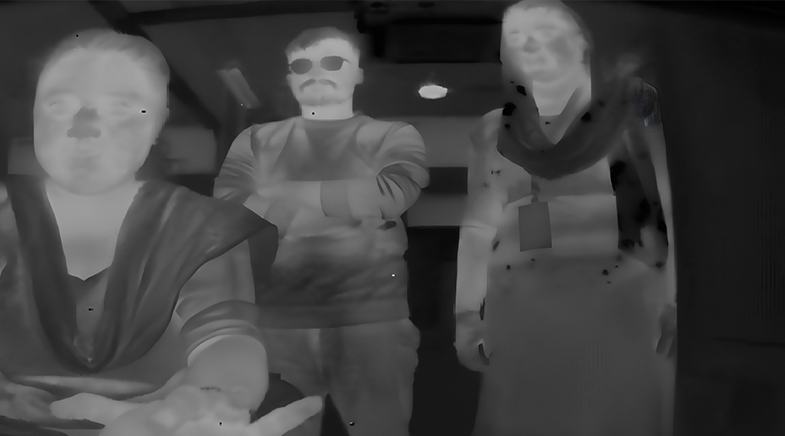
In 2026, the thermal camera was successfully tested, and the IVIS is now ready for use. C-DAC and IUCAA's industry partners — Aditya Infotech, Brahamastra Defence Techno Products, and RRP S4E Innovation — are at an advanced stage of prototyping the thermal camera. Once ready, it can be used in applications such as traffic sensing and vehicle identification. "We are reviewing their designs and providing technical guidance and clarifications as and when required," says Sathyanarayanan. Ramaprakash stresses he would like the know-how to be taken up by multiple industries. This could transpire if business development managers could take it to industries and canvas for it, he adds. "I think we need a much better ecosystem where academicians work hand-in-hand with industries."
The missing bridge
In India, such spinoffs from astrophysical research are rare. A more common route to a spinoff is for industry partners to develop unique skills and technology and commercialise them elsewhere. India's collaboration on the Thirty Meter Telescope (TMT) is an example.
Annapurni Subramaniam, Director of the Indian Institute of Astrophysics (IIA), Bengaluru, is a Principal Investigator of the TMT project. As her team built components for the TMT, their expertise was enlisted for the Keck telescopes, which were to look for exoplanets; they were asked to build components for an instrument to study them. "That was a spinoff, too," Subramaniam says. The institute has also developed and commissioned a segment polishing facility.
Industry-academia partnerships in astrophysics mainly focus on building components for ground- or space-based telescopes. Real commercial spinoffs, Subramaniam says, are difficult to come by, because they work only when there is a "bridge" — someone with a vision and the knowledge to implement it. "Such bridges are rare," she says.
Astrophysics institutes in India focus on unique instruments, such as the ultraviolet imaging telescope. The IIA has worked with close to 75 companies on TMT components. Some have commercialised and repurposed the technology learnt while making the telescope's components.
Precision at the limit
Prasanna Deshmukh, an engineering faculty member at IIA, is building parts for the TMT. Its large mirror will be made of 492 segments. Very thin and fragile, they must be held by a mechanical structure to be fabricated in India, along with 1,500 fasteners, in partnership with the precision engineering wing of Larsen & Toubro (L&T). Each hexagonal segment must also be precisely aligned with the others, and the edge sensors that determine how far the actuators must move it are being made with Bengaluru-based Optics and Allied Engineering (Optica). "It is on the limits of what companies are capable of doing," Deshmukh says, referring to the stringent demands on companies partnering with academia in this manner.
L&T says it is comfortable working with laboratories, largely in the defence sector, but scientific projects don't scale up like weapons projects. "If you build a missile you would probably go on to build thousands of them, but if you build a thirty-metre telescope, you will be lucky if you build two of them in your lifetime," says Arun Ramchandani, Senior Vice President and Head of Precision Engineering & Systems, L&T.
But there are opportunities beyond this. The L&T team has learned to machine Invar, a rare material used in optical instruments, prized for its low expansion and high stability. The alloy, roughly 36% nickel and 64% iron, was first made by Swiss physicist Charles Édouard Guillaume in 1895, yet the technologies for forming, machining, and joining it remain largely unused. That knowledge can be used in electro-optical, satellite, and aerospace systems.
The TMT's design involves an element called a whiffle tree. This pivoted swinging bar is used in telescopes to support large mirrors and balance them as they swing, avoiding distortion. L&T's Programme Manager S. Karthikeyan and his team can transfer this knowledge into developing defence applications where the whiffle tree is used. It can also be applied in directed energy weapons using lasers, an area where L&T is working.
Optica is another beneficiary. "We have been working with IIA for nearly seven years," says Rajendra Kotaria, Chairman and Managing Director, Optica. The company works closely with the Defence Research and Development Organisation to make lightweight mirrors for laser-directed energy weapons. "Our mirror is 60-70% cheaper than that obtained from international suppliers," says Nagaraj Gatty, General Manager, Projects. It is also working on infrared search-and-track domes for Indian aircraft and drones, and has started on optical payloads for satellites with a private entity.
Code from the cosmos
Software for TMT has had a ripple effect. The TMT group engaged tech company Thoughtworks, which built the common software framework (the backbone of communication on which the observatory's software rests) and the executive software, the user interface for operators handling the telescope. "One of the features we designed for the TMT is the data management system," says project manager Chhaya Dhanani.
The TMT experience helped in retail banking too. "Our learning from building such large real-time systems helped us build software for banks where they are looking for real-time transactions," she says.
The company is also associated with the Square Kilometre Array (SKA), a large radio telescope that will generate 700 petabytes of data in a year. The data will be processed through a chip called a Field-Programmable Gate Array (FPGA). "We asked whether we can design FPGAs, helping us retain the right data, remove noise and extract greater value from every observation," Dhanani says.
As companies find commercial interests in innovative research, astronomy bodies in India are looking for ways to extend the reach of their work beyond the observatory and into everyday use.
See also:



Why AI is thinking small
As the cost of running large AI models climbs, smaller, specialised models, built for local needs, are gaining ground.


Have a
story idea?
Tell us.
Do you have a recent research paper or an idea for a science/technology-themed article that you'd like to tell us about?
GET IN TOUCH