

Light at the end of the tunnel
-
- from Shaastra :: vol 05 issue 11 :: Nov 2026
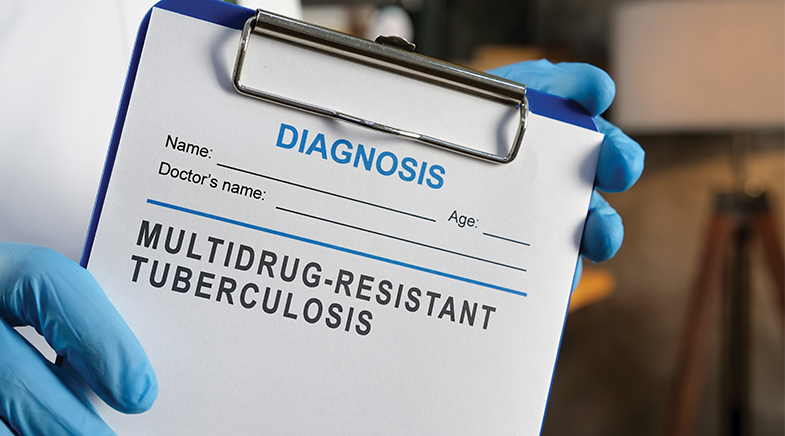
Hidden gateway into TB bacterium may inspire new drugs.
Rajesh Gokhale was intrigued by a gene in the genome of Mycobacterium tuberculosis (Mtb), the bacterium that causes tuberculosis (TB). Although scientists had catalogued the gene — called ppe1 — within months of sequencing the genome in 1998, its role in the bacterium's biology remained unknown. What particularly intrigued Gokhale, earlier a scientist at the National Institute of Immunology (NII) in New Delhi and now Secretary in the Department of Biotechnology, was the gene's location. It sits next to a cluster of five genes involved in assembling an important molecule produced by Mtb. Gokhale wondered whether ppe1 was required for the molecule's functioning, and asked NII research scholar Mohit Yadav to investigate the gene for his PhD thesis.
The resulting four-year investigation has yielded a discovery: a previously unknown molecular gateway, a tunnel-like opening, in the bacterium's outer membrane. NII researchers and their collaborators in Bengaluru, Pune, and Thiruvananthapuram found that the protein produced by ppe1 helps assemble this gateway, one of the first identified in Mtb's outer membrane. The gateway is made of alpha helices — segments of proteins that coil into a structure to form a tunnel-like passage through the membrane (bit.ly/TB-hidden-tunnel).
"The outer membrane is a critical barrier that the bacterium must constantly move substances across to survive, but until now we knew very little about how this transport actually takes place," says Gokhale, who continues to visit the NII to engage with students. "The gateway helps explain how the bacterium manages this essential transport process."
Yadav joined an NII team probing another aspect of TB biology. Scientists know that Mtb can survive inside mammalian hosts for years, remaining dormant and causing active disease when immunity weakens. Through multiple mechanisms, Mtb maintains an uneasy truce with its host, evading immune attacks while countering the host's attempts to eliminate it. One such host defence is starving Mtb of essential metals such as iron, manganese, and zinc by restricting their availability.
PAST ISSUES - Free to Read


Materials that cool sustainably
The hunt is on for materials that can bring temperatures down without using power.

Shape of things to come
3D biomaterial platforms are revolutionising cancer research, paving the way for personalised therapy.



Have a
story idea?
Tell us.
Do you have a recent research paper or an idea for a science/technology-themed article that you'd like to tell us about?
GET IN TOUCH