

Making a splash
-
- from Shaastra :: vol 05 issue 09 :: Sep 2026
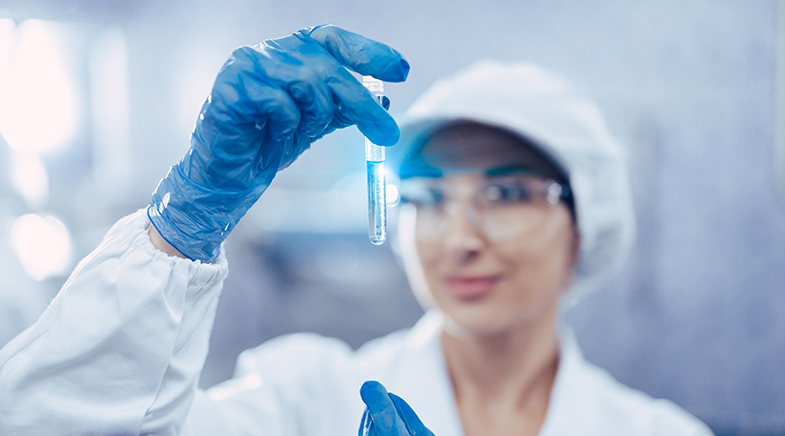
Scientists are taking a deep dive into water, and surfacing with gems.
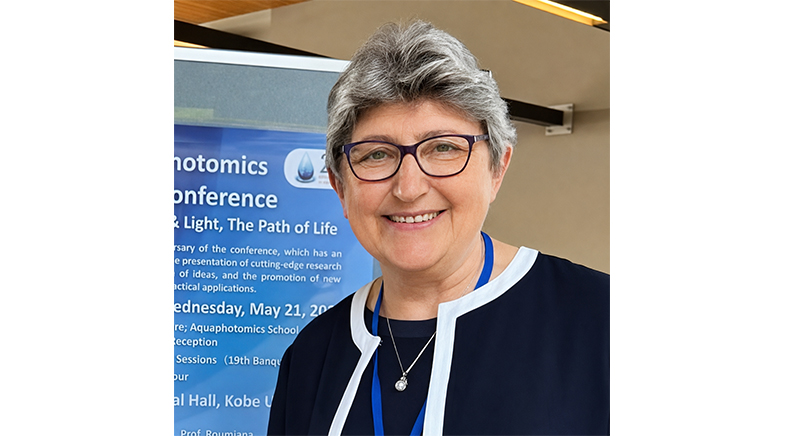
In 2005, Roumiana Tsenkova was invited to deliver a talk by tech giant Sharp Corporation. Sharp had developed a cooking technology that used superheated steam — water vapour heated beyond its boiling point — as a cooking medium. Since the technology depended on the unusual behaviour of water in its vapour state, Japanese engineer Tadashi Sasaki, then Vice President at Sharp, wanted to understand the science of water more deeply, and was keen to know about Tsenkova's work. The Bulgarian-born scientist at Kobe University had introduced a field called 'aquaphotomics' at an international conference in New Zealand that year. The field seeks to understand water by studying how its molecular structure responds to light, particularly near-infrared light.
After the talk, a member of the audience invited Tsenkova to his family's Yunosato hot spring spa in Hashimoto, Wakayama, at the foot of Japan's Mount Koya. The spa offered three kinds of bathing water, called gold, silver and bronze water, drawn from different depths. Although they appeared chemically similar, the owners believed they had distinct properties and effects on bathers, and sought Tsenkova's help to understand the science behind these claims.
The issue intrigued Tsenkova. Does water drawn from different depths have distinct molecular structures and properties? She investigated the waters using aquaphotomics, monitoring their spectral patterns, or 'aquagrams', to see if their light-absorption patterns could reveal differences in molecular structure and help explain their reported properties. In 2011, Kobe University established the Yunosato Aquaphotomics Lab in collaboration with the spa. Tsenkova's team monitored the three waters at the same time every day for more than five years. Using near-infrared spectroscopy, they tracked how the waters changed over time. The visit to the hot springs has led to deep research — and questions that are still being answered.
A deeper understanding of water promises to unravel secrets ranging from the processes of life to the chemistry of interstellar space.
WAITING TO BE EXPLORED
It is becoming increasingly clear to the scientific community that while water is an essential ingredient of life and one of the most abundant molecules in the universe, it has not been adequately explored. "Water doesn't get the attention it deserves. People don't know enough about water," Tsenkova rues.
New research, however, has now been unravelling little-known aspects of water. A deeper understanding of water promises to reveal secrets ranging from the processes of life to the chemistry of interstellar space — as underlined by a spate of recent studies.
Tsenkova, for one, has continued her path-breaking work on water — assessing how changing gravity may alter the hydrogen-bond network in water. In a March 2026 paper (bit.ly/Gravity-water), she and her group report that they investigated this possibility under controlled laboratory conditions. They studied ultrapure water and five salt solutions under normal gravity and under simulated microgravity, which is less than one-tenth of Earth's gravity. A rotating device called a clinostat created the simulated microgravity, while near-infrared spectroscopy detected changes in the hydrogen-bond network.
Water molecules are linked by hydrogen bonds, forming a dynamic network that constantly breaks and forms. This network is responsible for many of water's unusual properties and is important to its role in biological systems. The researchers found that the network became somewhat weaker under simulated microgravity. They suggest that reduced gravity lowers hydrostatic pressure, allowing water to expand slightly. The resulting increase in the distance between neighbouring molecules could weaken their hydrogen bonds.
The effect, however, was small. A temperature change of about 2° Celsius produced a larger change in the hydrogen-bond network than the reduction in gravity. The response also depended on the ions present. Solutions containing kosmotropic ions, which tend to strengthen or organise the hydrogen-bond network, showed smaller changes under reduced gravity. In contrast, chaotropic ions, which tend to disrupt it, showed larger changes.
The findings have also led to a new collaboration. Anirban Bandyopadhyay, a physicist at the National Institute for Materials Science, Japan, met Tsenkova at a conference in Italy in 2023. They subsequently began investigating whether the Moon's changing gravitational influence might leave a detectable signature in the spa waters. Tsenkova says her team has observed recurring spectral patterns that appear to follow lunar cycles. They are now investigating whether these changes help answer the question that first intrigued the spa owners: whether the waters' reported special properties have a measurable physical basis.
ARCHITECT OF LIFE
For more than a decade, Bandyopadhyay has been exploring the role of water in biological systems, including its interactions with microtubules and other biomolecules. "Our whole body is an architecture of water in every single moment," he says.
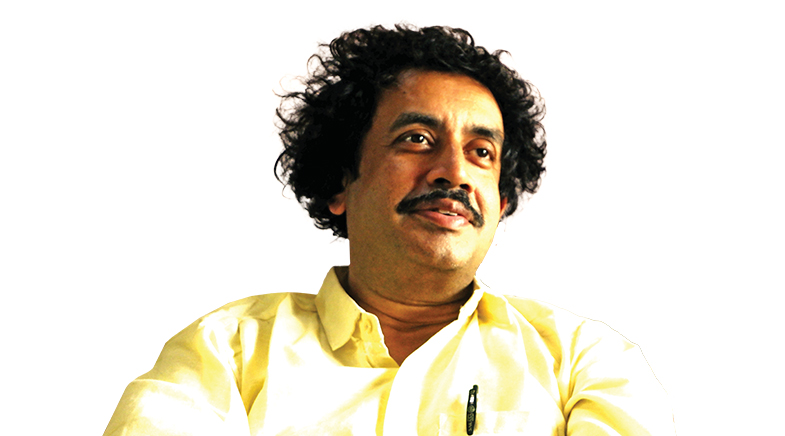
For a September 2026 study (bit.ly/Water-layer), Bandyopadhyay collaborated with Pushpendra Singh, a physicist at the Indian Institute of Technology Mandi, to develop a mathematical model of how water surrounding biological molecules could influence their interactions. They focused on the thin layers of water surrounding proteins, DNA, enzymes and other biomolecules. These layers are known as hydration scaffolds because water molecules around biomolecules can form an organised, interconnected environment, unlike water molecules farther away that are freer to move.
Their calculations and computer simulations suggested that hydration scaffolds can form connected networks with organised patterns across different length scales. The model produced a sequence of such states from the atomic scale to roughly 100 micrometres, about the width of a human hair. The researchers suggest that this scaling behaviour could help describe how biological systems maintain an organisation across different sizes. The study, however, is theoretical, as the pattern has not been experimentally demonstrated with a living organism.
The study suggests that water surrounding biomolecules may play a more active role in organising molecular interactions than otherwise assumed. Singh says the researchers want to understand whether the arrangement of these water layers could exhibit quantum-like behaviour and how information might be transmitted across them. For now, however, the mathematical model only provides a framework for investigating these possibilities; it does not demonstrate that biological information actually travels through hydration layers in this way.
Tsenkova's work offers another way to investigate water's connection with biological processes. In a 2025 study (bit.ly/Redox-plant), her group showed water surrounding a molecule might carry information about its chemical state. Researchers distinguish between the reduced and oxidised forms of glutathione, an antioxidant that protects cells from damage. These redox changes are essential for producing energy and maintaining cellular balance. They found that the two forms altered not only the glutathione molecules but also the water surrounding them. Simulations showed that the water layers around the two forms had different structures. The study suggests that changes in water around a molecule could reveal its chemical state, offering a new way to monitor significant processes inside living cells.
SECOND CRITICAL POINT
The biological importance of water, however, may be inseparable from its unusual physical behaviour. At a particular temperature and pressure, water's liquid and vapour phases become indistinguishable in what is known as the critical point.
For decades, physicist Pablo G. Debenedetti of Princeton University, U.S., investigated the possibility of a second critical point. At extremely low temperatures and high pressures, water may separate into two liquid phases: a low-density and a high-density phase. The point at which the two become indistinguishable would be the second critical point.
He and his collaborators studied supercooled water — liquid water cooled below its normal freezing point without crystallising into ice. Using a machine-learning model trained on quantum-mechanical calculations, they predicted how water molecules behaved in this difficult-to-study area (bit.ly/Energy-stat). Their calculations supported the existence of a liquid-liquid critical point, with the predicted location matching that of earlier studies. However, the critical point has not been directly observed experimentally.
Debenedetti refers to a 2026 experiment, led by Anders Nilsson of Stockholm University, which provides evidence for the long-proposed second critical point (bit.ly/Critical-cool). The researchers rapidly heated two glassy forms of ice, high-density and low-density amorphous ice, with ultrafast infrared laser pulses and used X-ray scattering to observe the resulting liquid water before it could freeze. They thus created and observed extremely cold liquid water before it crystallised, providing some of the strongest experimental evidence yet for water's hidden second critical point.
Finding the second critical point could explain how water's unusual molecular behaviour creates the physical and chemical conditions necessary for life. It could help explain how some of those conditions arose during the origin of life.
Debenedetti points out that another unusual form of water — glassy water — may be particularly important beyond Earth. Unlike ordinary crystalline ice, glassy water is a non-crystalline, solid-like form in which the molecules remain disordered. It has been found in cosmic environments including comets, interstellar clouds and icy moons, and may be the most abundant form of water in the universe.
Some of the chemistry needed to build complex biological molecules may have begun before planets existed.
INTERSTELLAR WATER
The researchers' findings establish how water in different states or structures may unlock not only life processes but also the origin of life.
The glassy water may not simply be a frozen reservoir of water in space. Its disordered structure can trap molecules and provide an environment where cosmic radiation drives chemical reactions. A 2026 collaborative study led by Alfred Thomas Hopkinson of Aarhus University, Denmark (bit.ly/glycine-ice), showed that glycine, a simple amino acid and a building block of proteins, could react in interstellar ice to form glycylglycine, a small peptide made of two linked glycine molecules, even without liquid water.
This suggests that disordered water ice can act as a microscopic chemical laboratory in space. Molecules trapped in the ice or on its surface are held close together, allowing them to interact. Cosmic rays and other energy sources can trigger reactions between them. As interstellar clouds evolve into stars and planets, some of these molecules could survive and become parts of comets, asteroids and other planetary material.

HIDDEN DEPTHS
With Tsenkova and Singh, Bandyopadhyay is now developing a new acoustic-levitation set-up in which a tiny water droplet can be suspended in mid-air using sound waves and then simultaneously exposed to sound, microwaves, and infrared radiation at different frequencies from three perpendicular directions. The idea is to understand if water plays a role in information processing in biological systems. Bandyopadhyay is excited about the ramifications of the ongoing research and the need to dive deep into water. "Biology is all about water," he says.
See also:








'It makes compelling sense to bring engineering, medicine together'
Dr Roderic Pettigrew points to the future of transdisciplinary convergence.


Messengers on a life-saving mission
Two scientists, across continents, collaborated to bring the mRNA vaccine to India.



Have a
story idea?
Tell us.
Do you have a recent research paper or an idea for a science/technology-themed article that you'd like to tell us about?
GET IN TOUCH