

Raising the bars
-
- from Shaastra :: vol 05 issue 04 :: Apr 2026
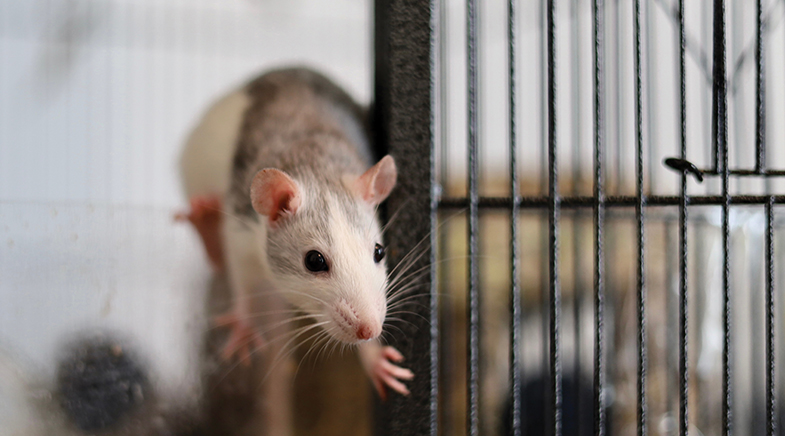
Drug companies' appetite for new testing methods may boost research and spawn a new industry.
The human placental barrier is a protective organ. Oxygen and nutrients pass from mother to foetus through it while foetal waste is removed. Drugs, too, can cross this membrane, though the extent differs from one medicine to another. Some can do so harmlessly; others may disrupt it — and these are factors that determine if a drug is safe in pregnancy.
Typically, experimental drugs are tested on animal models before they are deemed safe for humans. But when it comes to pregnant women, the drug industry has hit a wall. No animal model fully replicates the human placenta. Most drugs have never been tested on pregnant women, says Abhijit Majumder, Professor of Chemical Engineering at the Indian Institute of Technology Bombay (IITB). This deprives them of treatment for serious diseases such as epilepsy or depression.
The professor has a solution. He and collaborators at IITB and the Indian Council of Medical Research (ICMR)-led National Institute for Research in Reproductive and Child Health have developed placenta-on-chip (PoC) devices that mimic different stages of human pregnancy.
The placenta on a lab dish is made with living cells and has maternal and foetal chambers. It allows different cells to interact and mimics placental blood flow. Studies show that the model has resident cell types, secretes hormones, and exhibits other structural and functional similarities to the human placenta.
Such a model could prove invaluable to assess drug safety in pregnancy, an area that is in dire need of innovation. Researchers could study if — and at what concentrations — specific compounds cross the placental barrier, and whether they disrupt it. The development was made public in 2023. But end-users — pharma companies and contract research organisations (CROs) that offer drug testing services — have yet to license this or any other organs-on-chip (OOCs) that Majumder has worked on. Now, two of Majumder's students are taking steps to found a company to commercialise the PoC and other novel in vitro drug-testing methods.
PAST ISSUES - Free to Read









Fasten your seat belts!
A series of flight mishaps in recent times has rekindled interest in clear-air turbulence.

The cosmic rush
A series of new space missions is expected to answer some of the deepest questions in cosmology.




Have a
story idea?
Tell us.
Do you have a recent research paper or an idea for a science/technology-themed article that you'd like to tell us about?
GET IN TOUCH