

World of research: July 2026
-
- from Shaastra :: vol 05 issue 07 :: Jul 2026

A round-up of some recent striking studies.
OPENING GENETIC SECRETS
Genome sequencing of Pakistani people to help address diseases.
Amulti-institutional, multi-country study analysing the genomes of 173,303 people from Pakistan reveals new genetic variants and insights that can advance understanding of diseases and lead to safer, more effective medicines. The study also addresses the underrepresentation of South Asian genomes in global genome databases, and is expected to help tailor diagnostics and drugs to the needs of the population.
The tradition of marriages within families in Pakistan results in a greater chance of a person inheriting a non-working copy of a gene from both parents. An individual carrying a gene that is no longer active is a goldmine for geneticists, who otherwise perform gene deletions in experimental organisms such as fruit flies, zebrafish, and mice to infer the consequences of such a condition. But those results often do not corroborate in humans.
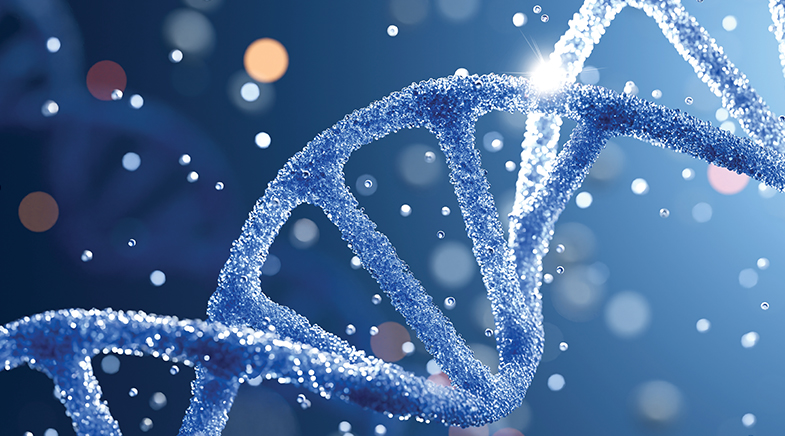
In the study published in Nature, scientists collected DNA samples and sequenced the genomes of individuals across 23 cities and 11 ethnicities in Pakistan. Sequence analysis revealed 6.6 million genetic variants in the dataset, of which 47% were unique to the population. The study identified nearly 6,500 genes that did not function in some people due to natural genetic variations.
"What's unique about our Pakistan study is we can go back to participants and conduct comprehensive medical exams to see what kind of effects the gene deletion may have on the individual," says Danish Saleheen, Professor of Medical Sciences and Director of Global Genomics at the Columbia University Vagelos College of Physicians and Surgeons, and also the corresponding author of the study (bit.ly/pressrelease-Pakistan). As multiple generations of a family often live together in Pakistan, researchers can also study the effects of partial or absent gene function, related to age and environmental factors.
The research presents 28 specific examples of how an inactive gene affects individual health to demonstrate its implications for diagnosis and drug development.
For instance, researchers found that Pakistani individuals with the inactive RXFP1 gene do not display cardiovascular or reproductive problems. The finding proved counterintuitive since the experimental mouse with the inactive gene displayed heart and reproductive issues, making it a drug target for heart failure. The study explains why this and other drugs failed in human trials. The study is particularly important for drug companies as it can save them millions of dollars in clinical trials and suggest better drug targets.

STRAND UPON STRAND
Synthesising distinct DNA sequences on a silicon chip.
Arthur Kornberg synthesised a DNA molecule in the lab for the first time in 1957. Using the DNA polymerase enzyme isolated from bacteria, he assembled nucleotides (the building blocks of DNA) into a DNA strand. The ability of scientists to synthesise artificial DNA in the lab has considerably improved since that first success several decades ago, but it is still not sufficient to meet the requirements of high-throughput processes.
However, a recent study (bit.ly/DNA-synthesis) published in Nature Electronics has elucidated a method for synthesising several strands of DNA in parallel on a silicon chip. Researchers synthesised 64 distinct DNA sequences of 38 or 39 nucleotides on the silicon chip. They used a water-based enzymatic process in combination with precisely controlled electric currents at each of the 64 sites on the silicon chip to produce 64 individual strands of DNA in one go.
Existing methods of enzymatic DNA synthesis cannot produce several strands parallelly; they only synthesise a few in one go. Other conventional methods can perform parallel synthesis and synthesise longer strands of DNA, but they rely on harsh chemical solvents. The new method provides parallelisation, while avoiding the use of such solvents.
Synthetic DNA has a wide range of applications beyond biology. For instance, it is a medium for data storage. To demonstrate this use, researchers encoded a 169-byte text across the 64 DNA fragments. As the ability to synthesise DNA improves, so will the ability to harness its diverse uses.
Growing a DNA strand is a multi-step process. Once a nucleotide has been added, it undergoes a step called deprotection — typically triggered by lowering the pH — which opens it up for the next nucleotide in the chain. The pH must be lowered precisely at each synthesis site on the chip. The researchers started with 256 synthesis sites on the silicon chip but achieved little success; they suspected crosstalk between the sites, which interfered with the process. However, when they reduced the synthesis density of 64 sites on the same chip, they successfully synthesised DNA on each site.
The researchers now want to work on the chemistry involved in the process to enable higher parallelisation, resulting in more than 64 active synthesis sites on the chip.
CLEAN CONVERSION
A scalable and low-cost solution to waste management.
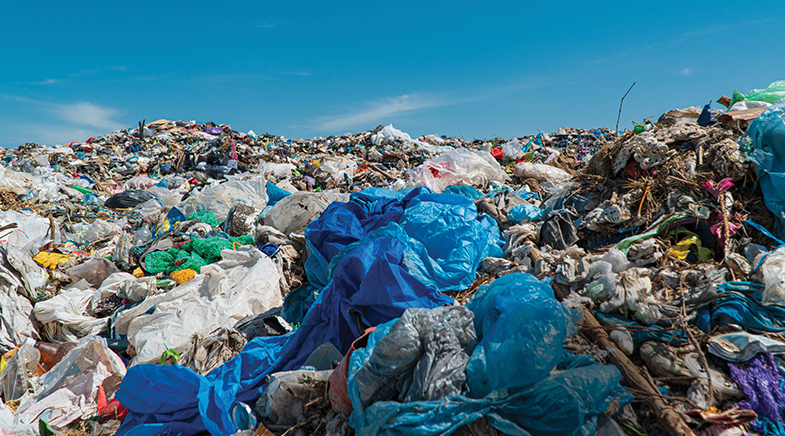
A research team from the Saudi Arabia-based King Abdullah University of Science and Technology has developed a highly durable, low-cost catalyst that can convert greenhouse gases produced during the treatment of organic and plastic waste into clean fuels. The new catalyst, which can be mass-produced, may lead to a scalable solution to the problem of waste management.
According to UNEP's Global Waste Management Outlook 2024, municipal solid waste generation is projected to increase from 2.1 billion tonnes in 2023 to 3.8 billion tonnes by 2050. Waste management currently involves collecting and segregating waste into recyclable and non-recyclable categories such as organic and certain plastic waste. Non-recyclable waste is either left in landfills to decompose, producing methane and carbon dioxide, or burnt in waste-to-energy plants to generate electricity. Scientists have developed catalysts that can convert greenhouse gases generated by the decomposition of organic waste into valuable chemicals and fuels, but these catalysts are expensive, not so efficient, and difficult to produce at an industrial scale.
In a new study published in Science (bit.ly/catalyst-waste), the researchers, while working to find a more efficient catalyst for waste conversion, found that carbon fumes blocked the catalyst's surface during the conversion of gases to fuels, thereby decreasing the catalyst's efficiency. To overcome the problem, they developed a new catalyst by uniformly distributing particles of nickel and molybdenum on a magnesium oxide support, which prevented carbon from sticking to the catalyst's surface and allowed it to keep working efficiently. To check the performance of the catalyst, organic and plastic waste were burned in the absence of oxygen, and the resultant gases passed through a second furnace where the new catalyst converted them into syngas – a mixture of hydrogen gas and carbon monoxide.
The syngas was later converted to methanol, and subsequently into a high-value product – dimethyl ether (DME) – a potential diesel substitute. The catalyst worked for over 35 days without measurable loss in performance, scientists observed, and the DME produced had the same cost but half the carbon footprint of fuel made by traditional methods.
To make the new catalyst industrially relevant, the scientists have developed a simple, one-pot synthesis method, enabling scalable production from grams to kilograms without loss of catalytic activity or efficiency. The team believes the new catalyst represents an industrial-scale, profitable route to recycling waste and will, hence, truly help create wealth from waste.









At a climate crossroads
Ahead of the upcoming IPCC report, 'hellfire and high-water' images around the world amplify the urgency of climate action.

Materials that cool sustainably
The hunt is on for materials that can bring temperatures down without using power.

Fathoming turbulence
Unravelling how heat threads through chaos helps researchers grasp issues ranging from weather patterns to stellar physics.



Have a
story idea?
Tell us.
Do you have a recent research paper or an idea for a science/technology-themed article that you'd like to tell us about?
GET IN TOUCH