

World of research: June 2026
-
- from Shaastra :: vol 05 issue 06 :: Jun 2026

A round-up of some recent striking studies.
SMALL AND BRIGHT
A deep-sea fish shows the light — and the way to efficient optical devices.
Deep in the darkness of an ocean, a tiny fish uses just a spot of light to illuminate its surroundings. A few centimetres long, Sigmops gracilis knows how to manage light, unlike many other light-producing creatures in the sea. Now, its ability to control and enhance light has caught researchers' attention (bit.ly/Sea-light).
Masakazu Iwasaka, a physicist at Hiroshima University, Japan, was studying the effects of magnetic fields on bone-forming cells in fish scales when he noticed that tiny guanine crystal plates on the scales rotated and flashed when exposed to a magnetic field. The observation revealed an unusual property of guanine crystals and sparked a research direction that would eventually lead him to the glowing organs of deep-sea fish. "I accidentally discovered that guanine crystal plates on the surface of the scales rotated in a magnetic field, causing flashing," he says. Iwasaka found that while guanine is not magnetic, its crystals respond strongly to magnetic fields through diamagnetism, allowing them to rotate and align.
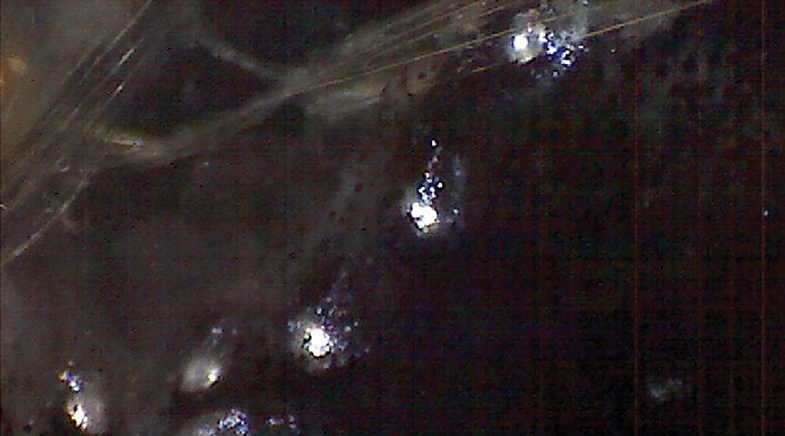
On a research voyage, he examined the Slender Fangjaw — Sigmops gracilis — and was surprised to discover that the fish was almost entirely black. It did not have guanine crystals, but the microscope revealed that the crystals were clustered around the photophores, organs that produce light. The finding suggests that even tiny amounts of guanine can play a significant role in managing bioluminescence.
The work reveals that guanine crystal plates were arranged in a curved structure resembling a parabolic antenna inside the light-producing organs. By studying how they work, researchers hope to develop new optical technologies, including energy-efficient lighting systems, lightweight reflective materials, advanced sensors, and photonic devices that can manipulate light without complex manufacturing processes. Iwasaka's study shows that even a small amount of guanine crystal material can significantly enhance the brightness and direction of emitted light.
Investigating guanine crystals helps researchers understand why some animals evolved reflective tissues, how biological materials acquire new functions, and why different groups of animals, such as fish and squids, developed distinct solutions for controlling and manipulating light. "Guanine possesses one of the highest refractive indices among biological molecules and, being a DNA base, is readily available to living organisms," Iwasaka explains.
He adds that the finding can help researchers make the most of limited energy resources with limited materials. "This may be useful in the field of production planning, such as determining how many organisms can survive based on the minimum necessary energy and material resources," he adds.

STORE, RELEASE, REUSE
Energy solution in a sunlight-capturing molecule.
The intermittency of renewables, which necessitates high-cost energy storage technologies, challenges the transition to green energy. Now, researchers at the University of California in the U.S. have demonstrated how the problem can be overcome. Capturing solar light in a newly developed DNA-inspired photosensitive compound can release energy when required, they report in a study recently published in Science. The molecule can be repeatedly used to store and release energy.
This new sunlight-capturing molecule — called pyrimidone — changes its structure in response to ultraviolet (UV) light; when treated with acid, it later reverts to its previous structure while releasing heat. The molecule is similar to the pyrimidine in DNA, which changes its structure when exposed to UV light.
"Think of photochromic sunglasses. When you're inside, they're just clear lenses. You walk out into the sun, and they darken on their own. Come back inside, and the lenses become clear again," says Han Nguyen, a doctoral student and lead author of the paper. "That kind of reversible change is what we're interested in. Only instead of changing color, we want to use the same idea to store energy, release it when we need it, and then reuse the material over and over," he says in a press statement.
The scientists showed how they tweaked the pyrimidone molecule so that it quickly and effectively changed its structure in response to sunlight (bit.ly/solar-molecule). For this, they engineered the pyrimidone core, ensuring that the carbon atoms were close by and could combine swiftly after UV irradiation to change shape. They also removed the bulky atoms from the molecule, which prevented it from bending and folding more easily. The team later tested this system and found that 107 mg of UV-light-exposed pyrimidone molecule was sufficient to boil 0.46 millilitres of water in 1 second; that is, the molecule had an energy density of 1.65 megajoules per kilogram. The system's USP is its recyclability and reusability.
While metal hydrides and molten salts are being used currently for storing solar heat in chemical bonds, this new molecule is part of an emerging technology called Molecular Solar Thermal (MOST) energy storage technology, which captures sunlight (not heat) directly, offers longer duration storage with minimal heat loss and does not require bulky reactors for operation. The technology, however, struggles with the low energy density of photosensitive compounds. This study overcomes that issue.

Bacterial cellulose may be used for cricket bats
GIVING IT A SPIN
Bacterial cellulose grown in a rotating tube may replace synthetic polymers.
Despite growing concern about the production of synthetic polymers, cellulose remains the most abundant polymer on Earth. Researchers are developing cellulose as an alternative to synthetic polymers to address the problem of degraded plastics, which persist in the environment as micro- and nanoplastics. Cellulose alternatives are already being used in the place of plastic cling films, for instance.
Engineers from the universities of Rice and Houston in the U.S. have designed a one-step method to manufacture pure cellulose sheets from bacteria with high mechanical properties. Maksud Rahman, Assistant Professor in Mechanical and Aerospace Engineering at Houston University, says that while cellulose is obtained from plants, the purest method of producing it is through bacteria fed on straw. "Plant-based cellulose had lignin and hemicellulose that need to be removed," says Rahman, the corresponding author of a paper on the subject (bit.ly/cellulose-sheet).
Rahman's team experimented with several methods for producing bacterial cellulose, including growing it on trays. However, to improve its mechanical qualities, the cellulose needed further treatment, including stretching. "The bacterial cellulose fibres were growing in different directions, which reduced the strength of the sheet. We thought of a way to orient all the fibres in one direction," he adds. The researchers placed the growth medium in a cylindrical tube fitted with a propeller to continuously circulate the medium in one direction. "Initially, we had no success. We kept tweaking various inputs. Finally, we had a thin layer of cellulose growing around the tube."
Once they had the desired thickness, they removed the cellulose roll from the tube and cut it into a sheet of pure cellulose. They tested the sheet for various parameters of mechanical strength and found it to be superior to cellulose produced by other methods. "The sheet was even sturdier than the sheets which had undergone post-manufacture treatment," Rahman says.
What plastic can such cellulose replace? "It can be thermoset to create a range of products. We can make a good cricket bat from it, too. A bat is mostly cellulose, after all," says Rahman, originally from Bangladesh, and, clearly, a cricket enthusiast.
They next tried improving the sheet's conductivity by adding hexagonal boron nitride, or white graphene. The white graphene was deposited homogeneously across the sheet when produced in the rotational tube, whereas in other methods it grew mostly on the surface.
The one-step method reduces manufacturing costs and can be scaled up. Cellulose has the same durability as plastic, but is fully biodegradable. "Our aim is to provide cellulose as an alternative to polymers like polyethene and polyvinyl chloride. The raw material is easily available agricultural waste," Rahman adds.
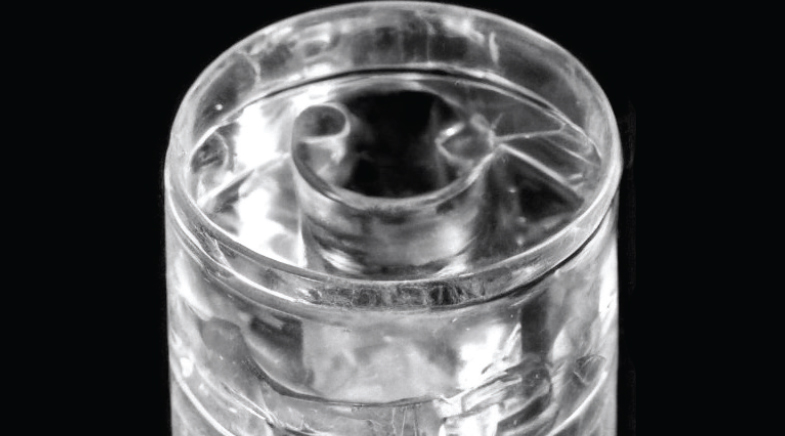








Chip off the old block
A device that mimics the human placenta may help identify pregnancy-safe drugs.


Lost in translation
India’s R&D spending is modest, which is why it must get more bang for its buck. Here’s how that can be done.
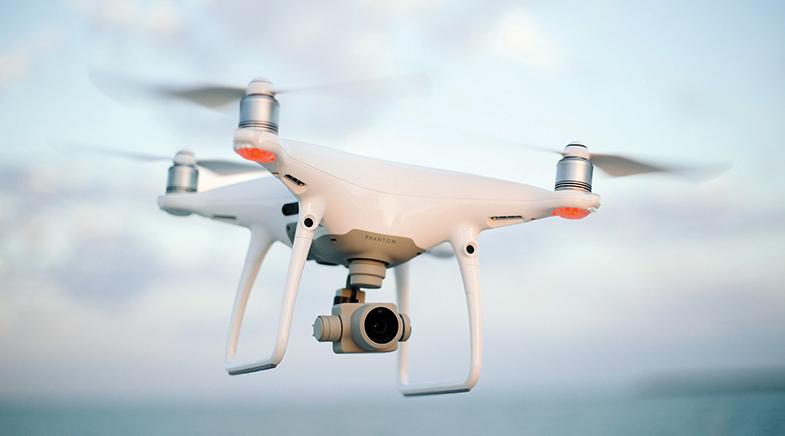
More power to them
Quadcopter flight endurance could benefit from a demonstrated surge of power and stability.



Have a
story idea?
Tell us.
Do you have a recent research paper or an idea for a science/technology-themed article that you'd like to tell us about?
GET IN TOUCH