

World of research: October 2026
-
- from Shaastra :: vol 05 issue 10 :: Oct 2026

A round-up of some recent striking studies.
SCENARIOS OF A COSMIC BIRTH
The Moon may have formed in as little as five hours.
The Earth's cosmic companionship with the Moon has intrigued amateurs and scientists alike. New insights into this billions-of-years-old partnership have come from researchers at the University of Arizona and Southwest Research Institute (SwRI) in the U.S. They factored in the material strength of the Earth and Theia, a Mars-sized protoplanet, the collision of which is considered to have formed the Moon. Satellite formation, says the study (bit.ly/moon-formation), depends largely on the temperatures of the colliding bodies. Under one such scenario, an intact Moon could have emerged in as little as five hours after collision, instead of weeks, months, or years, as was presumed.
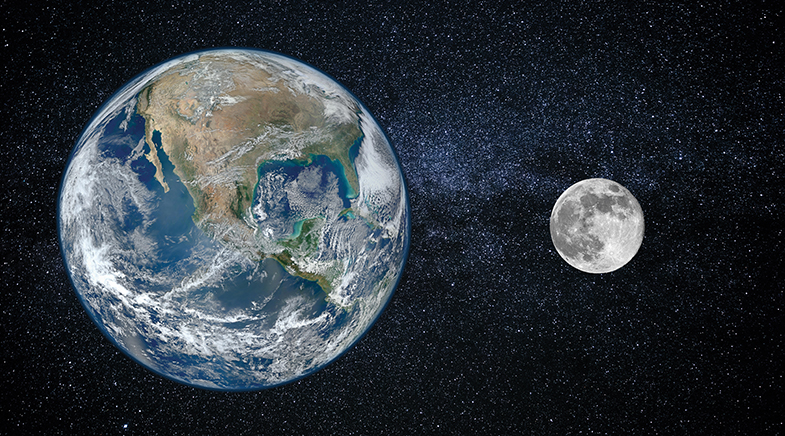
Earlier simulations considered the collision to be violent enough to melt the two bodies, so researchers rendered the Earth and Theia as fluid globs. New research, however, challenges this assumption; the colliding objects are imagined as rocky bodies. "When two fluid blobs hit each other, they just start deforming immediately, right? But if a rock hits another rock, that is not quite what happens," reasons C. Adeene Denton, former postdoctoral researcher at the Lunar and Planetary Laboratory, now with the SwRI. She is the first author of the study published in The Astrophysical Journal Letters.
Denton had earlier studied the collision that formed Charon, Pluto's satellite, and decided to extend her observations to the larger Earth-Moon system. By incorporating the structural strength of colliding bodies into advanced smoothed particle hydrodynamics simulations, the team found that Moon-formation events were sensitive to the temperature of the two colliding bodies. If they were hot, Theia would have remained intact and produced the satellite in 5 hours. However, if they were cold, the debris from the collision would have combined over weeks, months, or even years, to assemble and form the Moon.
Denton hopes to narrow down the time of origin of the Moon by putting together geological information about the Earth and the Moon. She wants to use the simulation results to better understand the formation of large satellites in the solar system, and gain insights into cosmic partnerships emerging from cosmic chaos.
— Aditi Jain
ON TIME, EVERY TIME
A high-precision lutetium clock drops a second in 260 billion years.
An atom that had gone largely unnoticed for years has been used to make one of the world's most accurate clocks. The unusual properties of the lutetium atom drew the attention of Murray Barrett, a physicist at the National University of Singapore, who, along with his colleagues, has used it to develop a very precise clock.
The clock will lose just 1 second in 260 billion years, or about 0.53 milliseconds over the age of the universe, according to the study published in Nature (bit.ly/Precise-clock). Barrett found a combination of useful properties in lutetium: its clock state had a very long lifetime, while the atom is relatively insensitive to temperature and magnetic fields — two common sources of error in precision clocks. "Our team noticed that lutetium had these promising properties and then spent years learning how to control and characterise the atom," says Barrett.

The researchers trapped a single lutetium ion in a vacuum chamber and used lasers to interrogate it. A laser pulse puts the atom into a quantum superposition of its ground state and a stable excited state. The system is allowed to evolve for a precisely controlled period before being probed again. The atom effectively oscillates between the two states like a pendulum. The researchers measure the oscillation to determine the atom's transition frequency, which serves as the clock frequency.
A key part of their approach was to build two independent clock systems and compare their efficiency. Instead of assuming that one clock is accurate, they checked whether the two clocks produced the same frequency. Barrett says direct comparison is essential to demonstrate a clock's accuracy. Their experiment showed that lutetium provides an exceptionally stable and reproducible frequency reference.
Lutetium clocks could be more than just timekeepers. They can be used to map the Earth's gravitational potential and measure differences down to the millimetre scale. Comparing different types of clocks could help test whether fundamental constants truly remain constant over time. The team is now working to make the technology transportable. "The goal is a system roughly the size of a server rack that could be delivered to users who need an extremely precise clock," says Barrett.
— Pallab Roygupta
BITING THE DUST
The Earth is less dusty than it was, and there are implications.
Seasonal dust storms may still be impacting air quality and disrupting travel, but dust has been — globally — on a decline. The Earth has become less dusty since the turn of the century, finds a study published in Science Advances (bit.ly/earth-dusty). The reduction in atmospheric dust may have contributed to the planet's recent warming, and has implications for the ocean carbon cycle as well.
Mineral dust is made of fine and coarse particles that are kicked into the atmosphere from deserts. Airborne dust reflects solar radiation and cools the atmosphere. The study, however, shows that dust emissions declined over the 20-year period from 2003 to 2023, with declines most pronounced over North Africa and Asia.
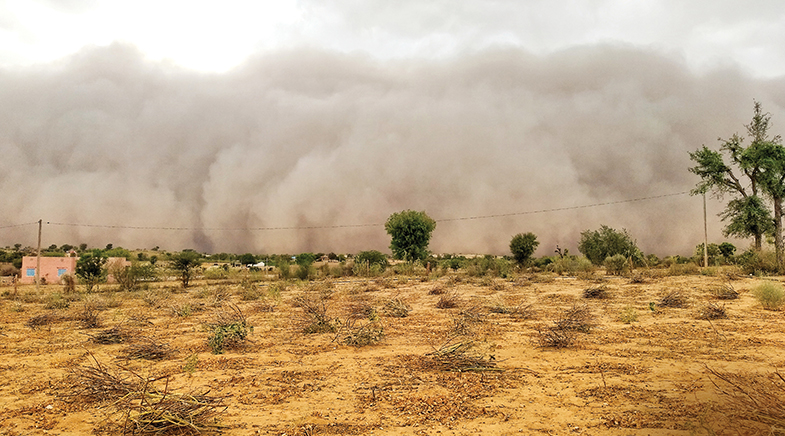
The atmospheric loading and deposition of dust have also fallen, weakening the global dust cycle, says Ashok Kumar Gupta, Staff Scientist in the Department of Earth and Environmental Sciences at Vanderbilt University, U.S., and the first author of the study. Gupta and his colleagues used satellite and ground-based observations, along with a modelling tool, to find that North Africa (including the southern Sahara and Sahel), the key source of global dust, has seen an overall decline of about 10% in 20 years. Similar trends were found over Asia. Together, these contribute to the 10% global average decline in atmospheric dust.
Mineral dust contains iron and phosphorus, and when it is deposited in the open ocean, it acts as a fertilisation agent for microorganisms, explains Gupta. Its decline can potentially impact ocean iron fertilisation, thereby reducing phytoplankton growth, and hence the ocean's ability to absorb atmospheric carbon.
There might be positive effects as well. For one, less atmospheric dust means better air quality. Dust aerosols, when deposited on snow and ice, have a 'snow-darkening effect' that accelerates melting; less dust could slow that down.
Scientists aim to understand and measure the impacts of declining dust patterns next. "We're trying to first look into... what's the cause for this decline and from there we will go on [to] the real implications on the other factors," says Gupta. He suspects changes in the surface winds over Africa, and land-use changes, like increasing vegetation in Asia, as probable causes of the recent decline in atmospheric dust. He is also investigating the interactions among surface wind, precipitation, soil moisture, and vegetation.
— Richa Malhotra
SAMPLE SIZE OF ONE
A new mRNA drug targets the genetic mutation causing ALS.
Amyotrophic lateral sclerosis (ALS) is a debilitating condition that impairs the motor neurons responsible for co-ordinating voluntary muscles. The afflicted progressively lose control of locomotion as motor neurons die. Patients typically die within five years of diagnosis; theoretical physicist Stephen Hawking, though wheelchair-bound, lived with the illness for 55 years.
Now, a physician in the U.S. suffering from ALS is reportedly carrying out his official duties — courtesy of a new drug targeting the genetic mutation causing the disease. The personalised drug was created by researchers from Mayo Clinic and Columbia University along with the n-Lorem Foundation, a non-profit providing experimental medicines for rare genetic diseases.

The results, published in the peer-reviewed journal Med, detail the treatment protocol for a single patient (bit.ly/ALS-hope). The causes triggering the disease remain unknown, and there is no established treatment path either. However, there is new evidence that a few patients have monogenic mutations (in a single gene) amenable to targeted therapy. In this case, the patient had a rare mutation in the CHCHD10 gene, which builds up proteins toxic to motor neurons.
The team opted for tailor-made RNA treatment. Standard gene therapy corrects the gene mutation causing a condition, while RNA treatment targets the messenger RNA responsible for coding the problematic protein. Scientists used short strands of a synthetic genetic material called antisense oligonucleotides (ASOs) that pair with the faulty RNA and render it non-functional, reducing the problematic protein in the body. The patient received six doses of the treatment, injected intrathecally (into the cerebrospinal fluid), over a year.
The patient showed improvements — his ALS Functional Rating Scale-Revised score improved by three points, and respiratory function improved from 48% to 55%. The levels of neurofilament light, a blood biomarker of nerve cell injury, declined by 50%. "Cognitive and quality of life scores remained stable," the paper states.
It is too early and too little to predict the outcome of the treatment, both in the long term for the patient and as a standard approach to treat rare mutation-related ALS cases. Yet, it remains a rare source of hope in the ALS landscape.
"I didn't think I would see this kind of research in my lifetime — identifying a disease-causing mutation, developing an experimental therapy, and delivering it to a patient," says Bjorn Oskarsson, a Mayo Clinic neurologist and the corresponding author of the study. "It speaks to the power of science and how far genetically targeted treatments have come."
— Rekha Dixit
FOOD SHOTS
A repository that captures feeding interactions between organisms.
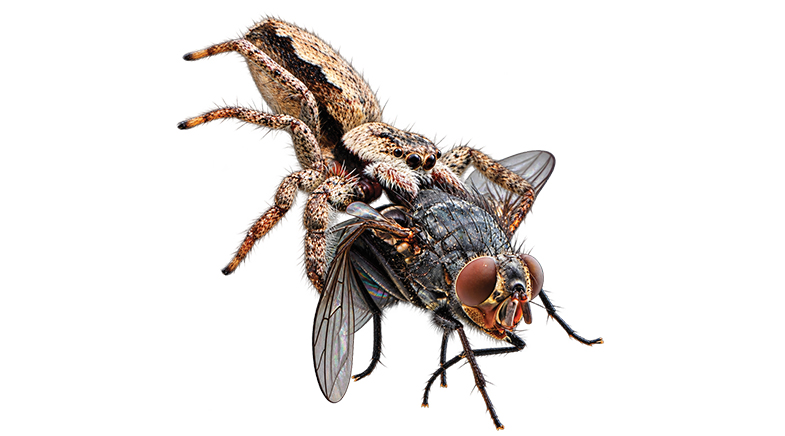
A candid dinner shot is the aim: a spider feasting on a fly, a mongoose savouring a cobra. Naturalists all over the world are discreetly clicking pictures of creatures in the middle of their meal to chart a living, breathing food web across ecosystems. The project, 'Who Eats Whom', started by ecologist Bradley Allf, is a unique repository of nearly 20,000 photographs of feeding interactions between organisms. Predators range from fungi to bears. Allf, a postdoctoral researcher at Colorado State University, published the citizen-science research project in PLOS Biology (bit.ly/who-eats-whom).
"Changing diet patterns of different species tell us how climate change, flooding, and other phenomena affect a given area," says Alff. Though food webs are studied, feeding-interaction data are difficult for ecologists to gather, often requiring hours of observation in the wild, and at times, sifting through scat for prey's bones. "But by leaning on the observation powers of thousands of people, all of a sudden you have a lot of data for these rare events," says Allf. "That's the magic of crowdsourcing."
A submission from India captures a rare event: a juvenile mugger crocodile in the jaws of a bigger one — a display of cannibalism. Feeding interactions reveal data about invasive species. For instance, lionfish are not native to the southeastern U.S., but they have taken over its waters. Their poisonous barbs make them difficult to hunt, but a photograph showed an American crocodile eating a lionfish. "If American crocodiles, a protected species, are able to survive by eating lionfish and reduce this invasive population, that's two kinds of victories," says Allf.
Aditi Mallavarapu, Assistant Professor of Computer Science at NC State University and co-author of the paper, helped create the database website. Photographs are submitted using an iNaturalist tool to ensure they are research-grade. "We can now think of simulating species extinctions and their cascade effect," says Mallavarapu. "That was not possible before at a planetary scale because food webs we usually learn with are smaller in size or limited by the ecosystem we are looking into."
Mallavarapu is working on a vision model that better identifies the species in a picture; prey are often half-eaten and difficult to recognise. The data will now be validated externally to ensure the portrayed ecological relationships are feasible. Allf hopes the repository will be useful not only for children's education but also to ecologists who parse multiple journals for feeding data. "It's even better because it's not just a static site; it's constantly growing with new records," he says.
— Sweta Akundi
LONG AND SHORT OF IT
Gravitational torque impacts the length of a day across decades.
Thousands of kilometres under the Earth's surface is its iron-rich core, made up of a solid inner layer and surrounded by a liquid outer core. Outside the core is the mantle, another rocky layer. The forces produced when the core and mantle move against each other are responsible for changes in the length of a day across decades, finds a study (bit.ly/day-torque) published in Nature.
The changes are minuscule: fluctuations of milliseconds on timescales of 10–70 years. Researchers have known about these changes for a while, but the mechanism that drove them was unclear. Researchers study changes in day length — however tiny — to better understand the events unfolding in the heart of the Earth. Earlier studies used earthquake data to show that the rotation of the inner core has slowed since 2009. The rest of the Earth now rotates faster than the core.
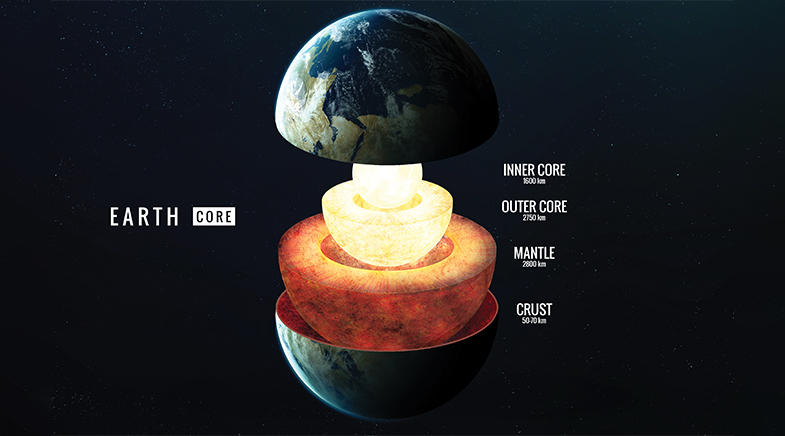
A mechanical torque is produced when the liquid outer core of the Earth moves against the rough surface of its mantle. At the same core-mantle boundary, an electromagnetic torque is produced when the core interacts with iron-rich parts of the mantle. Yet another force — the gravitational torque — is generated when the dense inner core is pulled by the unusually dense regions in the mantle.
For this study, researchers developed a model to understand how these forces affect the Earth's rotation and the length of the day. Gravitational torque, they found, was the main driver of change. The other forces, electromagnetic and mechanical torque, provide a counterbalance or resistance to the effects produced by gravitational torque. The combination of these forces eventually creates conditions that alter Earth's rotation and day length over multiple decades.
"Before we obtained our results, we did not know that the gravitational and electromagnetic torques are competing with each other. That is the most exciting part for me," says Huifeng Zhang, an author of the study and a PhD scholar at the University of Alberta, Canada. Previous studies, she says, had relied on a 'single' torque, but "our results combine the different torques and show that gravitational torque plays a dominant role" in affecting day length across decades. The study provides an 'emerging picture' of the forces deep within the Earth, she adds.
— Manupriya








It's the science, silly!
Curiosity‑driven scientific inquiry, seemingly without a 'use', isn’t a luxury. It forms the foundation of innovation.



Have a
story idea?
Tell us.
Do you have a recent research paper or an idea for a science/technology-themed article that you'd like to tell us about?
GET IN TOUCH

