

World of research: September 2026
-
- from Shaastra :: vol 05 issue 09 :: Sep 2026
A round-up of some recent striking studies.
AMULET IN THE EARTH
Plants that fight pests make the next generation resilient.
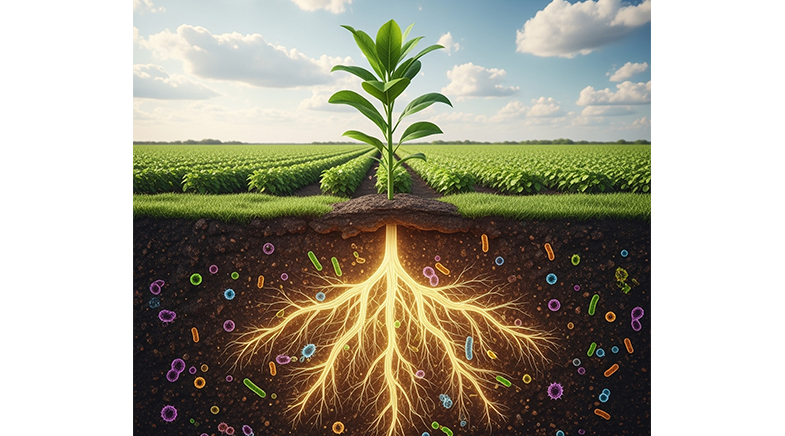
A cowpea plant that bore an insect attack leaves behind hints in the soil to alert the next generation of plants, emboldening them against such threats. Plants employ tactics to evade pests, but a legacy of warning, rendered from plant to plant through the soil, has been decoded by researchers from China. The soil, a study shows, retains the defence triggers of the cowpea plant under attack.
Plants produce compounds that make their leaves smell bad or taste bitter to ward off insects. They also lure the enemy's enemy by transmitting scent signals to insect predators. Both strategies are triggered by the genetic and chemical changes in plants in response to a herbivore attack. These signals travel from leaves to stem and roots, and change the soil environment around the plant.
In the study published in Cell Reports (bit.ly/plant-legacy), scientists from China-based Zhejiang University sought to find whether plant chemicals reaching the soil impact the next generation of plants growing in it. The team created a system with three main players: cowpea plants, leaf miners, which attack cowpea, and a tiny wasp that feeds on leaf miner larvae. Some cowpeas were grown normally in the soil; others were infested with leaf miners. After seven days, the plants were replaced with a new set of cowpea seedlings. Scientists noticed that the soil which hosted the infested plants bore a sturdier set of new plants that attracted more wasps compared to plants grown in regular soil.
Hormone profiles, activated genes, and chemicals and scents released by the plants were analysed. The plants infested with pests triggered jasmonic acid, an internal defence mechanism, which travelled down shoots and into the roots, leading to the release of root exudate containing flavonoids. The flavonoids enriched the soil with Bradyrhizobium, a beneficial microbe. When the infested plants were replaced by new seeds, the microbe colonised the emerging roots and triggered an internal warning before the pest attack. The plants consequently produced the scent to attract wasps, thereby arming them from leaf miner attacks.
The researchers noted that the findings provided a foundation to exploit plant-microbe partnerships. It highlighted new opportunities for designing resilient and sustainable agro ecosystems, they added.
TRUE COPY
Synthesised Hachimoji DNA is successfully transcribed.
Seven years after the Hachimoji DNA was first synthesised, researchers have efficiently transcribed it, easing the path of synthetic biology. Chemist Steven Benner's team, which synthesised the Hachimoji DNA — the eight-letter genetic alphabet — collaborated with scientists from the University of California San Diego to transcribe the synthetic DNA with Escherichia coli (E. coli) RNA polymerase. Transcription is a crucial step in gene expression where a DNA sequence is copied into an RNA molecule, without which the DNA cannot duplicate itself. The finding, published in Nature Communications (bit.ly/Hachimoji-DNA), ensures that the enlarged DNA can replicate itself.
DNA, the blueprint on which all life on Earth duplicates itself, is built on a four-letter alphabet consisting of bases adenine (A), thymine (T), guanine (G) and cytosine (C). The DNA of every living organism is a combination of the four bases. In 2019, Benner, from the U.S.-based Foundation for Applied Molecular Evolution, synthesised unnatural DNA, which has two more base pairs — P-Z and B-S. Early in the collaborative research, efforts at efficient transcription, after the unnatural bases were incorporated into the natural DNA, did not succeed. The Z:G and Z:S misincorporation was a major issue, says Dong Wang, Professor at University of California San Diego. The researchers, therefore, had to improve and modify the base Z. They synthesised the analogue Z*, replacing the C5 nitro group with carboxamide, which Wang adds, "significantly suppresses these misincorporations".
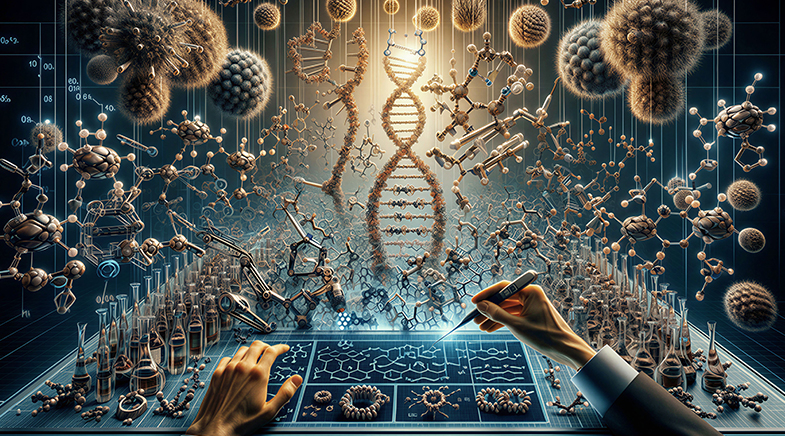
The study demonstrates that the bacterial enzyme — E. coli RNA polymerase — can recognise the unnatural base pairs the same way it does the native base pairs, and efficiently incorporate them. "This finding will pave the way for developing an eight-letter genetic alphabet system for transcription in cells in the future," says Wang.
DNA data storage is an emerging field and its digital data are not stored in binary digits of 0s and 1s, as is the convention, but encoded in the chemical bases of A, T, G and C. "The eight-letter system will be a more powerful platform (than the four-letter one) for data storage," says Wang. The finding will expand the chemical space for selection of functional RNA molecules to aid disease detection and diagnosis.
Future research will focus on designing next-generation unnatural base pairs that are more efficient, and evolving engineered RNA polymerase that can recognise unnatural base pairs with greater efficiency, in addition to recognising the native base pairs.
— Shubashree Desikan
EYES ON THE POLES
Pockets on the Moon are conducive to microbe survival.
A place where no life — not even microbial — can survive; the Moon has been called that place by space scientists. A new study in Science Advances (bit.ly/Moon-Life), however, pokes at that age-old understanding and highlights the possibility of microbes surviving on certain isolated niches of the Moon.
The equatorial region is not only the most studied region of the Moon, but also the one exposed to high ultraviolet (UV) radiation and extreme temperatures, making it impossible for any life form to survive there. But new studies, focused on the topography of the Moon, show that polar regions have pockets of persistent low temperatures and low UV. Researchers compared the conditions in these pockets and the survivability criteria of certain microbes, and found many pockets amenable to microbe survival.
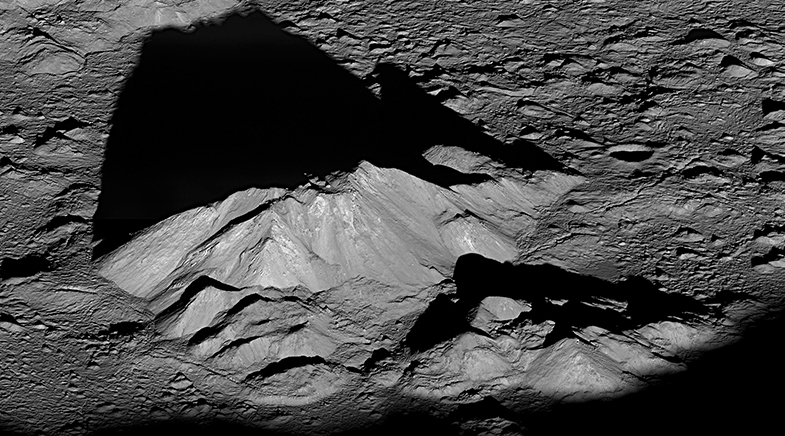
Some of the past studies, for instance the Lunar Reconnaissance Orbiter, produced high-resolution maps of the Moon, enabling researchers to examine its surface at 5-metre resolution. They saw mountains, craters and other topographical features in detail and identified regions where topography altered the exposure to UV and temperature. "Even small bits of topography, like a small hill or a small crater, can create a shadow, or a temporary shadow that will reduce how much light an area gets," says Prabal Saxena, space scientist at the Planetary Geology, Geophysics and Geochemistry Lab at NASA Goddard Space Flight Center, and one of the authors of the study. The researchers observe that both lunar poles likely have significant regions of potential microbial survivability, but they may be limited to a 'cryptobiotic state' or a dormant state, where growth is not possible till conditions become more habitable.
The researchers tested the survivability of three genera of bacteria — Bacillus, Deinococcus, and Staphylococcus; and two fungi — Aspergillus and Fusarium. "These were chosen because they're very common microbes and have had a history already of trying to hitch around to space-related environments," says Saxena. Aspergillus showed the best survivability, followed by Fusarium.
Researchers are examining each of the potential Artemis (NASA's ongoing Moon mission) landing sites at the highest possible resolution, and expanding the number of microbes being tested for survivability. According to Saxena, the study shows that unexplored regions of the Moon may be very different from the equatorial regions, and may host features and processes not yet seen.
— Manupriya








Health is skin deep
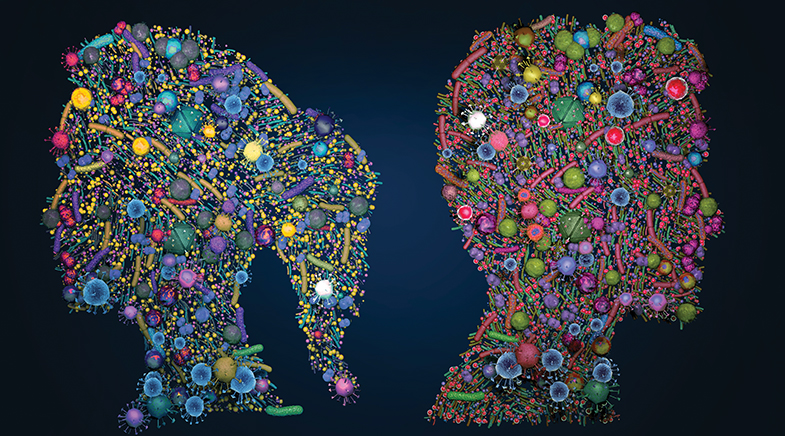
Skin microbes are the new sensors of health, helping scientists tackle disease.



Walking the green talk
The future belongs to cities where you can get to anywhere in under 15 minutes.



Have a
story idea?
Tell us.
Do you have a recent research paper or an idea for a science/technology-themed article that you'd like to tell us about?
GET IN TOUCH