

The Ayrton arc
-
- from Shaastra :: vol 05 issue 09 :: Sep 2026
British suffragette carried out fundamental work in electrical engineering.
At the International Electrical Congress in Chicago in 1893, British engineer William Ayrton handed over the sole copy of his paper on electric arcs to a secretary for publication. But the paper went up in smoke when a cleaner accidentally used it to light a fire. Unwilling to repeat the experiments, he abandoned the work. His wife and fellow engineer, Hertha Marks Ayrton, took it up instead, and went on to make fundamental discoveries that cemented her own place in history.
Famous in school for having a "fiery, occasionally crude personality" — she once went on a hunger strike upon being falsely accused of breaking rules — Ayrton developed an early interest in mathematics. Although she passed the notoriously tough Mathematical Tripos exam at Cambridge in 1880, the university wasn't handing out degrees to women at the time. Ayrton got a B.Sc. from the University of London instead in 1881.
She became not only a maths teacher, but also an inventor. Ayrton once fashioned a device to record pulse using an old watch spring and a paintbrush. Later, she designed and patented, among others, a line-divider, a drawing instrument which received considerable media attention. She also took up evening classes in electrical engineering at Finsbury Technical College, where she met and later married her instructor.
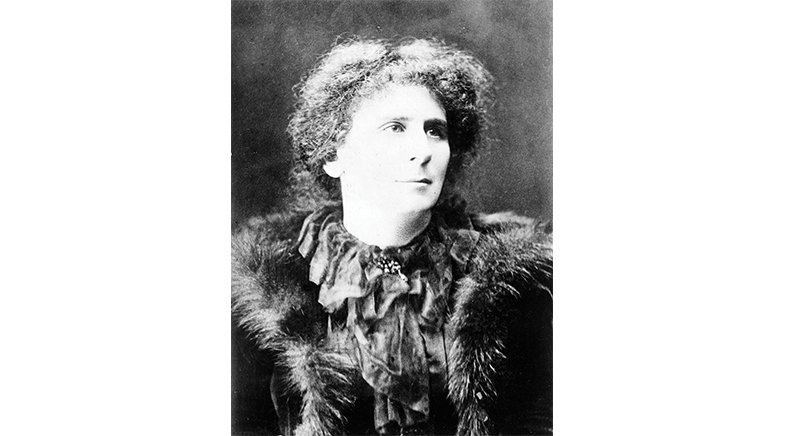
A supportive spouse and a generous inheritance from a mentor helped Ayrton continue her work after marriage; she set up a home lab and invited other women for lectures on electricity. Picking up from where William left off, she started studying arc lamps used to light up streets, factories, and stores. The lamps used carbon electrodes to create an intense arc of light but hissed and flickered frequently.
Ayrton discovered a linear relationship among arc length, pressure, and potential difference, called the "Ayrton equation". The hissing, she found, occurred when oxygen reached a crater in the positive carbon electrode, causing carbon to oxidise, but excluding oxygen produced a steady arc. Ayrton used these insights to patent improvements to arc lamps, searchlights, and cinema projectors. She published several papers, and a book — The Electric Arc, which established her authority in the field.
In 1901, while staying at the seaside town of Margate to improve William's poor health, Ayrton noticed patterns formed by ripples in the sand, leading her to study the fluid dynamics of waves. During the First World War, she designed a hand-operated fan to disperse poisonous gases from trenches. The British War Office initially dismissed it as "too simple", but adopted it once she developed an improved version. More than 100,000 were supplied to troops on the Western Front.
Ayrton devoted her later life to supporting women's rights, participating in protests and marches, and opening up her home to women taking part in hunger strikes. She died in August 1923, and even a century later, The Electric Arc remains an important work.
Ranjini Raghunath is a Bengaluru-based science writer and editor.
Curie's cohort
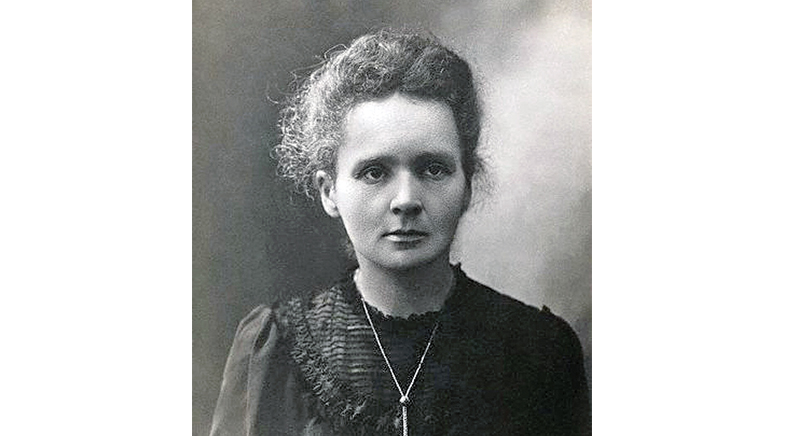
Hertha Ayrton and Marie Curie (pictured) were friends. After Pierre Curie's death, Ayrton objected to newspaper accounts that credited him with discovering radium, stating: "Errors are notoriously hard to kill, but an error that ascribes to a man what was actually the work of a woman has more lives than a cat." Ayrton offered her friend refuge during the 1911 scandal around Curie's relationship with physicist Paul Langevin, and also tutored Curie's daughter Irène.
Closed doors

Ayrton was the first woman to receive the Hughes Medal from The Royal Society and the first woman to read her own paper before it. In 1902, she was recommended for a Fellowship by another engineer, but her application was rejected after the Society's legal counsel declared that married women were not eligible under its existing statutes. Ayrton would go on to be prominently involved in the suffragette movement.








A prescription for safer drugs
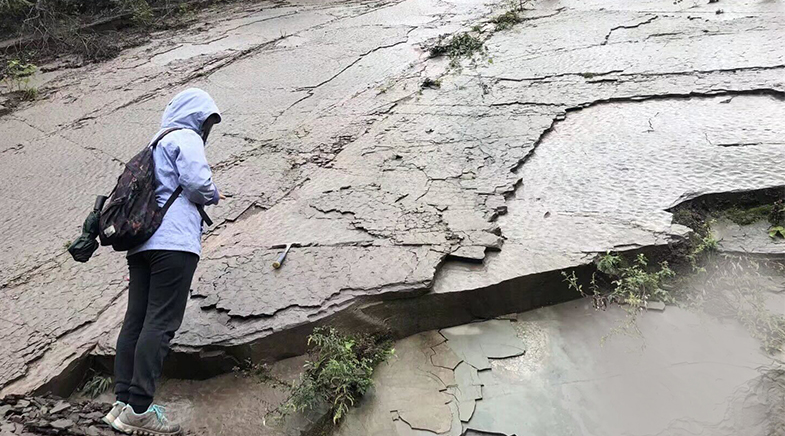
A path-breaking study, led by scientists at IIT Kanpur, uncovers a critical protein mechanism that holds promise for regulating drug effects.
Big little tactics
Plants rely on photosynthetic tricks to survive lethal heat.
Heart of the matter
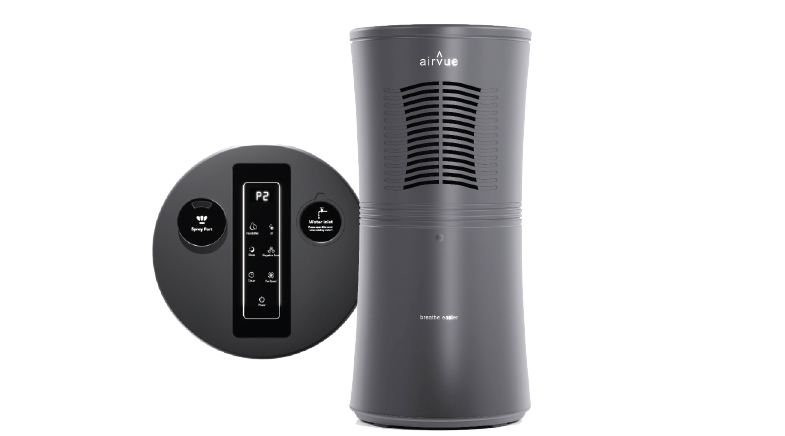
Start-ups focus on improving indoor air, 3D metal printers for aerospace, and painless jabs with microneedles.


Have a
story idea?
Tell us.
Do you have a recent research paper or an idea for a science/technology-themed article that you'd like to tell us about?
GET IN TOUCH