

Bone collector
-
- from Shaastra :: vol 05 issue 11 :: Nov 2026
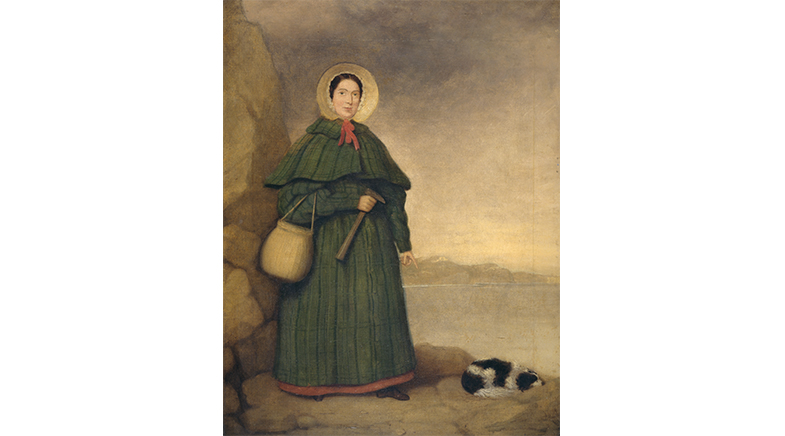
A fossil finder who set the ground for modern palaeontology.
Mary Anning was 15 months old when a neighbour took her to a travelling horse show held on a field. Rather unexpectedly, a storm broke out, and three women, including the one who held infant Anning, were killed by lightning. Anning miraculously survived (bit.ly/anning-survives).
That fortuitous escape aside, Anning's life was pretty rocky. Born in 1799 in the English coastal town of Lyme Regis, she and her brother Joseph were the only ones to reach adulthood among her parents' 10 children. Their father, a carpenter and cabinetmaker, hunted for fossils along the ancient coastal cliffs and sold them to tourists to supplement his meagre income; he often took the siblings along in his expeditions. He died in 1810, when Anning was 11, leaving the family in debt and without savings. Circumstances forced the duo into the dangerous work of fossil-hunting, which entailed scaling cliffs to scour rocks loosened by winter storms, and securing fossils before the sea swept them away.
Joseph made a stunning discovery in 1811: an intact skull of a creature that resembled a crocodile. His sister spent the next few months digging up the rest of the 4.5-metre-long skeleton, which turned out to be that of an ichthyosaur, an extinct marine reptile. The discovery fuelled debates on extinction and the timeline of the Biblical flood. It also catapulted Anning to fame, though her name was left out of the scientific paper on the finding.
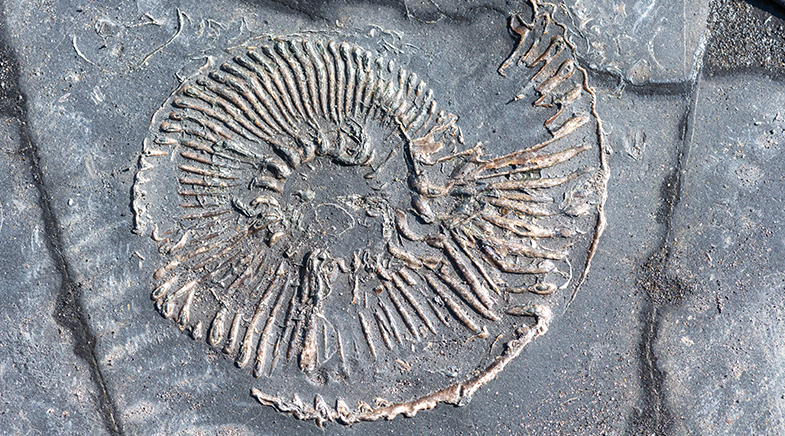
Joseph gave up fossil-hunting soon enough, but Anning continued, making several discoveries over the years. She unearthed a plesiosaur skeleton so well-preserved that French zoologist Georges Cuvier dismissed it as fake (bit.ly/cuvier-fake) until he saw the detailed drawings. Another of Anning's famous finds is the skeleton of a pterosaur, an ancient flying reptile. She also dug up "bezoar stones", which turned out to be fossilised faeces, and discovered dried ink inside a belemnite fossil (a squid-like creature), which was used for illustrations by artists.
Though Anning had little formal education, she taught herself to study, preserve, and make detailed drawings of fossils. She passed them on to leading male geologists, most of whom published papers on the creatures without mentioning her contribution. But William Buckland was an exception; he credited Anning in his paper on the pterosaur. Anning's fossils, displayed in museums across the country, stirred public interest in the fledgling field of palaeontology.
Anning faced several setbacks in later life. She was once nearly killed in a landslide. She lost her savings to a failed investment. Anning developed breast cancer, and the illness restricted her work. She received financial support from the British government and members of The Geological Society, but succumbed to the disease in 1847. The cliffs she combed are now part of a 95-mile stretch called the "Jurassic Coast", a UNESCO World Heritage Site, which draws hundreds of visitors hunting for fossils.
Work hazard
 Fossil hunting was risky business even for the sure-footed Anning. Once, she was so engrossed in excavating a plesiosaur fossil that she did not notice the tide rising. She and her assistant escaped in the nick of time. Anning later joked in a letter (bit.ly/anning-letter) that they looked like a "couple of drowned rats". She lost her dog Tray, her faithful fossil-hunting companion, to a landslide while at work, which also nearly crushed Anning.
Faith and fossils
 Anning's family were Protestants, and she diligently read the Bible and attended Sunday service for years. But her views on evolution evolved with her discoveries. She once explained (bit.ly/anning-faith) to a priest's son that fossils found at different cliff levels indicated the different timelines in which the creatures existed, suggesting they may not be a week's work of god. The priest was not keen on pursuing that discussion, the son notes in his journal.



Pollen power
The 'diamond of the natural world' helps map migrations, and assists in solving ancient riddles and modern crimes.
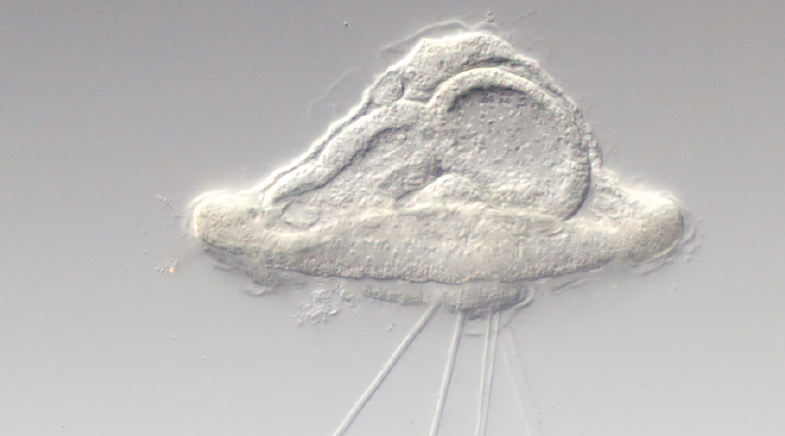
About time: the origin of species
Why do animals have different types of life cycles? A study explains.

Courting AI, legally!
With the help of Artificial Intelligence, researchers, lawyers and technologists are coming together to facilitate legal services.



Have a
story idea?
Tell us.
Do you have a recent research paper or an idea for a science/technology-themed article that you'd like to tell us about?
GET IN TOUCH