

Quiet flow the fixes
-
- from Shaastra :: vol 05 issue 01 :: Jan 2026
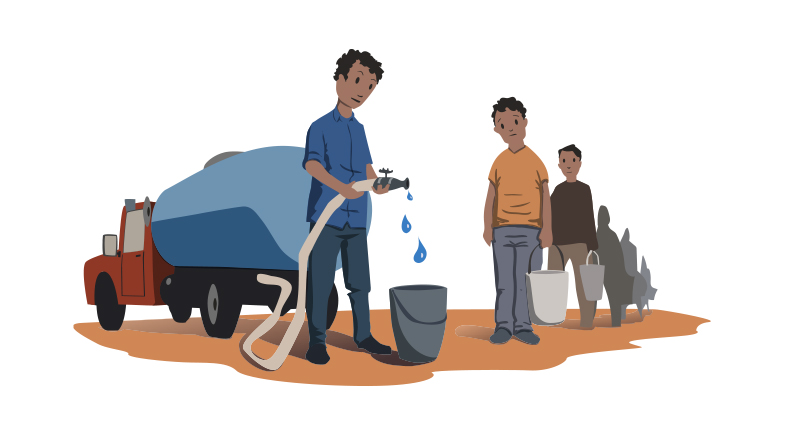
Water scarcity is a real threat. Solutions exist, but the race is now between innovation and implementation.
howindialives.com
howindialives.com is a database and search engine for public data
ESCALATING RISK
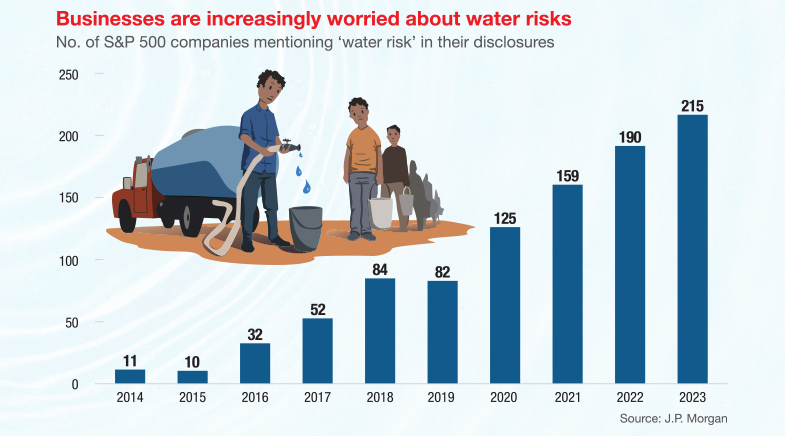
Water stress is now being felt across governments, businesses, and communities. Governments are struggling as billions still lack reliable access to safe drinking water, making water security a central governance concern. Companies, too, are sounding the alarm: the number of S&P 500 companies mentioning 'water risk' in their disclosures jumped from 11 in 2014 to 215 in 2023, reflecting growing exposure to scarcity and operational disruption.
The infrastructure that drives artificial intelligence (AI) is a major contributor: a mid-sized data centre may use around 300,000 gallons of water a day for cooling. As demand rises, water availability is beginning to shape strategic decisions and valuations across water-intensive industries.
HUMAN COSTS
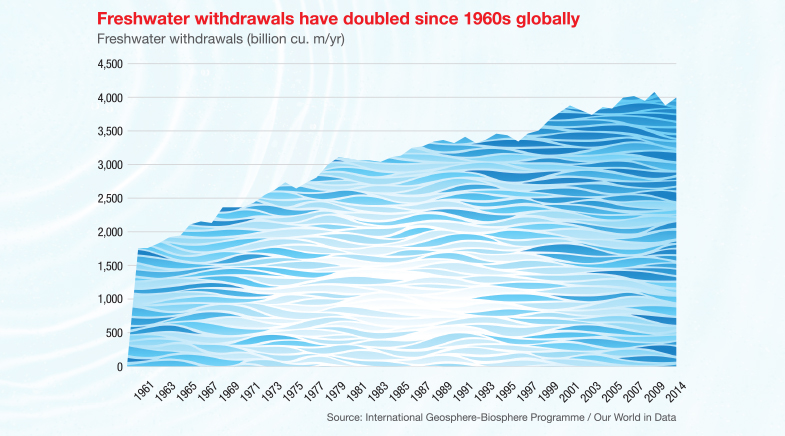
Global freshwater use has more than doubled since the 1960s, reaching nearly 4,000 billion cubic metres a year. Demand is levelling off in developed nations but rising sharply in developing regions; sub-Saharan Africa alone is projected to see a 163% increase by 2050. In many places, extraction is outpacing natural recharge, contributing to steep ecological losses, including an 83% decline in freshwater species since 1970.
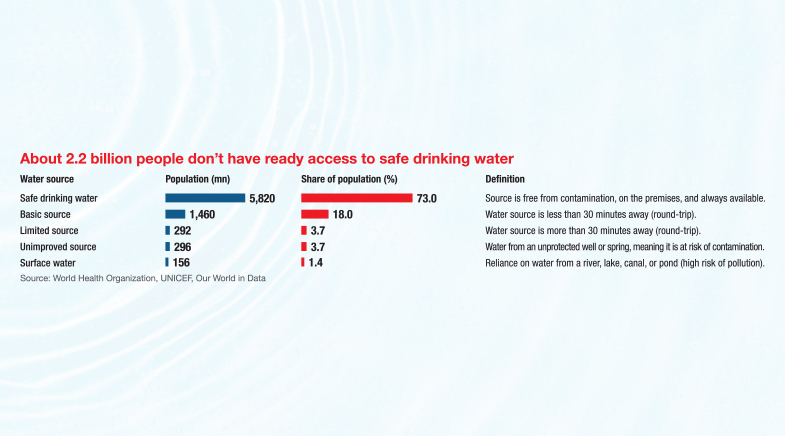
Human impacts are just as stark. The 2.2 billion people without safely managed drinking water span a wide range of insecurity — from those who rely on basic, off-premises access to the 115 million still dependent on untreated surface water. Beyond the hundreds of thousands of deaths from diarrhoeal disease each year, unsafe water and sanitation fuel broader health challenges.
SYSTEMIC LOSSES
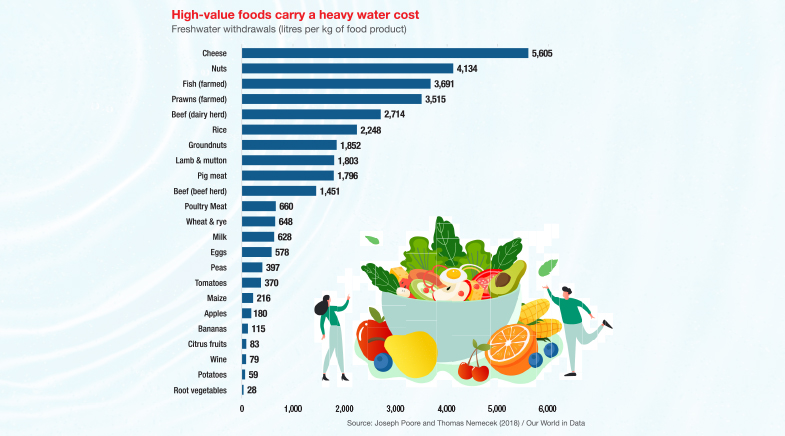
Inefficiencies in how water is used and delivered intensify scarcity. Agriculture accounts for about 70% of global freshwater withdrawals, yet water footprints vary sharply: producing a kilogram of cheese requires over 5,600 litres of water, compared with just 28 litres for root vegetables. Subsidies often entrench these patterns by encouraging water-intensive crops in arid regions. And while only 16% of global farmland is irrigated, it produces 44% of the world's food, creating a structural dependence on irrigation that is difficult to unwind.
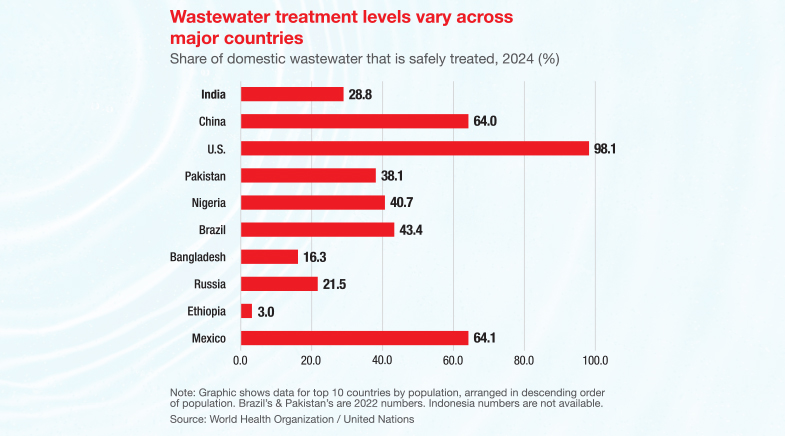
Infrastructure shortfalls compound the problem. Wastewater treatment rates differ widely, and even countries with high coverage face hidden weaknesses. Ageing assets, such as the United States' five-decade-old pipes, lead to significant leakage and system losses.
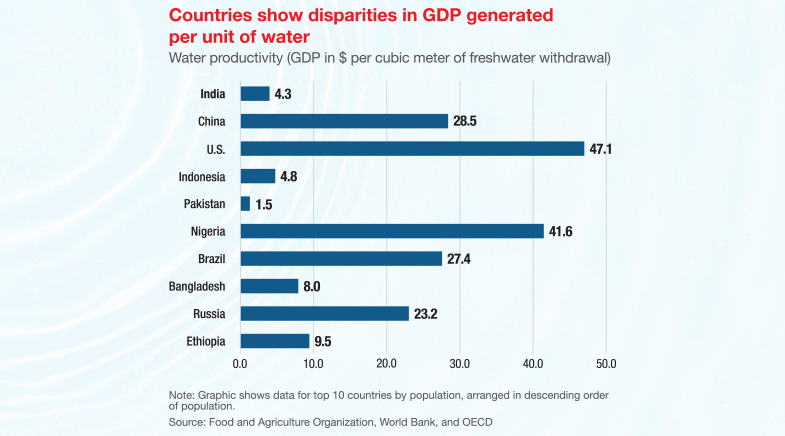
Together, these inefficiencies shape the wide gaps in "water productivity". The United States generates about $47 of GDP per cubic metre of water withdrawn, while agriculture-heavy economies such as India generate less than $5. Without major efficiency gains, water-stressed regions face the prospect of slower economic growth in the years ahead.

CAPITAL FLOWS
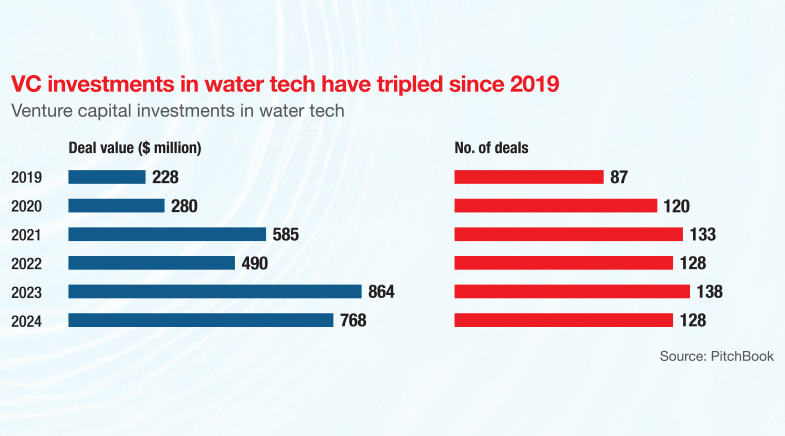
Financial markets are beginning to respond to these pressures. Venture investment in water technologies tripled between 2019 and 2023, reaching $864 million at the peak. North America dominates this activity, accounting for nearly 78% of deal value. Much of the capital is flowing into tools that improve resilience to climate volatility, particularly in water management and treatment.
INNOVATION SURGE
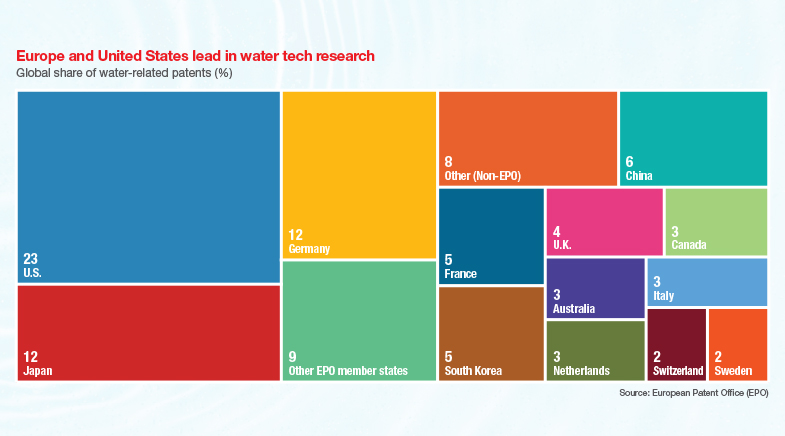
The United States and Europe are leading the global push in water-technology innovation. Patent data show the U.S. holds about 23% of water-related patents, and Europe roughly 40%, making these regions the main exporters of water-resilience solutions. Much of this activity is concentrated in treatment technologies, which account for around 60% of all international patent families, reflecting tighter pollution standards and an urgent need to recycle wastewater at scale.
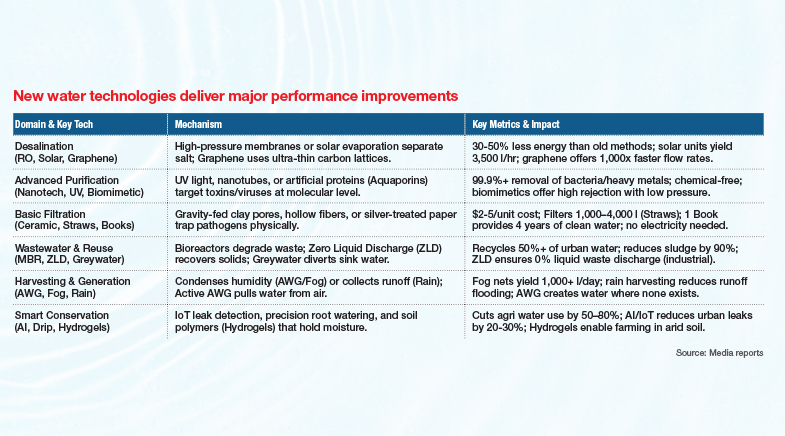
Across the sector, three fronts are advancing quickly: desalination technologies using graphene membranes and solar-powered systems are sharply reducing energy use; digital tools such as AI, Internet of Things sensors, and digital twins are helping utilities cut leaks and optimise ageing infrastructure; and new purification methods using nanotechnology and biomimetic filters are removing contaminants like PFAS with 99.9% efficiency. Together, these innovations point to a future in which more water can be produced, reused, and managed far more efficiently than today.
Science is advancing faster than ever. The question is whether implementation can match the urgency of a world running short on water.








The great makeover
New techniques and materials are transforming the technologically conservative construction industry.



Why your dog can't face Jasprit Bumrah
Only humans can excel at high-velocity ball sports which place extreme demands on an athlete's sensorimotor system.



Have a
story idea?
Tell us.
Do you have a recent research paper or an idea for a science/technology-themed article that you'd like to tell us about?
GET IN TOUCH