

Made-for-India AI
-
- from Shaastra :: vol 05 issue 07 :: Jul 2026
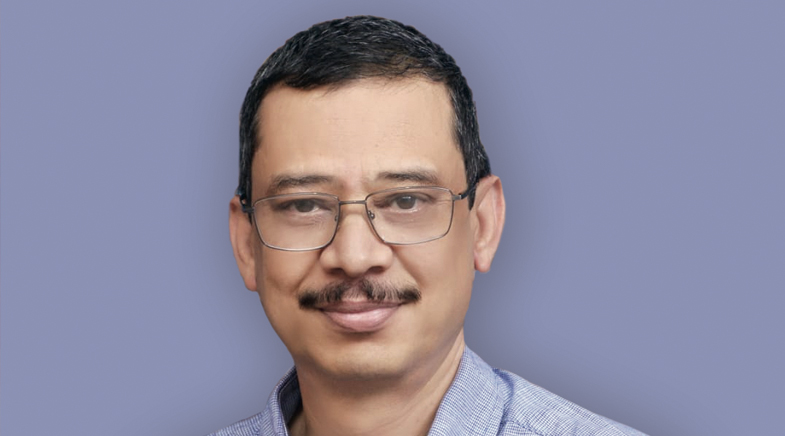
Countries have realised the need for AI sovereignty, and India is looking to become an application leader in this space.
Throughout their histories, mathematics and science have been international endeavours. Modern mathematics, especially, was developed over two millennia in several layers by people in Greece, India, and northern Europe. The Greeks had achieved dizzy heights in geometry more than 2,000 years ago, developing the notion of a logical proof among other things, but they struggled with their clumsy number system. The development of modern arithmetic had to wait until the 7th century, when Brahmagupta invented the place-value system and zero, which are key concepts of modern number systems. This concept reached Europe after several centuries, through Baghdad and the Arab mathematicians. Europeans recognised the system's utility and quickly adopted it.
AI accelerates the development of other technologies and offers enormous strategic value. Countries with an advantage would like to retain that edge.
The development of contemporary mathematics required at least one more key step: the invention of a symbolic language. This happened over 150 years, beginning in the middle of the 16th century, as mathematicians started using symbols to denote quantities in equations. It also required, remarkably, the use of the = sign in equations. By the time Newton began to work on calculus and mechanics, the groundwork had been laid over two millennia, combining innovations from many parts of the world. The adoption of symbolic language, rather than prose or verse, to describe equations reduced cognitive load and sparked an explosion in mathematics and science.
The language of mathematics and the methods of science were standardised after the 17th century. They have been adopted by people around the world, regardless of their culture. On the other hand, technology had a different history. It was developed in pockets across different parts of the world, often depended on the existence of a local ecosystem, and comprised parts that depended on tacit knowledge for adoption. The Wootz Steel in South India, which reigned supreme for at least 1,500 years, was a unique combination of quality ores, crucible technology, good charcoal, and exceptionally skilled artisans. This knowledge was not transferred to any other place in the world.
As modern technology became increasingly dependent on science, it took the middle ground. Advances in principles of engineering were known and published throughout the world. Yet, the conversion of this knowledge into technology required specialised skills and strong ecosystems. Modern semiconductor manufacturing is an example. Others include jet engine technology, drug discovery, and several precision technologies, such as optical manufacturing. In the 21st century, this list includes artificial intelligence (AI).
The basic knowledge that drives AI development is known to researchers worldwide. However, the development of AI at the frontier level requires a robust ecosystem, including capital, engineering expertise, and computational and communication infrastructure. Like any platform technology, AI accelerates the development of all other technologies, not to speak of administration, finance, security, and intelligence gathering. AI has enormous strategic value, and countries with an advantage would like to keep it that way. This creates severe disadvantages for other countries, as was clear in the recent U.S. government order barring non-Americans from using some critical AI technologies.
Our Cover Story from page AI for India is partly a report on India's response to this denial. India does not have the ecosystem to be a frontier player in AI; this role belongs to the U.S. and China. Neither can it be an infrastructure provider, a role in which Taiwan, Japan, Korea and the Netherlands excel. So, India has been trying to become an application leader in AI. The country has played a similar role well in the software industry. However, in AI, especially after the U.S. embargo, leaders in large countries have realised the need for AI sovereignty: this means a few critical parts of the technology that are uniquely theirs, developed by their own engineers for their own people.
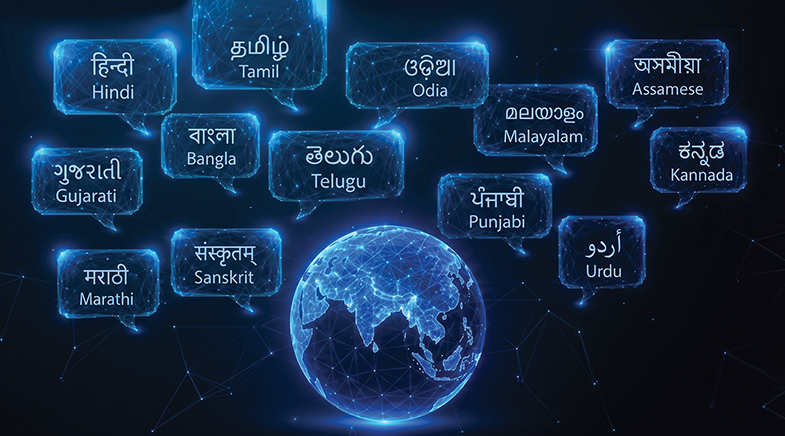
The development of sovereign AI would include understanding the country's inhabitants and their culture. It involves learning how people speak, the nuances of combining multiple languages and customs, the subtleties of gesture, and so on. It would also include developing key components of AI technology within the country and skillfully integrating them with global knowledge and technology. As the Cover Story shows, this project has just begun in India. Its future may be tortuous, exhilarating, and eventually rewarding.
See also:
No country is fully sovereign in AI: Maya Sherman









Learning by teaching
How Agastya International Foundation triumphed over all odds to take hands-on experiential learning to remote parts of India.

Dr Bot wields the scalpel
Robots are rewriting the rules of surgery, with a precision that humans may find hard to match. A glimpse of the revolution in the operation theatre.



Have a
story idea?
Tell us.
Do you have a recent research paper or an idea for a science/technology-themed article that you'd like to tell us about?
GET IN TOUCH