

Fields of green
-
- from Shaastra :: vol 05 issue 06 :: Jun 2026
Tech start-ups mine a spectrum of plant waste for profits and planetary good.
Connoisseurs of banoffee pie, or the sundae twist on the British dessert, can now have the banana and eat it too – thanks to a young entrepreneurial team that is turning banana plant waste into flaunt-worthy items. Banofi, a Kolkata-based materials science start-up, is producing plant-based leather from banana stem fibre to replace the animal leather in your handbag, jutti, belt, watch, notebook and coat. In a full-circle moment, the banana-fibre (Ban-o-Fi) leather debuted at the 2026 London Fashion Week – in the country that gave the world the OG banoffee, the irresistible banana-toffee combo.
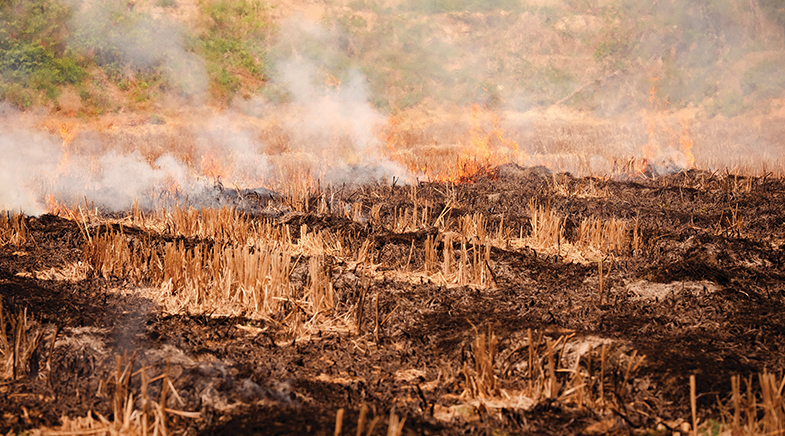
Across India, the banana fruit – eaten ripe for breakfast, added raw to curries, and dried into crispy chips for an evening snack – leaves behind massive amounts of waste, not just the slippery peels. The plant's thick trunk-like stalk, the pseudostem, is chopped down after fruiting as it can bear fruit only once. About 2-3 tonnes of pseudostem is generated for every tonne of banana harvested. The peels can be composted, but the stem has little use other than as mulch; the rest of it is burnt or dumped in a landfill, causing air pollution and waste-related issues.
The problem is not unique to banana cultivation. India generates 350 million tonnes of agricultural waste every year, including crop residues and byproducts of food processing – a source of energy that is wasted, while the country imports oil and natural gas to meet its domestic fuel and fertiliser requirements. India's circular economy is projected to grow to $2 trillion by 2050, according to Circular Economy in Agriculture: Waste to Wealth, a government note released earlier in 2026 (bit.ly/PIB-agriwaste). Agriculture is key to unlocking this growth.
Naturally, technology start-ups are going bananas over turning agri wastes into value-added products, while giving farmers an additional income and a means to get rid of waste. Start-ups are converting waste from a dozen sources into biochar, advanced biofuels, syngas, sustainable materials, proteins, and engineered nanocarbons. In doing so, they are solving not one but multiple environmental problems.
NANOCARBONS FROM COCONUT
Jaipur-based Cancrie homed in on walnut and brown coconut shells to provide energy storage solutions after experimenting with several types of waste. The start-up has developed and patented a technology to engineer advanced nanocarbons from agricultural residues. The nanocarbon material replaces petroleum-derived carbon black in battery electrodes.
Start-ups are converting agri wastes into value-added products.
Mahi Singh, Co-founder of Cancrie, says that the nanocarbon material offers several advantages over carbon black, which constitutes a small percentage of any given battery (0.2 to 2%). It enhances battery life, charges the battery faster and grants better mileage. It can also be used in batteries meant for vertical take-off and landing, and in inclination applications – drones, for instance.
The material is suitable for a wide range of battery technologies and is already commercialised for lead-acid batteries. "We have a 25,000 sq. ft. of scaled-up plant where we are able to cater to more than one lakh batteries per month through our production," Singh says. The start-up has partnered with a Bengaluru-based company to make lithium-ion cells using its nanocarbons. It has also collaborated with Mercedes-Benz India on a hybrid, lithium-ion battery technology, where the cathode is made entirely of nanocarbons instead of LFPs (lithium, iron, phosphate) and NMCs (nickel, manganese, cobalt). This is for high-power capabilities, Singh says.
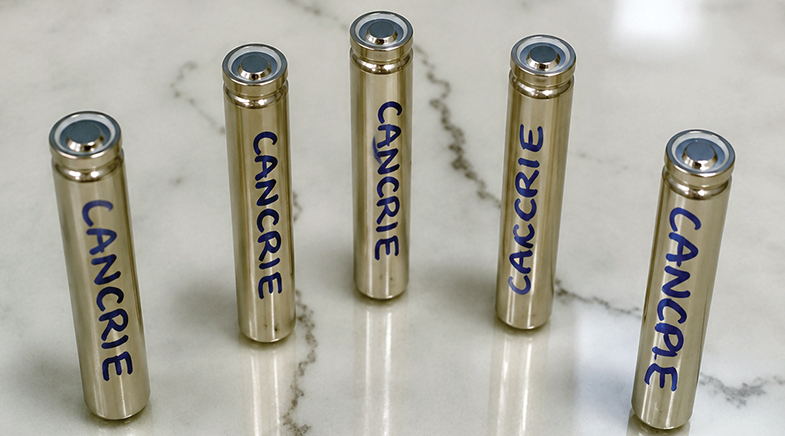
The company has developed 250 carbon prototypes for various applications, using over 16 types of agricultural and industrial precursors. "What we are really looking for in a waste profile is consistency in quality and quantity," says Singh.
The upcycling of lignocellulose present in waste into nanocarbons is a multistep process involving a patented technology. The resulting material is a dry black powder, Singh says. "We mill it to a different particle size based on the application we are working on." Each battery – lead-acid, lithium-ion or sodium-ion – has its own particle-size requirement based on its chemistry, she explains. To make 1 kg of nanocarbon, 4 kg of crop residue is required – a yield of 25%. Since batteries are compact, there is little room for error; the material has to be free of impurities and perform at its peak.
Cancrie sources the coconut shells from Karnataka, Tamil Nadu and Maharashtra. But to ensure consistent supply, some start-ups are setting up shop closer to the source. Take MASH Makes, for instance.
WASTE OF WASTE
Indo-Danish company MASH Makes works with cashew-processing waste in India to make biochar and biofuel. As the world's second-largest cashew producer, India generates 450,000 tonnes of cashew nut shells annually (bit.ly/nut-shell). "The shell is already considered a waste," says Srikanth Vishwanath, Product Owner – Biochar and Carbon Removal. The shell waste is pressed and oil extracted from it by another industry, leaving behind agro-processing waste. "We take the waste of the waste."
The start-up uses pyrolysis (high-temperature and anaerobic conditions) to convert cashew waste into a solid, carbon-rich material called biochar and pyro gas, which is condensed into biofuel. Any biomass residue can be used to make biochar, but MASH Makes was looking to make a valuable co-product. "We had tested over 50 different feedstocks," Vishwanath says. "We've narrowed down on this cashew residue because the fuel that is produced is a high-quality fuel."
The company tested the biofuel as a 20% blend on a shipping vessel that journeyed from Singapore to Brazil and back a year ago. Vishwanath says this is the only biofuel made from a pyrolysis process to have been tested on a shipping vessel. The fuel, which is similar to biodiesel, meets the requirements of the heavy and low-sulphur fuel oils used in the shipping industry, he adds.
MASH Makes operates a commercial pyrolysis plant near Udupi in Karnataka, close to the source of the cashew waste. The plant utilises 23,700 tonnes of waste a year and produces 3,400 tonnes of biofuel. For every tonne of biofuel, it also produces 1.8 tonnes of biochar. The company has identified more cashew-processing hubs for setting up pyrolysis facilities. "We want to be located as close to the feedstock as possible," says Vishwanath. The biochar produced goes back to the fields and is used to improve crop yields and sequester carbon. Its application reduces fertiliser use; fertilisers are produced using liquefied natural gas imported from West Asia. Reducing fertiliser dependence will indirectly reduce fossil-fuel emissions, Vishwanath says.
MASH Makes is also deploying a gasification reactor in Denmark to convert agri waste into syngas, which can then be used to produce hydrogen and electricity. A spin-off from the Technical University of Denmark, MASH Makes has scaled up the pyrolysis and gasification tech developed at the university over decades. Though still in its pilot stage, the gasifier can utilise different feedstocks.
Stubble – the stalks left standing after crops like rice and wheat have been harvested – is in want of solutions. About 80 million tonnes of it is burnt annually (bit.ly/crop-residue). "Stubble is definitely something we're looking at," confirms Vishwanath. "But we also need to look at the supply chain around it because it's highly seasonal." This is not a concern with agro-processing waste, he says.
THE SUSTAINABILITY CLUB
Materials innovation start-up Avinya chose rice and wheat straw as raw materials for its plant-based leather as their wide availability can support scaling up. The start-up has been running a pilot plant in Ahmedabad since January 2025 and is now gearing up for commercialisation. The commercial plant, coming up in Bhavnagar, will be able to upcycle 1,500 tonnes of straw into leather in a year, says Jenil Gandhi, Co-founder.

The start-up is currently sourcing straw (dried stalks and leaves) locally from farmers in Ahmedabad and Bhavnagar. But talks are on with the U.P. and Punjab governments to set up small processing units on-site to extract cellulose, which would be transported to the Gujarat facility to make leather. Reducing straw to powder form will cut logistical and storage requirements and carbon emissions, Gandhi says.
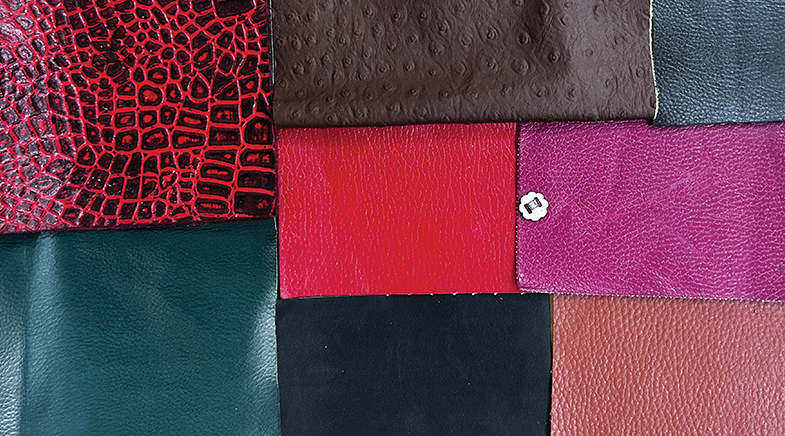
Avinya's plant-based leather, according to Gandhi, needs 95% less water than conventional leather. The finished material contains about 60% agri waste and is free of polyurethane (PU), a polymer typically used to make vegan and synthetic leathers. "Our material is suitable for all kinds of fashion accessories like laptop bags, wallets, handbags, shoes, jackets," Gandhi says. His team is exploring ways to enhance the durability of leather and break into the automobile and upholstery markets.
Banofi's handcrafted banana-fibre leather, on the other hand, contains about 35% crop waste along with naturally derived oils, fillers, gum, starch and raisins. It is 97% bio-based, says Tanisha Chatterjee, Business Development Lead. The remaining 3% is a PU top-coat to enhance durability. "Our goal is to make a 100% bio-based material," Chatterjee says. The material's life cycle assessment shows it has 95% lower greenhouse gas emissions compared to animal (bovine) leather.
"The good part about banana is that it's a very abundant crop," says Chatterjee. And not seasonal, she adds.
TURN OVER A NEW LEAF
Vaibhaw Dwivedi and Arjun Ayyagari, farmers and founders of a farm-to-door business, knew firsthand the amount of green waste that's left behind after every vegetable harvest. "We realised that leaf is a key source that is getting wasted," says Dwivedi. "We also just happenstance discovered RuBisCO." The duo co-founded Proleri in 2023 to extract RuBisCO from leaves.
RuBisCO is a complete protein with a balanced amino-acid profile (bit.ly/Shaastra-protein). This high-quality, plant-based protein, Dwivedi says, remains untapped owing to commercialisation and scale-up concerns. Proleri developed a novel water-based and enzyme-free technology that can adapt to a wide variety of leafy green waste for RuBisCO extraction. The process is pH- and temperature-controlled to maintain the integrity and stability of the protein, says B. Madhavi, Research Scientist.
About 80 million tonnes of stubble – the stalks left standing after crops have been harvested – are burnt annually.
The Hyderabad-based start-up tested the capability of its RuBisCO protein isolates with the Venture Center technology incubator in Pune, and is primed to set up a pilot plant in the city later in 2026. The pilot will have the capacity to process 1-2 tonnes of green leaf biomass a day. The plan is to upscale to a commercial plant that can process 50 tonnes of biomass per day by 2028, says Dwivedi.
Proleri will use broccoli leaf waste and mix in leaves from cultivated alfalfa, a low-maintenance crop, to maintain the supply chain.
Utilising agricultural waste, Madhavi says, will reduce greenhouse gas emissions. For every kilogram of leaf biomass saved from rotting in the open, the greenhouse gas emissions avoidance would be about 2.08 kg of CO2 equivalent (CO2e), estimates the start-up.
Compared to animal-derived whey (80% protein), which emits about 7.5-8.8 kg CO2e per kg of protein, the carbon footprint from RuBisCO extraction (80-90% protein isolate) is estimated to be 0.5-2.0 kg CO2e. Homegrown RuBisCO is likely to reduce dependence on imported protein isolates, further reducing emissions.
EVOLVING SOLUTIONS
According to Prashant Singh, Co-founder of Blue Planet Environmental Solutions, crop-residue burning solutions are now robust in technology and byproduct offtake. The challenge, he thinks, lies in the aggregation and supply of the feedstock at the right price and quality. These solutions are still evolving, he says. "Technology and the offtake become irrelevant if we are not able to feed that technology with the right kind of feedstock consistently."
The Singapore-headquartered company has carried out multiple agri-waste management projects across 15 countries, utilising wastes such as rice straw and corn stover. In India, it has piloted a dry-digestion technology in Haryana, converting agricultural waste into biogas and fertiliser, and is now analysing the data to scale it up for commercial use. Most anaerobic digestion technologies use a wet method, Singh says. The dry method, on the other hand, significantly reduces water and electricity use – an advantage in remote locations.
Each of these waste-to-wealth businesses has its own distinct raw materials, processes, and end products. The intent, though, is shared: nothing goes to waste.








Rajinder Kumar: He saw Beauty in Bubbles (1934 - 2022)
An extraordinary scientist, mentor and administrator, he built a school of chemical engineering based on mathematical modelling.
Material, heal thyself
Everyday products get a shine with an eco-friendly coat that disperses in water and repairs on its own when scarred.
They're building in space!
Researchers and engineers are looking at space as the new frontier to manufacture crystals, optical fibres and drugs.



Have a
story idea?
Tell us.
Do you have a recent research paper or an idea for a science/technology-themed article that you'd like to tell us about?
GET IN TOUCH