

Protein shake-up
-
- from Shaastra :: vol 05 issue 02 :: Feb 2026
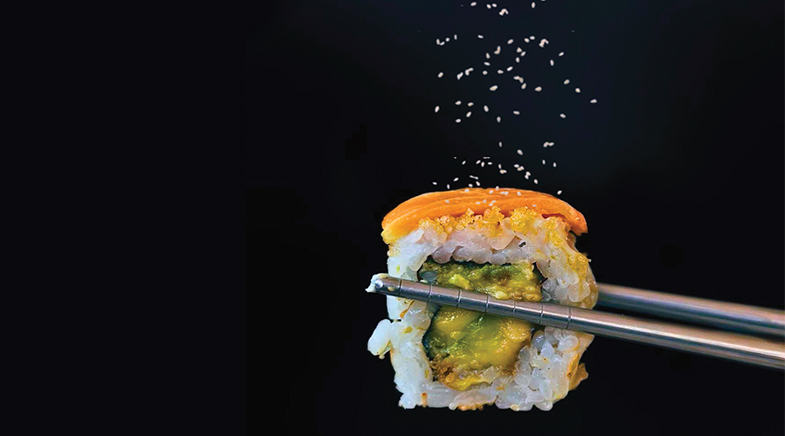
Alternative proteins are at the top table, fed by dietary, ecological and ethical concerns.
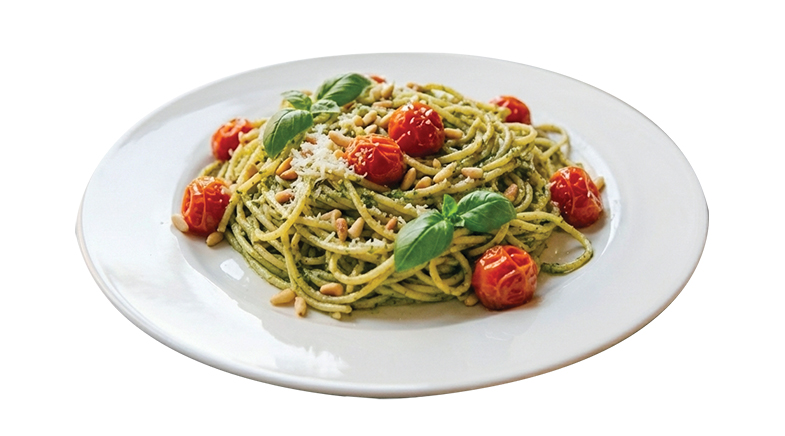
On a chilly December morning, delegates at a food science symposium in Delhi were served vol-au-vents — flaky pastries with a mushroom stuffing, daintily garnished with greens. As they sank their teeth into the savoury appetiser, they filled out a questionnaire to record their sensory perception of the dish. Mayank Chopra, Associate Director of Culinary Arts at Le Cordon Bleu School of Hospitality & Tourism in Gurugram, was testing consumer response to a culinary experiment: adding the blue-green alga Spirulina to the delectable starter. He was pleased with the response. No one could identify the ingredient's telltale signs — a strong smell and bitter taste.
Chopra is enthusiastic about introducing non-traditional proteins into gourmet diets. He is even pursuing a PhD on people's awareness of alternative protein sources, with a focus on Spirulina. "I was looking for a non-traditional protein source which does not face religious barriers," says Chopra. To mask the smell and taste of Spirulina, he often pairs it with the umami flavours of mushroom and cheese, or drowns it in the intense flavours of garlic and basil in a pesto sauce.
Alternative proteins can come from a variety of sources, including plants, fungi, algae, and laboratory cell cultures. The trend towards these alternatives is primarily driven by increased awareness of protein intake among vegetarians, whose carb-heavy meals often lack protein — essential for a healthy body — and by dietary shifts away from animal-sourced protein for ethical, health and environmental reasons. The meat industry is resource-intensive with a massive carbon footprint, and consumers are interested in guilt-free, dairy-free options.
ENTER 'SMART' PROTEINS
"These are sensorially and nutritionally reliable substitutes to animal-derived meat, egg, dairy and seafood," explains Padma Ishwarya, Senior Scientist at The Good Food Institute (GFI) India.
Plant-based proteins, including protein powders and meat analogues, currently dominate the smart protein space. While protein powders are typically made of whey protein derived from cow milk, plant-based protein powders made from peas and brown rice, labelled clean and gut-friendly, are becoming popular. Soy is the reigning star of the faux-meat platter, used even for seafood analogues. Wheat gluten and peas are other popular protein sources for plant-based meats.
A study conducted by GFI India (bit.ly/GFI-2025) found that the amino acid composition of plant-based products that used a combination of two plant sources (such as soy and pea, or soy and wheat) was superior to that of products using a single source of protein. "We need a combination of plant proteins to get a balanced amino acid composition," says Padma.
New plant protein sources now being explored are seeds of trees — such as jackfruit, rubber and drumstick — and plant leaves. Fresh leaves contain 4-8% protein, similar to milk; dried leaf powder can contain up to 30% protein. While research into the benefits of beets, broccoli, spinach and amaranth continues, leaf candidates from the wild and food databases of indigenous communities are also being studied. Leaves are plentiful and available year-round in tropical India, where there is more photosynthesis, points out Vasanth Ragavan K., Assistant Professor at the National Institute for Interdisciplinary Science and Technology, Thiruvananthapuram.

Leaf proteins, however, are associated with anti-nutrition factors such as tannins and phenols, which need to be addressed. The extraction is also challenging and energy-intensive due to the complex matrix of cellulose, lignin and pectin (bit.ly/leaf-protein).
While start-ups in the Netherlands and New Zealand have demonstrated commercial-scale extraction of RuBisCO, a protein abundant in green leaves, research in India is limited to proof-of-concept studies. "We need to develop a robust R&D to make leaf-protein extraction cost-friendly and competitive," says Ragavan. "Finding new protein sources is one aspect; equally important is to ensure scalability, affordability and taste," agrees Jeyan Moses, Assistant Professor at the National Institute of Food Technology, Entrepreneurship and Management (NIFTEM), Thanjavur.
Scientists are also looking at new side-stream sources of protein, such as spent coffee grounds and tomato pomace. Driving further innovation in the plant-based protein category are vegan eggs made from mung bean, cowpea and chickpea, whereas millets are new entrants to the plant-based milk category.
For India, with its rich agrobiodiversity, smart proteins not only diversify protein sources but also add value to the crops farmers produce, Padma says. "Otherwise, we are routing the calories through animals to get meat."
Food technologists are repurposing plant protein with two primary goals in mind: to provide more protein per serving and to make it look and taste like the real deal. Biomimicking plant-derived proteins to recreate the texture, flavour and taste of meats is thus a key area of research. Plant proteins differ from animal proteins in their architecture, amino acid composition and structure. Except in produce such as tender jackfruit, the fibrous texture of a conventional meat product is not inherent to plant proteins, says Padma. These need processing, as well as texturisers and flavour enhancers, to mimic conventional meat. Meat gets its red colour from a haem-containing protein. In plant-based products, beetroot juice is often added to replicate the colour. Soy leghaemoglobin, a protein present in soybean root nodules, is another colouring and flavouring agent. Moses notes that following the flavours, colours and texture is the key to a product's saleability. At the same time, keeping additives to a minimum is important, he says.
Technology plays a key role, too. 3D printing, in which food 'inks' are layered to create a dish, is being used to create faux meat (bit.ly/shaastra-3D). Electrospinning is another new method for creating fine filaments from protein powders, which can later be assembled into steaks, fillets or nuggets. However, India needs to develop indigenous technology to extract and process proteins at industrial scales; plant protein isolates are still largely imported. An incremental development in this area is a patent NIFTEM recently received for a technology to extrude (make into filaments) protein from plant protein and quinoa flour.
THE MICROBIAL SPACE
Among microbes, microalgae — single-celled organisms found in fresh and marine ecosystems — are rich sources of protein. They contain about 50-70% protein, second only to bacteria, which have a 50-80% protein content.
The meat industry is resource-intensive and has a massive carbon footprint, creating room for alternative proteins.
Microbial proteins derived from algae and other microorganisms, such as bacteria and yeasts, are called single-cell or fermented proteins. In the last few years, these proteins have been moving from the lab towards commercialisation, Padma says.
Despite pulses being one of the most consumed commodities in the country, Indians are still protein-deficient, says Gowtham Thirumalai, Director of Algae Labs in Chennai. This is due to the low absorption of protein in the body as the food lacks in fibre and micronutrients, which aid protein absorption. "That's why these types of single [cell] proteins must come into the market to reduce the deficiency of protein as well as micronutrients," says Thirumalai. Algae also contain Omega-3 fatty acids, antioxidants and other micronutrients. The start-up is working on a range of algae-derived products (bit.ly/shaastra-algae).
Algae are even on the radar of space agencies for the future 'grow-your-food' stage of extraterrestrial living. Aboard the International Space Station in 2025, Indian astronaut Shubhanshu Shukla farmed three kinds of microalgae to study the impact of microgravity on their growth (bit.ly/shaastra-shukla).
Bengaluru-based start-up String Bio, on the other hand, cultures bacteria which naturally make single-cell proteins by growing on a diet of methane (bit.ly/shaastra-methane). Using its patented technology platform, String Bio grows these methane-eating bacteria, also called methanotrophs, for protein processing.
In animal feed, microbial proteins can replace fishmeal used in the aquaculture sector and soy in poultry, says P. Sreedevi, Scientist at String Bio. The firm also aims to introduce microbial proteins into the human diet, replacing plant- and dairy-derived proteins in drinks, brownies, nutrition bars and other products.
Microbial proteins are gaining traction because they emit lower amounts of greenhouse gases than conventional protein sources and are less resource-intensive. Moreover, microbial proteins contain all essential amino acids (bit.ly/mproteins). However, proteins derived from microbes have a high concentration of nucleic acids. Increased intake of nucleic acids can cause gout, as they break down into uric acid in the body. String Bio reduces that content during processing to below 2% as per regulatory guidelines. Microbial proteins are categorised as 'novel foods' by the Food Safety and Standards Authority of India and need requisite approvals. Because they lack a history of consumption, their safety must be established through multiple toxicology experiments, Sreedevi says.
"Indian companies and research organisations are working on two different types of fermentation," says Padma. Biomass or gas fermentation, the type String Bio is deploying, relies on the rapid growth potential of microbes and their ability to produce a biomass rich in protein. The other type, precision fermentation, involves genetically engineering microbes to produce specific proteins, such as whey and casein milk proteins. Phyx44, a Bengaluru-based start-up, for one, is making milk proteins using precision fermentation.
STUMBLING BLOCKS
Challenges faced by alternative proteins.
PLANT-BASED PROTEINS
- Replicating the taste, texture and flavour of animal meat
- A single plant source may not provide a balanced amino acid profile
- May contain anti-nutrients such as oxalates and tannins; need appropriate processes for mitigation
- May be harder to digest, requiring pre-treatment with proteases and pairing with pre- and probiotics
- Classified as ultra-processed foods, despite some proven nutritional benefits
FERMENTED (OR MICROBIAL) PROTEINS
- Higher production costs
- Consumer awareness and acceptability
- Scalability
- Regulatory clearances
LAB-GROWN (OR CULTIVATED) MEATS
- Replicating the taste, texture and flavour of animal meat
- Reducing the number of additives
- Regulatory clearances
- Consumer acceptability
INSECT-BASED PROTEINS
- Not likely to be accepted by vegans and vegetarians
- May contain allergens
- High production costs
- Regulatory hurdles
PHOTO: COURTESY: MAYANK CHOPRA

Chef Mayank Chopra is keen on introducing alternative sources of protein to his menu.
PROTEIN PARALLELS
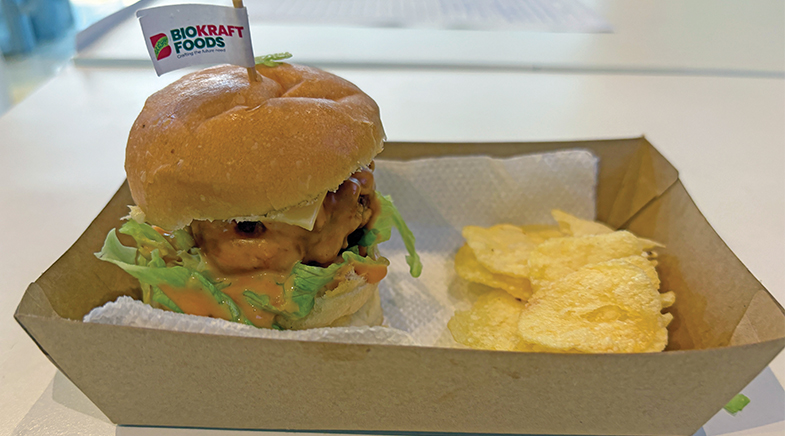
As a Marwari, Kamalnayan Tibrewal grew up on a vegetarian diet with a negative perception of meat. A post-graduation in green tech from the Institute of Chemical Technology in Mumbai led him to a rethink. He wanted to change this association of meat with animals, and thus founded Biokraft Foods. The start-up cultivates artificial chicken and seafood in the lab from animal-derived cells.
Cultivated seafood is still under development in many countries, says Tibrewal. In collaboration with the Central Institute of Coldwater Fisheries Research in Bhimtal, Biokraft is developing lab-grown fish. The rainbow trout thrives in cold conditions, says Tibrewal, but its population is declining. Using a trout cell line developed by the institute and additional food ingredients, Biokraft has created a 3D-printed prototype of the rainbow trout, which was revealed in 2025.
The lab-grown fish will be available at an upcoming seafood tasting event. Since it uses a fish cell line, it falls under the seafood category, says Tibrewal, who claims it is the first seafood product to be lab-cultivated in India. He is also working on snow trout, which, unlike the rainbow trout, is native to India. While the seafood is being developed, the start-up has already filed for regulatory approvals for its cultivated chicken.
Cultured and plant-based meats aren't the only alternatives to animal meat and seafood. Juicy grubs are on the menu, too. Edible insects, traditionally a part of indigenous diets, are being farmed as alternative proteins, given their modest growth requirements and their rich protein content (30-65% of dry weight). Insect-derived proteins are used in animal feed and are undergoing approval for human consumption in a few countries.
While the more traditional patrons might feel squeamish, Chopra believes the well-travelled, ready-to-experiment Gen Z will be more receptive to insect-based diets. His insects of choice are crunchy crickets and succulent woodworm larvae. In his kitchen, he is experimenting with them in rubs and seasonings for kebabs.
No matter where your protein comes from, the recommended dietary allowance is about 1 gram of protein per kilogram of body weight a day. But, with all this talk of protein, what's often forgotten is the quality of protein — and the energy that comes from it. "We should derive 10-15% of the calories from our food from the protein component of it," says Padma.








Clearing the air
A trimetallic nanocatalyst promises to effectively convert CO2 into carbon monoxide — at top speed!

Tyres get a green signal
Rubber scientists and the tyre industry are reinventing the wheel.
Mars mission... to Ladakh
Mars is a prime candidate in the search for extraterrestrial life. Ladakh helps in the quest.



Have a
story idea?
Tell us.
Do you have a recent research paper or an idea for a science/technology-themed article that you'd like to tell us about?
GET IN TOUCH