

Mind it!
-
- from Shaastra :: vol 05 issue 10 :: Oct 2026
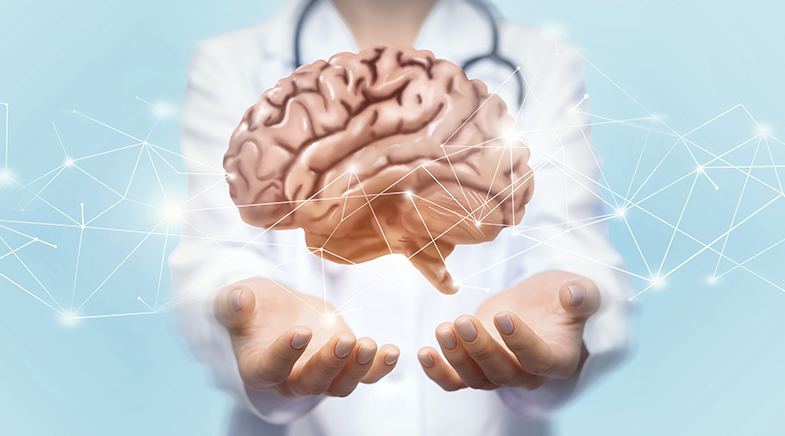
An atlas of 6.3 million brain cells reveals secret rhythms and common disease pathways.
The prefrontal cortex (PFC), the part of the brain behind the forehead, is often called the brain’s control centre because it controls high-level thinking, emotional regulation, executive functions, cognitive flexibility, and working memory. These roles are concentrated in the dorsolateral portion of the PFC, a region about the size of a small lime.
A multi-institute research group, the PsychAD Consortium, led by Icahn School of Medicine at Mount Sinai, New York, released on September 23 an atlas of this part of the brain (bit.ly/roussos-atlas). The population-scale, single-cell atlas was created by painstakingly assessing over 6.3 million cell nuclei from an autopsy dataset of 1,494 human donors of different ancestries in the United States. Unlike an atlas built from a single individual’s brain cells, this ‘population-level’ atlas spanned individuals with disorders like Alzheimer’s disease, Parkinson’s disease, Lewy body disease, vascular dementia, schizophrenia, and bipolar disorder, as well as neurotypical controls, capturing differences and connections. Psychiatric and neurological degenerative diseases originate in various parts of the brain, but most of them impact the PFC.
The atlas, generated at the transcriptomic, or RNA, level using single-cell technology, pinpoints variations inside the nucleus at the level of individual cells. With older technology, researchers homogenised bulk brain tissue to access nuclear material; as a result, they could not identify cellular-level specifics. The brain tissue comprises several highly specialised cell types.
The researchers say these new insights into disease pathways are steps towards designing targeted therapeutics.
The study showed that many diseases shared common molecular pathways, even as they maintained distinct signatures. “By integrating single-nucleus brain data with human genetics, we can translate broad genetic risk into specific changes in gene activity, helping identify the cell types, genes, and biological pathways that may become future therapeutic targets,’’ said Georgios Voloudakis, one of the lead authors, in a press statement.
NEW UNDERSTANDING
The consortium released its findings across eight other papers, under the Nature group of journals. In one of them, investigations of brains of individuals ranging from 0 to 97 years showed that the proportion of various brain cells — neurons, microglia, astrocytes — changes with age (bit.ly/age-changes). Early life shows rapid remodelling, with relative stability attained by age 24. In later life, proportions begin to change again. Similarly, the researchers noted that the gene activity in brain cells follows circadian rhythms or a 24-hour cycle. This rhythm gets weaker after age 60. Instead, the glial cells, which, among other functions, also act as the brain’s immune system, develop new rhythms associated with cellular stress and inflammation. “The brain does not simply stop keeping time — it changes what it is timing,” said Kiran Girdhar, co-senior author, in a press statement.
The researchers also generated an atlas of cell-specific genetic regulation, identifying expression quantitative trait loci (eQTLs) and uncovering regulatory mechanisms linked to brain disorders (bit.ly/regulation-brain).
The group developed several tools during these investigations. The iBrainMap, an AI-powered tool, builds personalised brain roadmaps showing how brain cells communicate and how genes work together in each individual. It helps distinguish Alzheimer’s cases from healthy individuals. A Phenotype Associated Single Cell encoder (PASCode) was developed to detect Alzheimer’s cells associated with phenotype (observable traits). It revealed the association of 27 cell types with the disease. The researchers say these new insights into disease pathways are steps toward designing targeted therapeutics, the reason PsychAD was created in 2019.
With longer human lifespans, the burden of geriatric diseases is rising. According to the World Health Organization, about 5.7 crore individuals worldwide live with dementia, with Alzheimer’s being the major contributor to the condition. In addition, around 12 lakh new cases of schizophrenia are diagnosed every year.
At the core of the research by PsychAD is access to a huge repository of autopsied brain tissue across ages, disorders, and ethnicities. The team hopes to build on these findings by assessing 10,000 brains.
See also:









Harnessing the herb
Scientists have known the medicinal properties of ashwagandha for several decades. Now the evidence is getting stronger.

The shape of things
Scientists are studying the relation between the geometry of DNA nanocages and their ability to enter cells.



Have a
story idea?
Tell us.
Do you have a recent research paper or an idea for a science/technology-themed article that you'd like to tell us about?
GET IN TOUCH

